Description
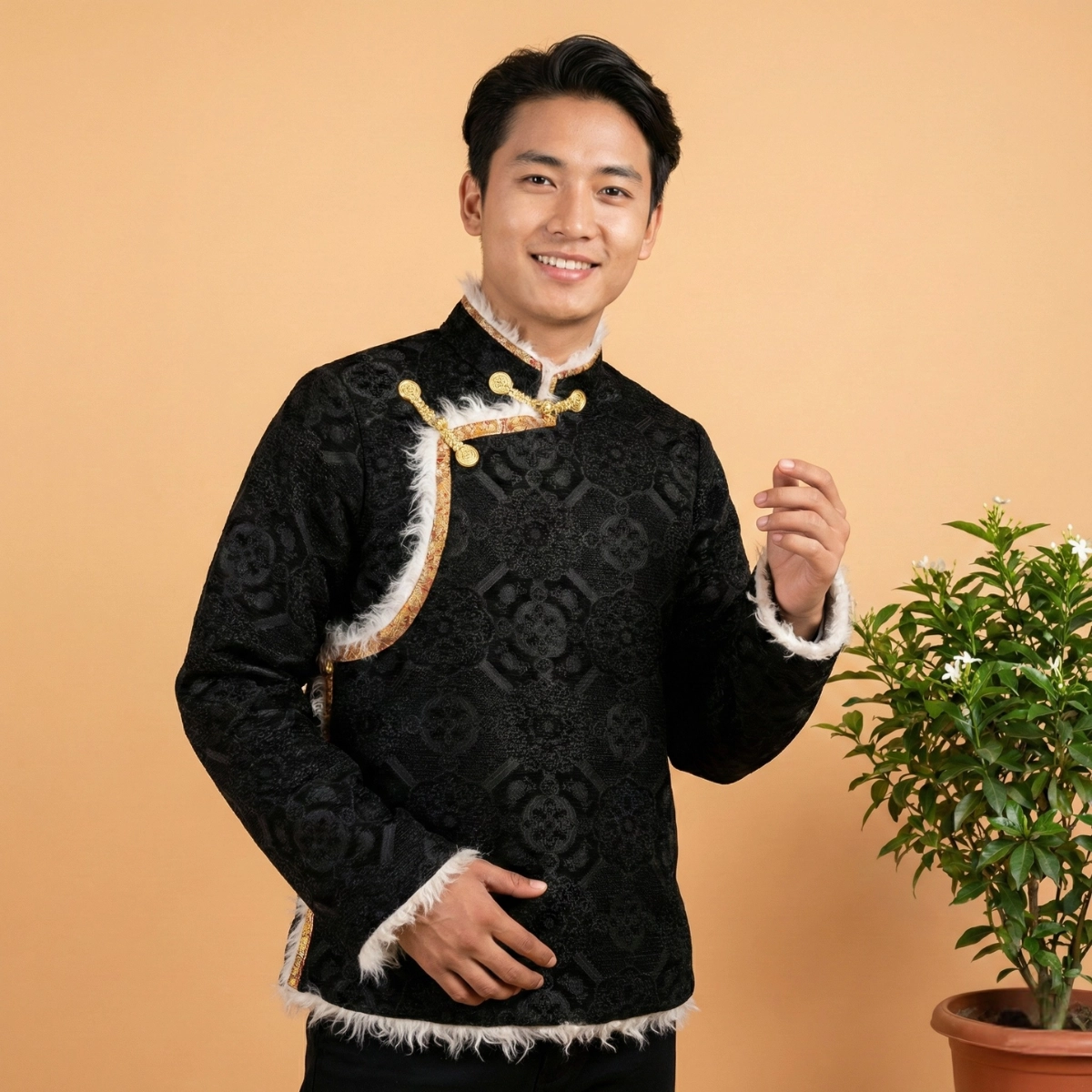
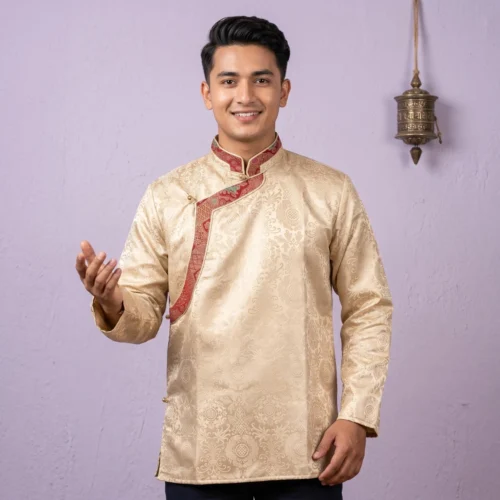
The Khenja is worn by men of Tibetan, Bhutia, Tamang, and Sherpa communities on occasions that call for cultural formality — Losar, Saga Dawa, weddings, and the kind of gatherings where how you dress signals where you belong.
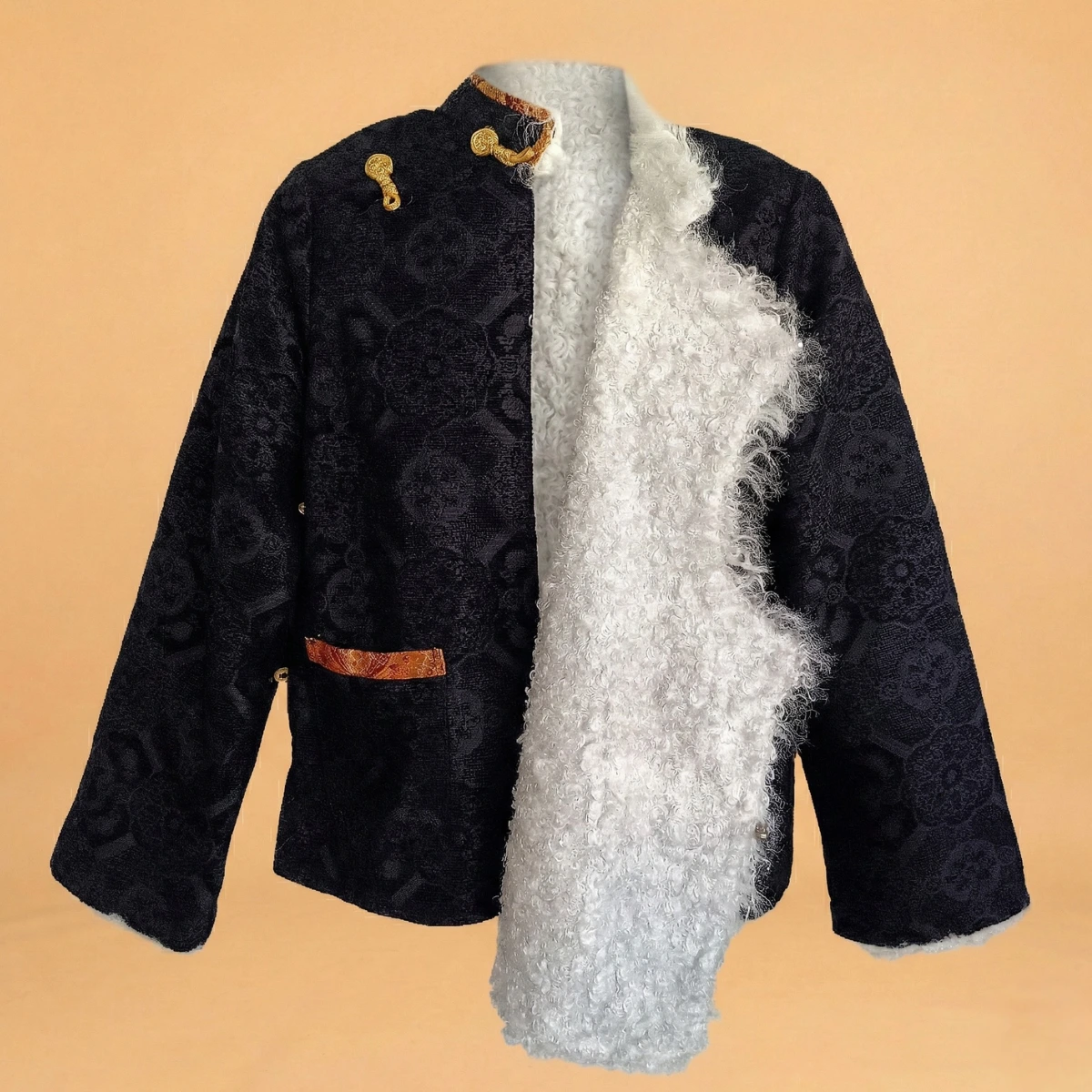
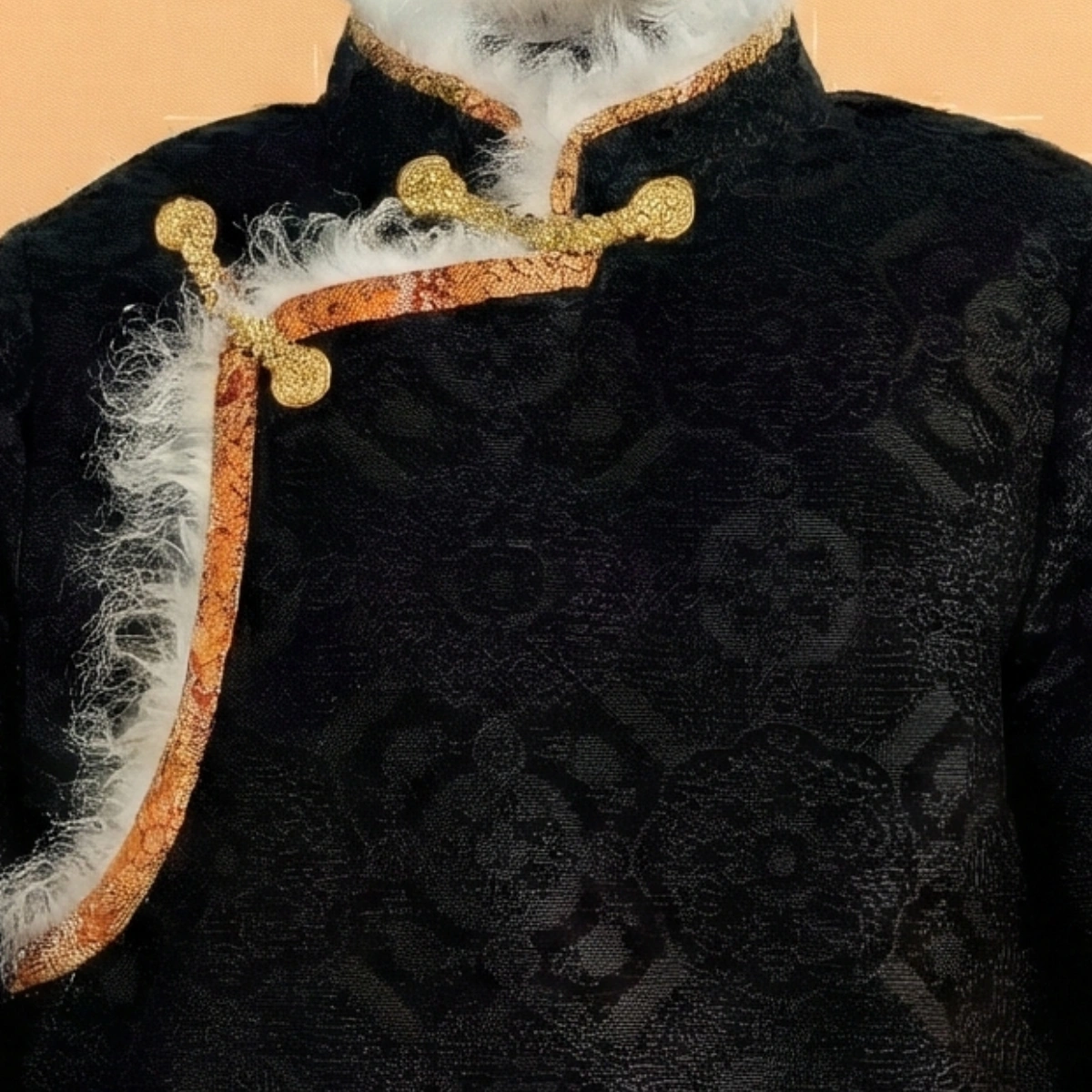
This Khenja is constructed from a poly-cotton jacquard weave — a woven fabric with a repeating geometric surface pattern and a quiet lateral sheen — lined throughout with a dense poly-fur that gives the jacket its weight and warmth. The Tash Kuchin border frames the mandarin collar, cuffs, and hem in a contrasting gold-toned woven trim, the same detail seen on prestige occasion garments across the Himalayan hills.
Front closure runs vertically with traditional hook-and-eye fastenings — five to seven points that hold the jacket close through the body. Men across the Bhutia, Tamang, and Sherpa communities layer this over a simple inner garment or Bakhu base for formal occasions.


Tenzin Dorje –
The poly-fur lining makes this jacket genuinely warm — wore it for Losar morning prayers in Darjeeling and stayed comfortable through the cold without needing an extra layer underneath. The Tash Kuchin gold border at the collar and cuffs looks very refined in person.
Karma Wangchuk –
Hook-and-eye closure holds the jacket close without any gapping — this is exactly the kind of tailored fit you lose when you buy ready-made. The jacquard surface pattern catches the light very well at indoor gatherings.
Passang Tamang –
The fur lining is warm but it adds significant bulk to the chest — if you’re going for a sleeker silhouette, this may feel heavier than expected. Quality is solid but sizing up would have helped me layer more comfortably.
Lobsang Sherpa –
Wore this to a Sherpa community wedding in Namchi and the Tash Kuchin border detail got comments all evening. The gold trim against the jacquard body looks genuinely ceremonial.
Dawa Gyaltshen Bhutia –
The jacquard weave exterior has a quiet geometric sheen that reads as understated elegance — not flashy, but clearly crafted. The poly-fur interior means I can wear this through the entire Losar season without a separate inner jacket.
Mingma Norbu –
The mandarin collar is stiff and structured — sits well and frames the face properly for formal occasions. Tailor-made fit across the chest and shoulders is noticeably better than anything I’ve found off the rack.
Rinzin Wangdi –
Bought this for my father for Saga Dawa and he has worn it to every community function since. The combination of the fur lining and the Tash Kuchin trim is exactly what a prestige occasion Khenja should be.
Pemba Gurung –
Delivery took longer than expected — nearly 10 days. The jacket itself is well constructed and the fur lining is genuinely dense.
Sonam Tshering –
The hook-and-eye fastenings are sewn in tightly with no looseness — a small detail but one that usually fails first on traditionally made garments. This one has held after several wears.
Jigme Dorji –
Layered this over a plain white inner garment for a Bhutia cultural reception in Siliguri. The jacquard exterior looked formal and the fur interior kept me warm through an evening that got cold quickly.
Chewang Bhutia –
The Tash Kuchin border trim at the hem adds real visual weight to the bottom of the jacket — it grounds the silhouette nicely and makes the whole garment feel more complete.
Kelsang Gyatso –
The poly-fur lining is dense enough to replace a separate inner garment on cold Himalayan mornings — that practicality combined with the formal exterior makes this a genuinely versatile piece for winter season occasions.
Tashi Gyalpo –
The geometric jacquard pattern has a subtle raised texture that you only fully appreciate when you hold the fabric close. In photos it looks like a plain weave — in person it has real depth and detail.
Ugyen Wangchuk –
This is a cold weather occasion jacket done properly — warm enough for Himalayan winters, formal enough for weddings, and cut precisely to the Khenja silhouette that Tibetan and Bhutia men recognise immediately.
Dorje Namgyal –
The five hook-and-eye closures run cleanly down the center-front without bunching the fabric on either side. This level of construction attention is what separates tailor-made from mass produced.
Pema Rinchen –
Wore it layered over a Bakhu base for a formal Tibetan gathering in Gangtok — the combination looked very traditional and the Tash Kuchin border at the collar tied the two garments together visually.
Sangay Tshering –
The dry-clean-only care requirement is a genuine inconvenience given how frequently this would be worn during festival season. Worth knowing before purchase — it adds an ongoing maintenance cost to an already premium jacket.
Dichen Sherpa –
The gold-toned Tash Kuchin border at the cuffs is the detail that makes this jacket feel finished. Without it the jacquard body would look plain — with it, the whole garment has a ceremonial quality.
Norbu Wangchuk –
I own three different Khenja jackets and this is the only one with a fur lining — the difference in warmth during early morning Losar ceremonies is significant. The construction quality matches the price point.
Lhakpa Tamang –
Bought this for my cousin’s wedding in Kalimpong. The jacquard weave and Tash Kuchin trim looked genuinely regal at the reception — several guests asked where it was sourced from.
Gyamtso Bhutia –
The fur lining is well-stitched to the interior — no bunching or pulling when the jacket is worn open and then buttoned. That kind of interior finishing is often where cheaper garments fall apart.
Tshering Dorji –
The mandarin collar height and the Tash Kuchin trim give this jacket a distinctly Himalayan formal register — it reads as culturally specific in a way that generic western formalwear simply cannot replicate.
Kunzang Sherpa –
The weight of this jacket feels deliberate — the poly-fur adds substance without making it heavy or restrictive. Wore it for a full day community event and the fit held throughout without the shoulders dropping or the closure pulling.