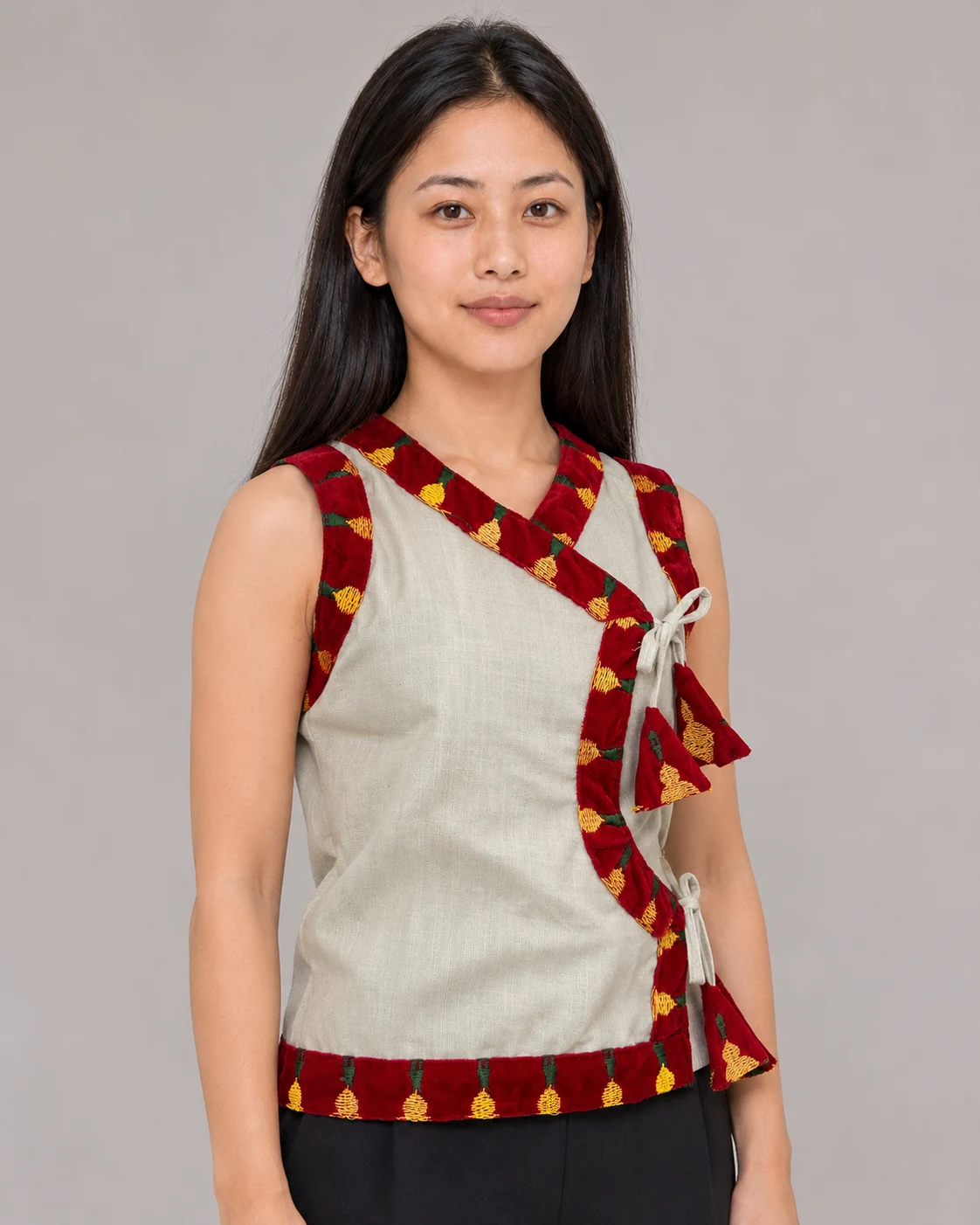
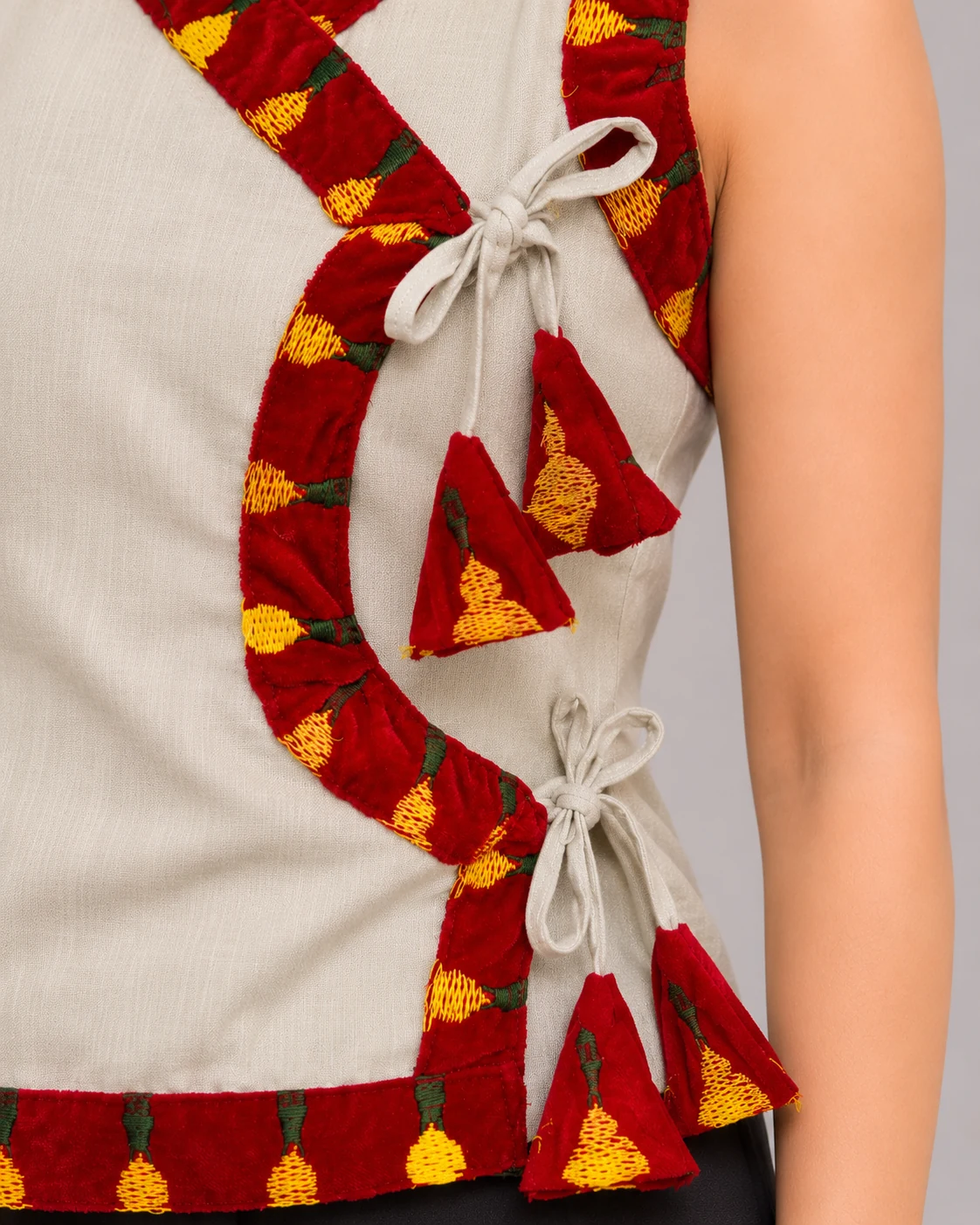
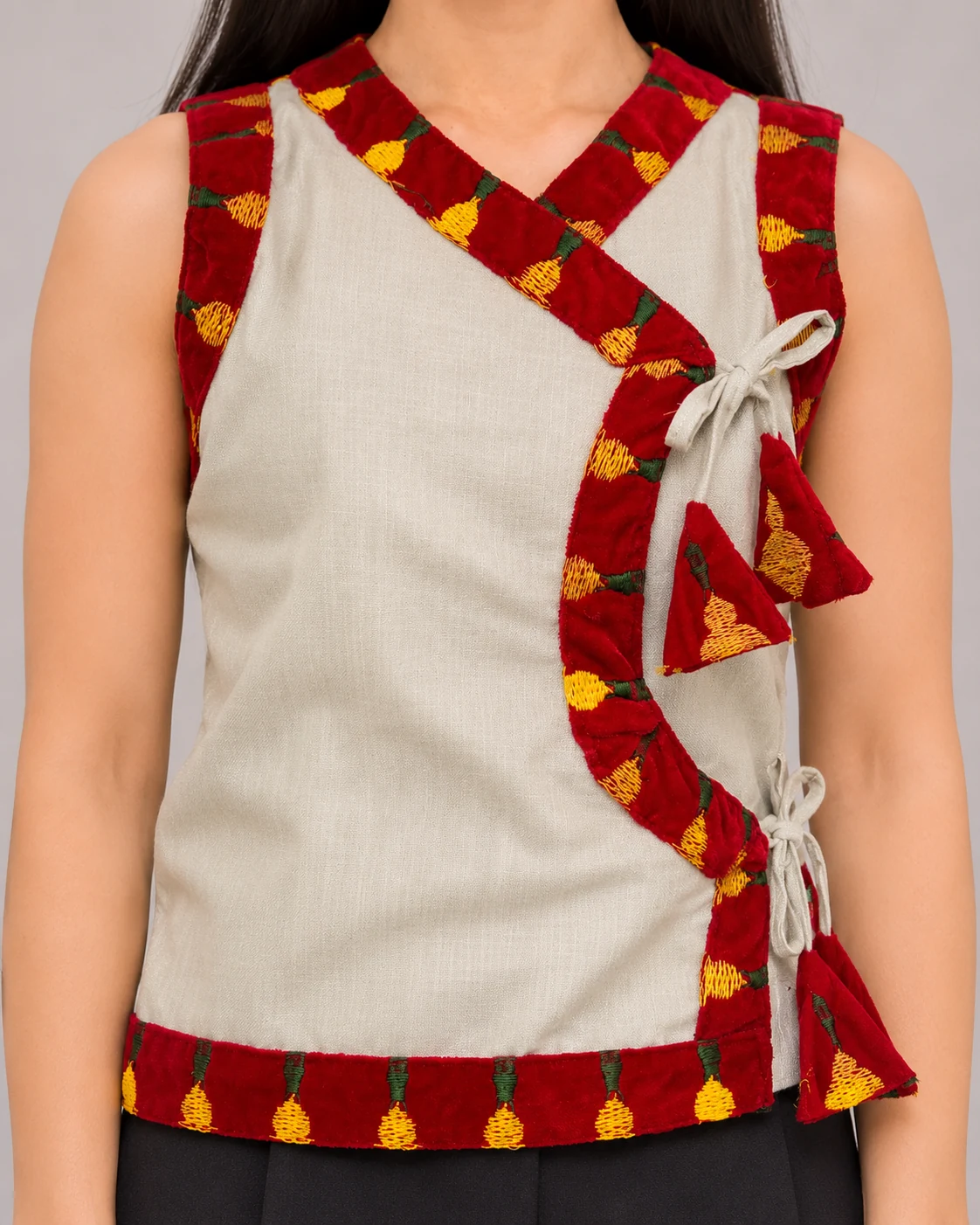
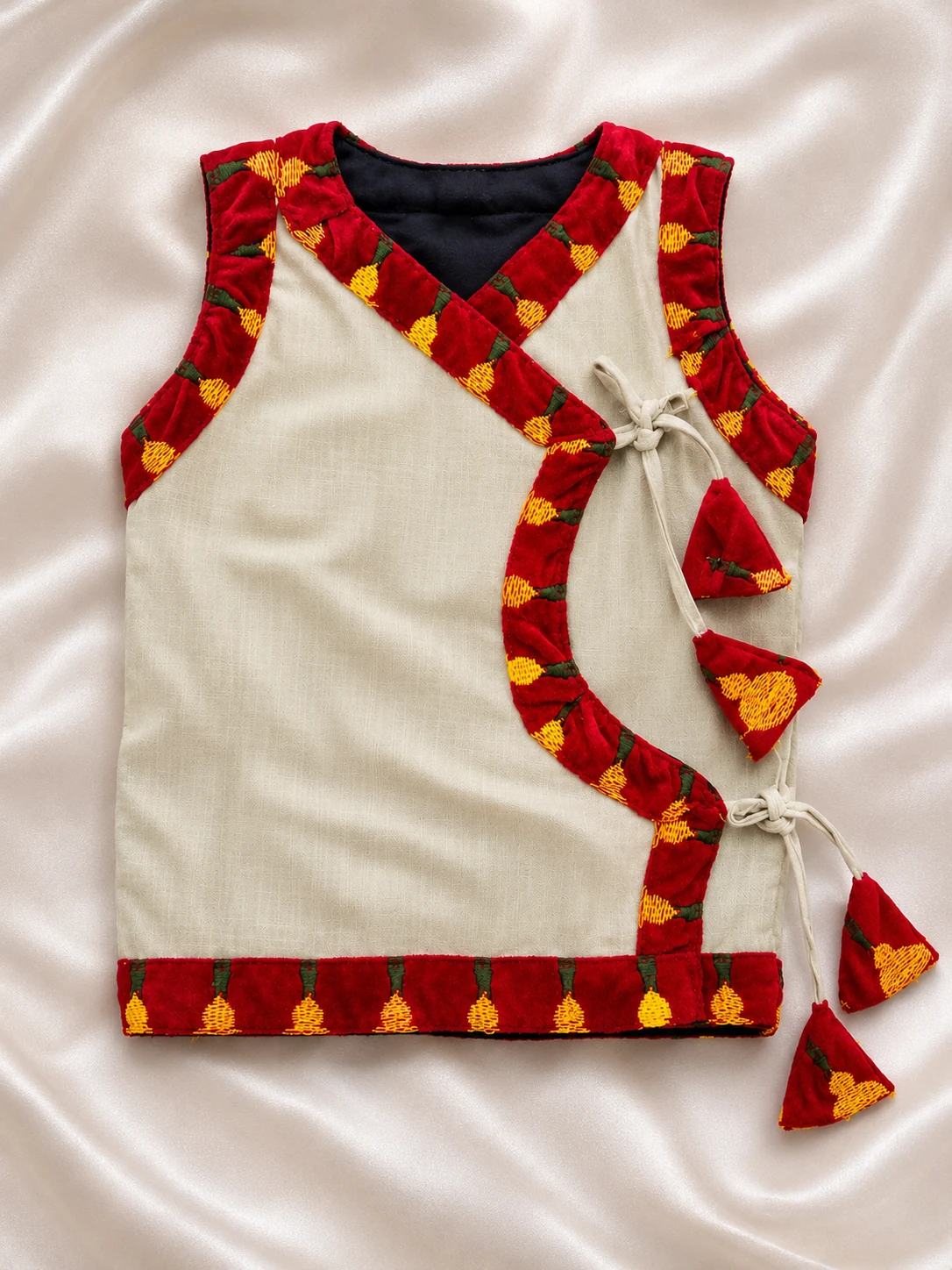
Rai women’s dress is built from the cholo, the gunyo wrap skirt and the patuka at the waist, with the chindo badge and the dhajura chest cover added for Sakela, when the Kirati Rai gather to dance Ubhauli in Baisakh and Udhauli in Mangsir. This is the cholo cut without sleeves: a wrap that crosses the chest and ties at the side, framed by the red velvet chindu border that marks Rai dress from across a dance ground.
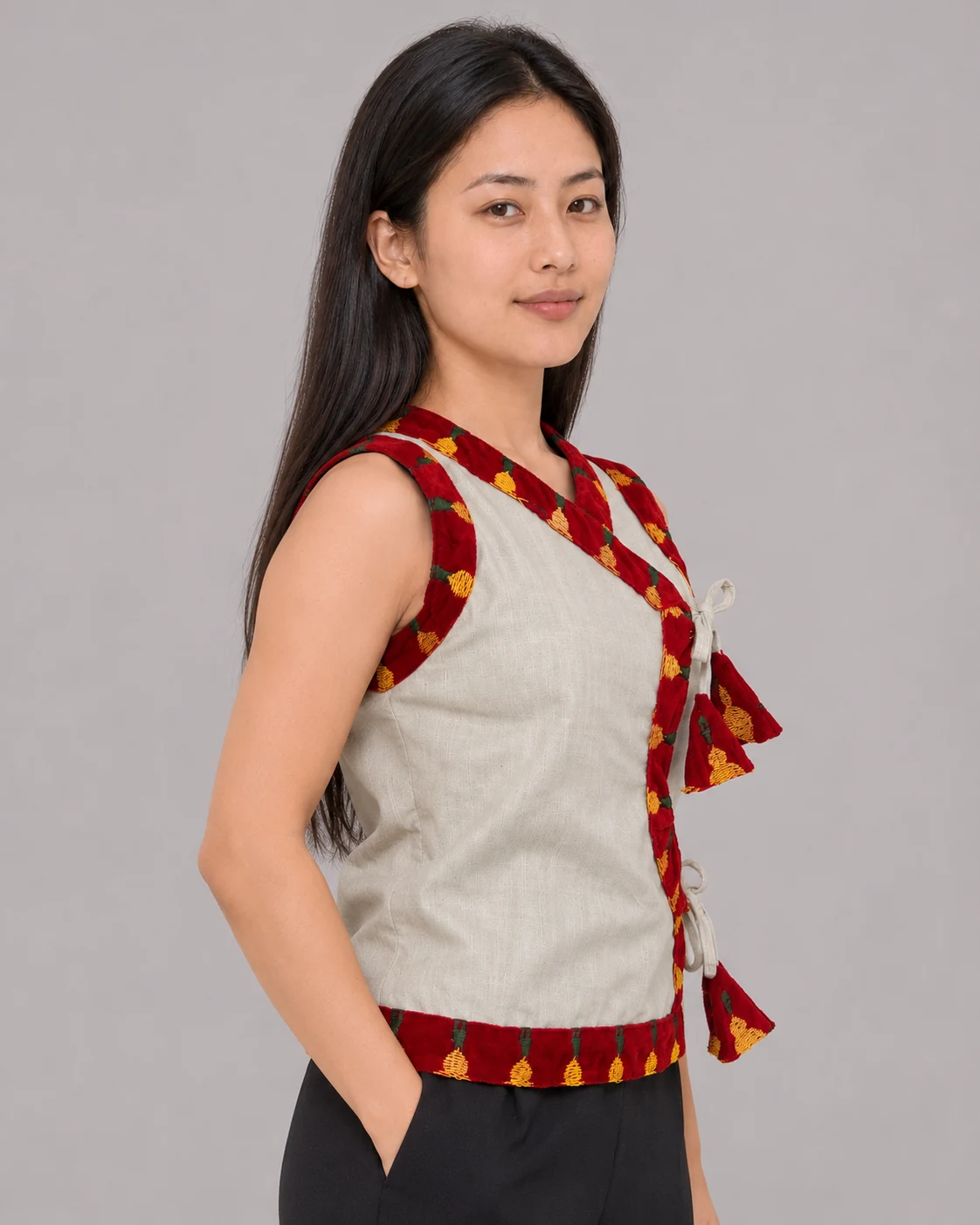
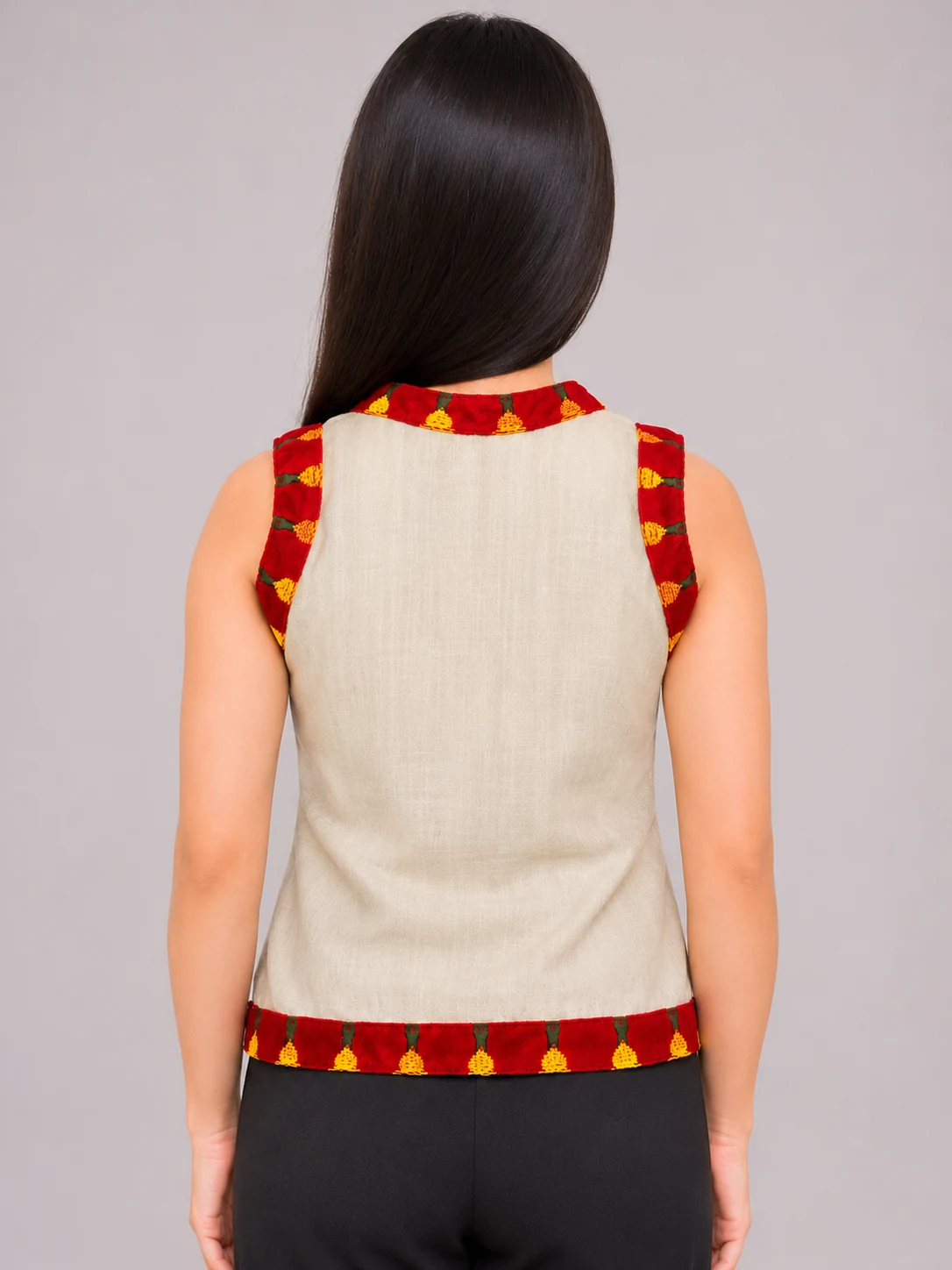
The body is a plain beige cotton with a dry, matte hand. The border is red velvet, cut on the curve so it follows the neckline, both armholes, the wrap edge and the hem without a break, and it carries a line of embroidered buds in yellow and gold with green leaves between them. Two ties close the wrap at the side, each ending in a stiffened triangle with a small tassel, so the ties hang as an ornament rather than a knot. The whole cholo is lined, which keeps the velvet border flat and the inside smooth against a blouse or the skin. Each cholo is cut only after you order and checked for fit, finishing and cultural accuracy before it ships. Each one is tailor-made to your measurements — after ordering, Bhutib contacts you directly to confirm fit and preferences.
Wear it the way it is mostly worn, over a long-sleeve blouse with a gunyo and patuka for Sakela, a wedding or a family gathering, or on its own over trousers in warm weather; it joins the lehenga sets, cholos and shawls of Rai dress. When the day calls for sleeves, the long-sleeve printed cotton Rai cholo is its everyday partner. Each cholo is stitched for Bhutib in the Eastern Himalayan hills.
| Garment type |
Sleeveless cholo, wrap front, side ties |
| Border |
Red velvet chindu border, embroidered, on neckline, armholes, wrap edge and hem |
| Cultural wear |
Rai and Kirati women, for Sakela (Ubhauli and Udhauli), weddings and cultural programmes |
| Styling |
Over a long-sleeve blouse with a gunyo and patuka; also alone over trousers |
Questions buyers ask
What is the chindu border? The embroidered red velvet band that edges Rai women’s tops. Here it runs around every edge of the cholo in one continuous line.
Is it worn alone or over a blouse? Mostly over a plain long-sleeve blouse, the way Rai women layer it for Sakela and weddings. In warm weather it also works on its own.
Does it come with the gunyo? No, this listing is the cholo only. The Rai lehenga sets on the site include the skirt.