Description
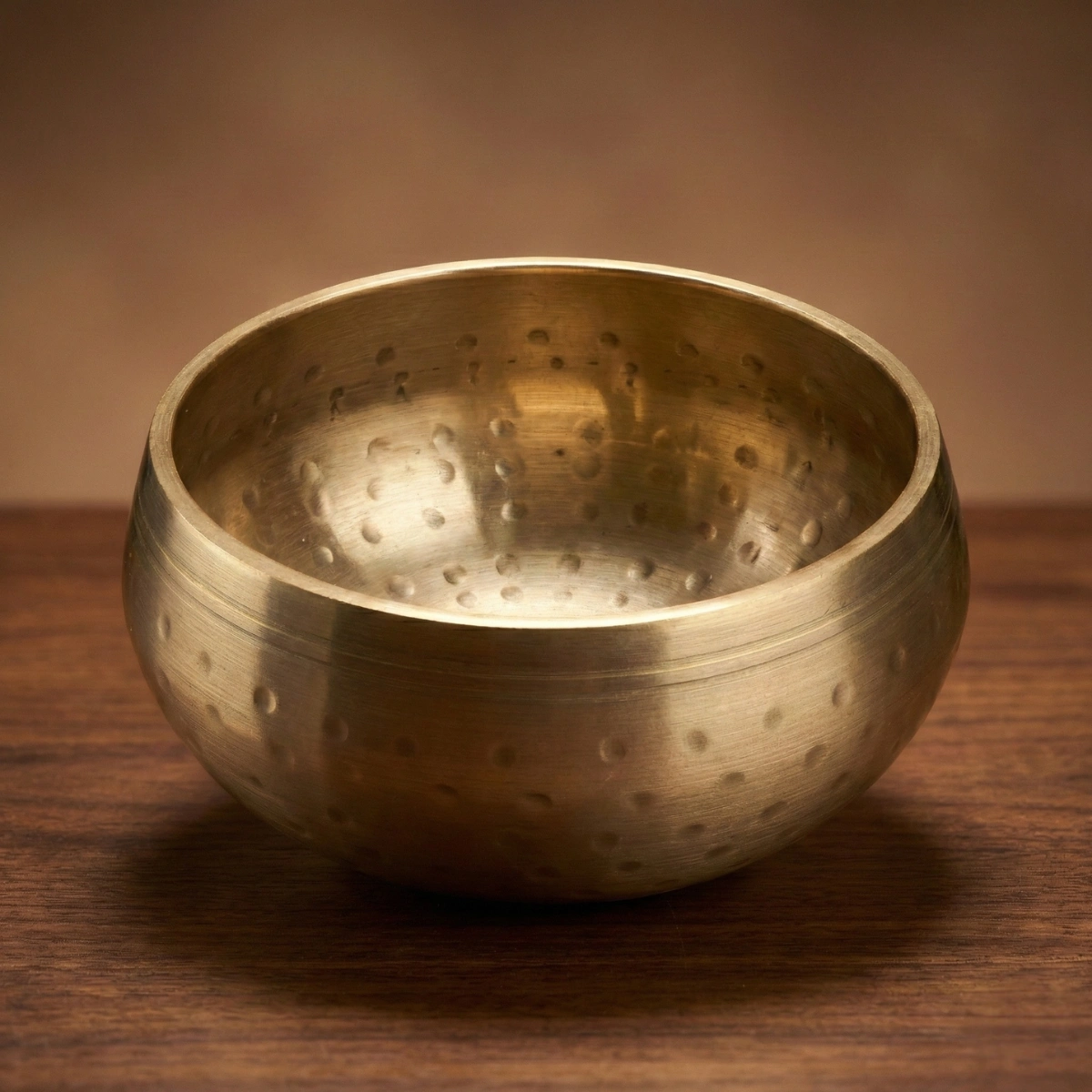
The Tibetan singing bowl is an instrument of Vajrayana Buddhist puja — struck or rimmed to mark the opening and close of meditation sessions and prayer cycles. Across Himalayan communities in Nepal, the eastern Indian hills, and the wider Tibetan Buddhist world, it serves as both sound instrument and altar object: a vessel representing Sunyata, the Buddhist concept of emptiness, even when still. This bowl carries no inscription — its surface texture is the product of the hand-hammering process alone.
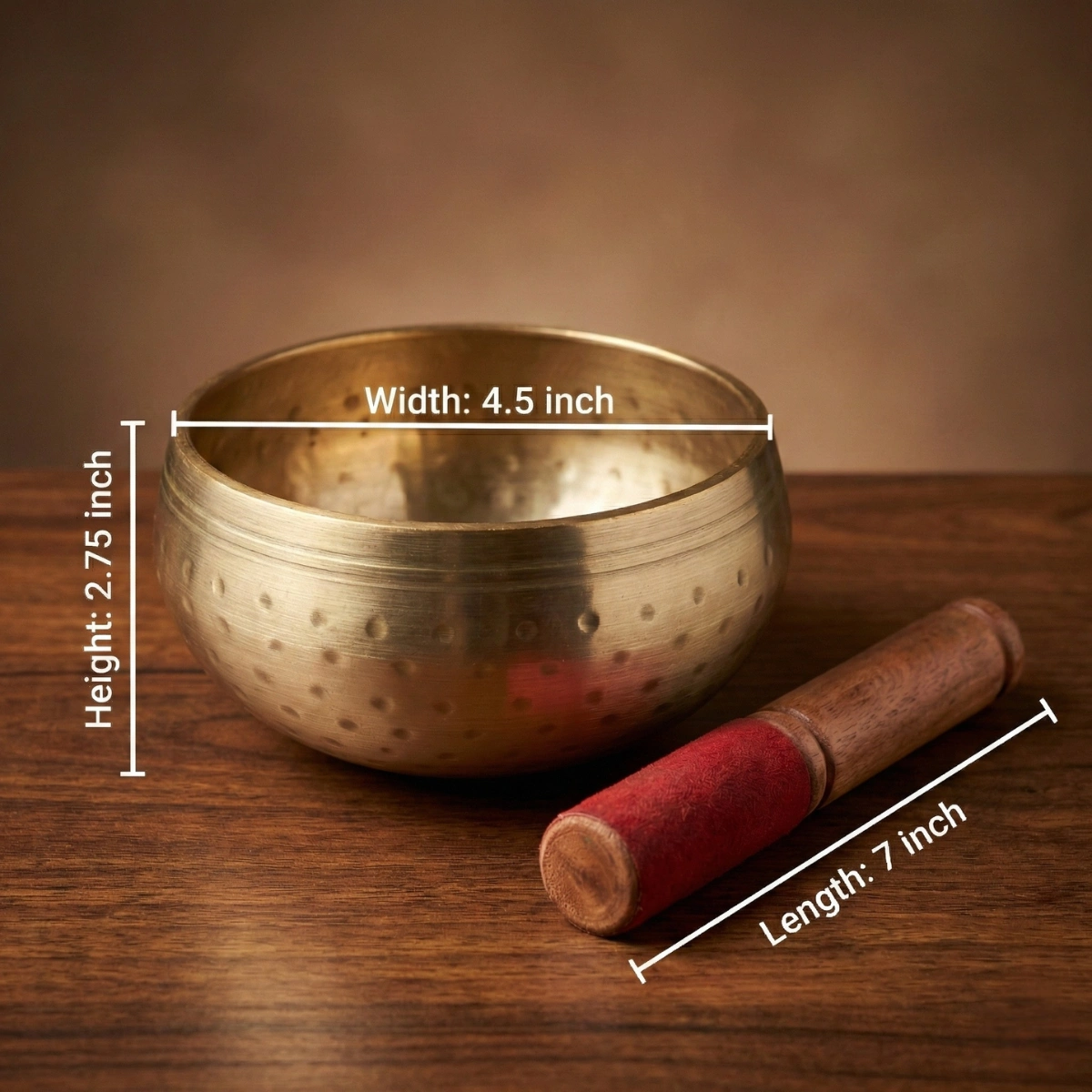
Cast from bronze alloy — the bell metal of copper and tin — the bowl was shaped through traditional hand-hammering: the alloy is melted, cast into rough discs, then heated repeatedly until red-hot and workable. Artisans hammer the metal into form through multiple annealing cycles, aligning the grain and building the wall structure. The subtle irregularities, slight dents, and varying wall thicknesses that result are the marks of hand-made production — visible across the outer body as a field of close-packed hammer indentations. At 11.43 cm across and 721 g, this bowl produces higher-pitched tones with a shorter, focused sustain.
On a meditation cushion, a puja shelf, or a home altar, the bowl works as a devotional object whether sounding or still. The hand-carved hardwood mallet with red suede tip supports both techniques: strike the exterior wall for a clear bell tone, or draw the suede tip around the rim to build a continuous harmonic. Each piece is sourced from artisan workshops in the Eastern Himalayan hills and dispatched from Kalimpong, West Bengal.




Reviews
There are no reviews yet.