Description
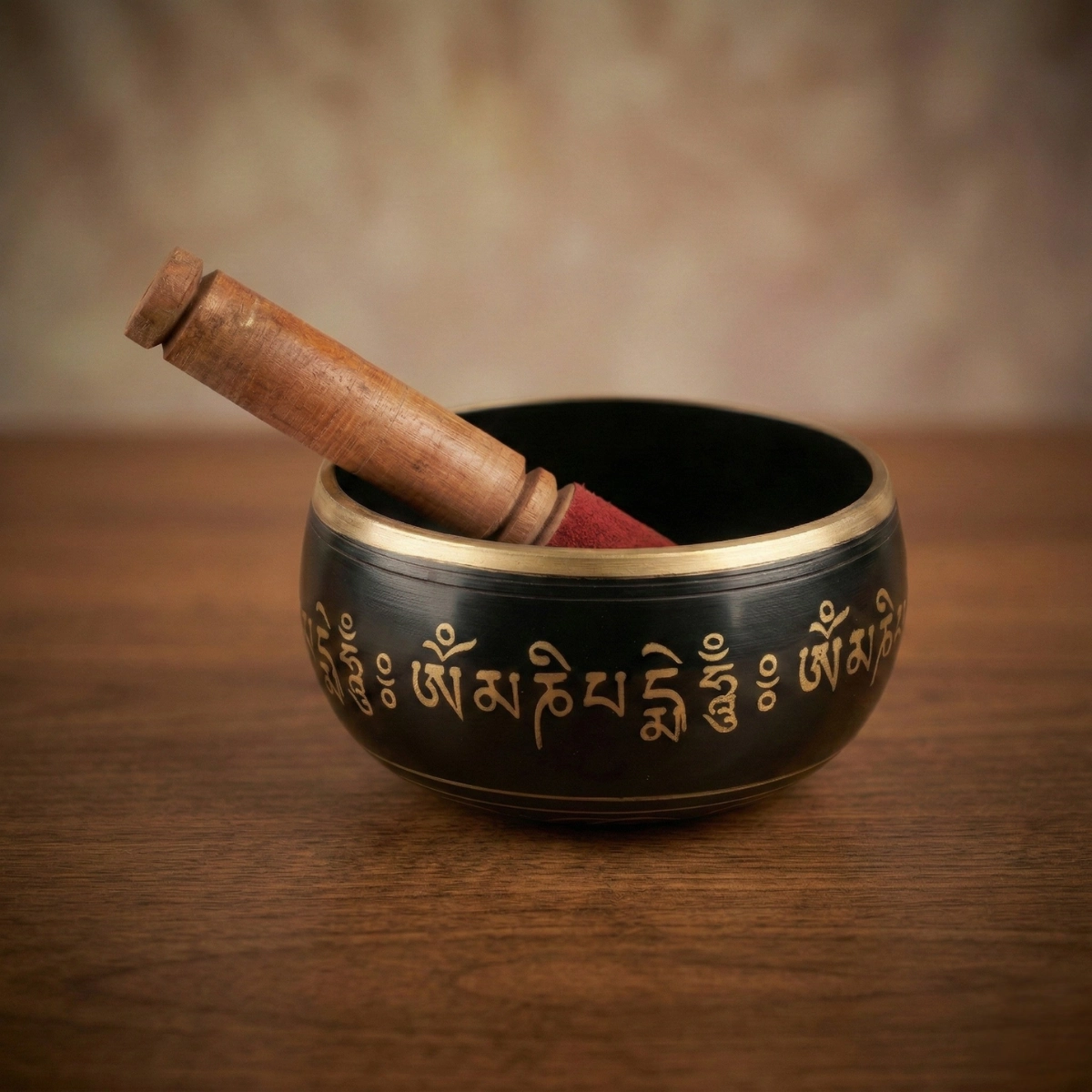
The Tibetan singing bowl — used in Himalayan Buddhist puja and sound meditation practice — is struck or played along its rim to produce a sustained, penetrating tone that marks the opening and close of ceremonial sessions. This bowl carries Om Mani Padme Hum, the six-syllable invocation of Avalokiteśvara, inscribed continuously in Tibetan Uchen script around its outer wall — making it both an instrument of sound practice and a devotional object.
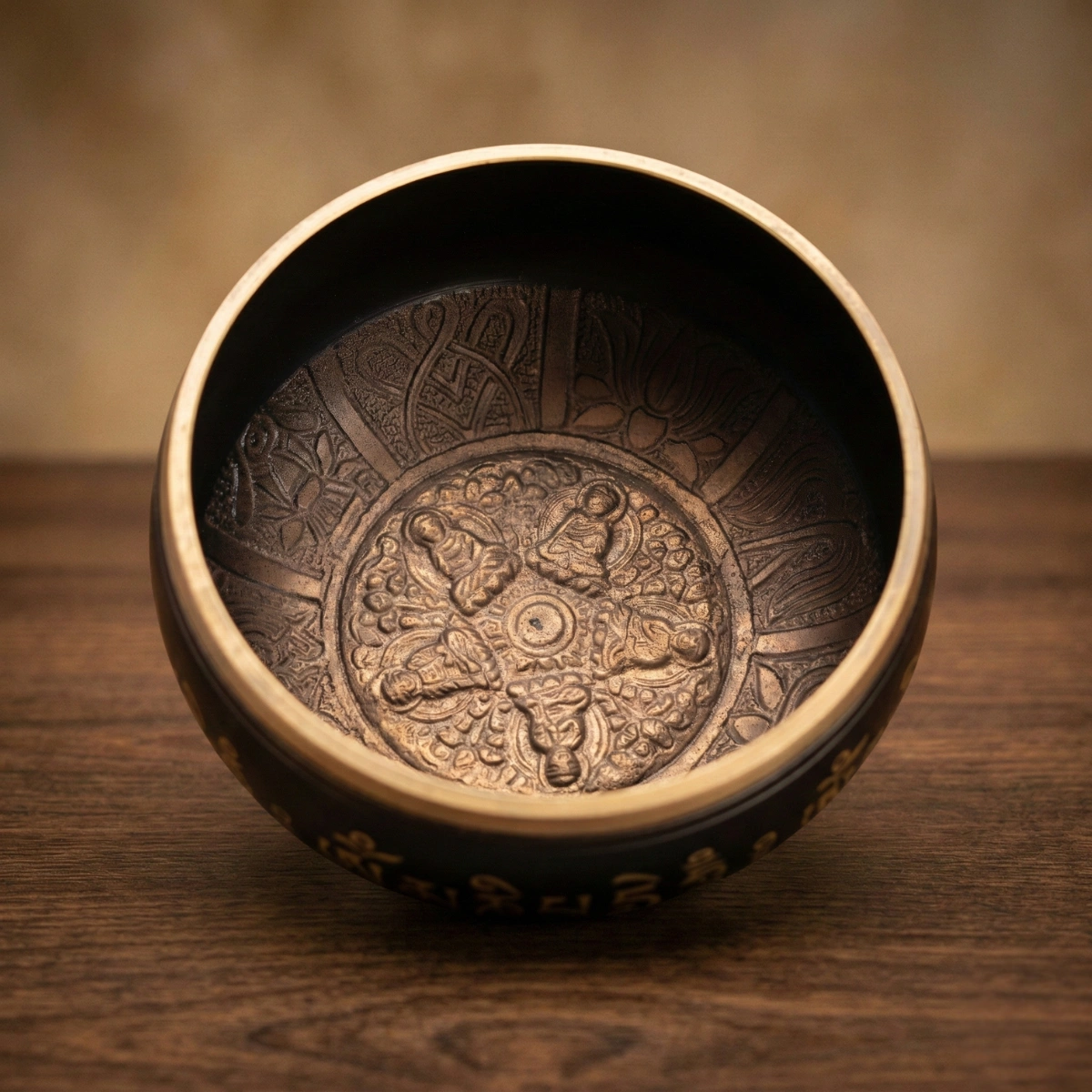
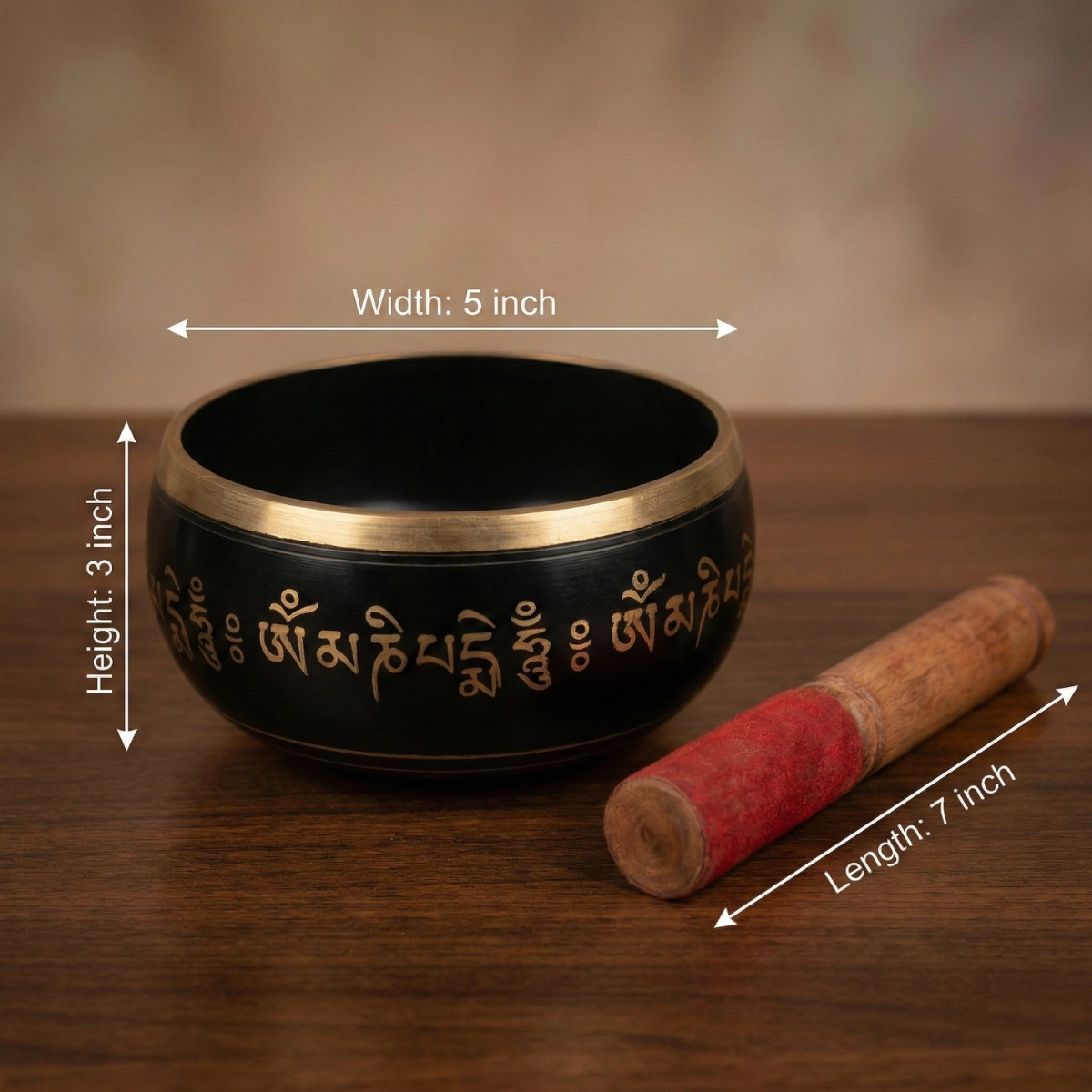
Cast and lathe-turned from brass, the bowl is finished in a matte black oxidised exterior with a polished brass rim band. The Om Mani Padme Hum inscription runs the full outer circumference in Tibetan Uchen script — gold lettering rendered in precise relief against the black ground. A lotus motif is engraved at the interior base in natural brass tone. At 1.01 kg and 12.7 cm across, the bowl carries a dense, weighted feel associated with fuller, longer-sustaining resonance. The hardwood mallet is fitted with a red suede tip for dual-technique play: strike the rim for an immediate bell tone, or draw the suede tip around the rim’s edge to produce a continuous, rising harmonic.
Placed on a meditation altar, a puja shelf, or a practice corner, this bowl works as both sound instrument and devotional marker — the Om Mani Padme Hum inscription carrying meaning even when the bowl is still. It is a considered gift for practitioners entering a sitting practice, or for diaspora families establishing a home altar.



Reviews
There are no reviews yet.