Description
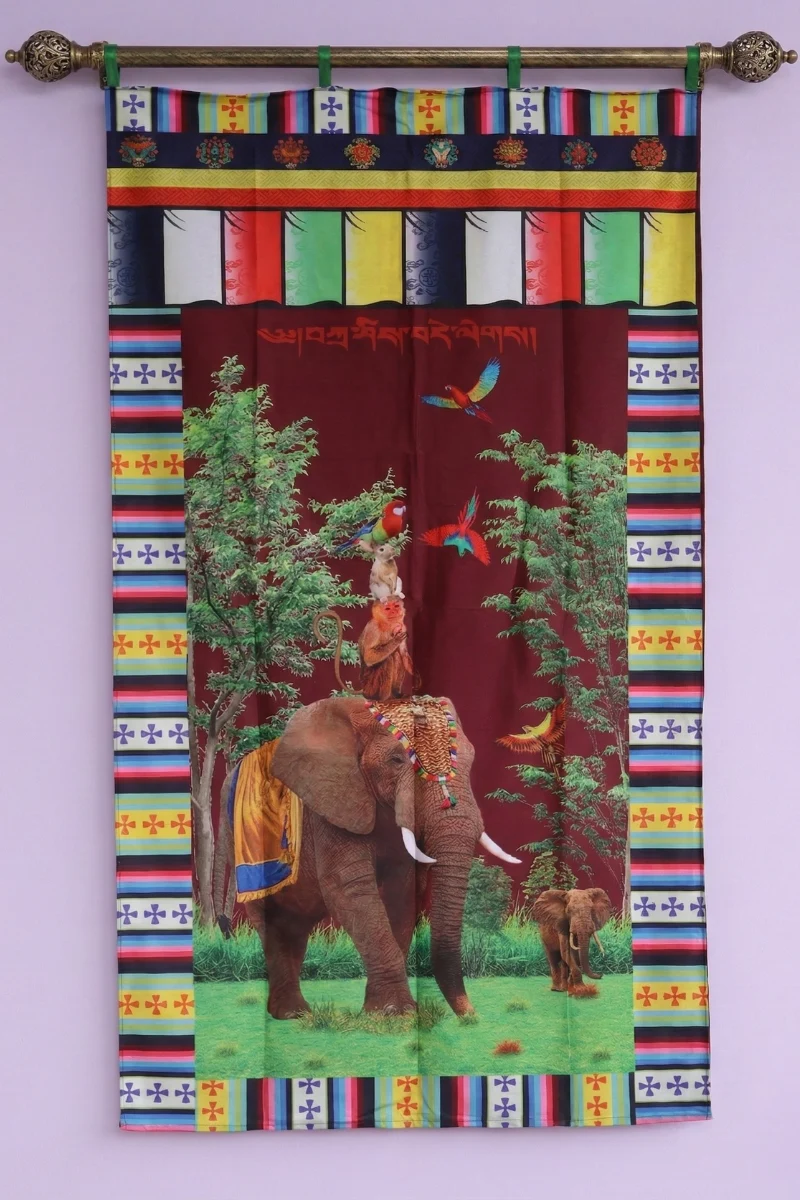
In Tibetan Buddhist households and monasteries across Tibet, Nepal, and Bhutan, the door curtain — known as go-chor — functions as a threshold between the outer world and protected interior space. These fabric panels serve simultaneously as ritual boundaries and thermal regulators, filtering movement while affirming the sanctity of the room beyond. This maroon-ground design draws its palette from the deep crimson associated with Tibetan monastic life, situating it within a recognisable visual tradition that stretches from Lhasa monasteries to Himalayan village homes across Bhutan, Ladakh, and Sikkim.
The central panel carries a photographic-quality digital print of a caparisoned elephant — a creature of wisdom, strength, and royal dignity across South and Southeast Asian Buddhist iconography — set within a lush forest scene with two macaque monkeys and three macaw parrots in full colour. A line of Uchen Tibetan script in orange-red text runs across the upper portion of the central panel. The border on all four sides follows the pangden stripe convention: horizontal bands in the five auspicious colours associated with Tibetan prayer flags — blue, white, red, green, and yellow — with four-pointed star motifs at intervals. The top edge carries a header band of traditional auspicious symbols above a row of five coloured panels replicating wind-horse prayer flag blocks.
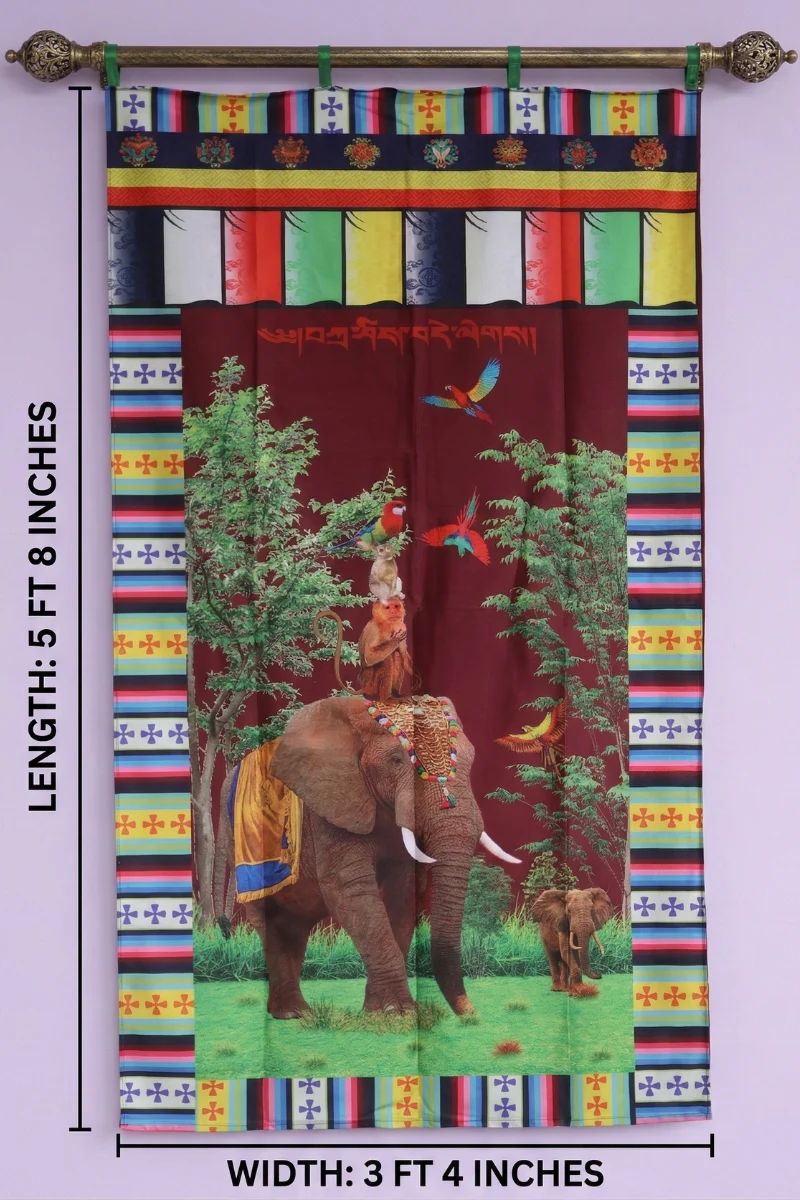
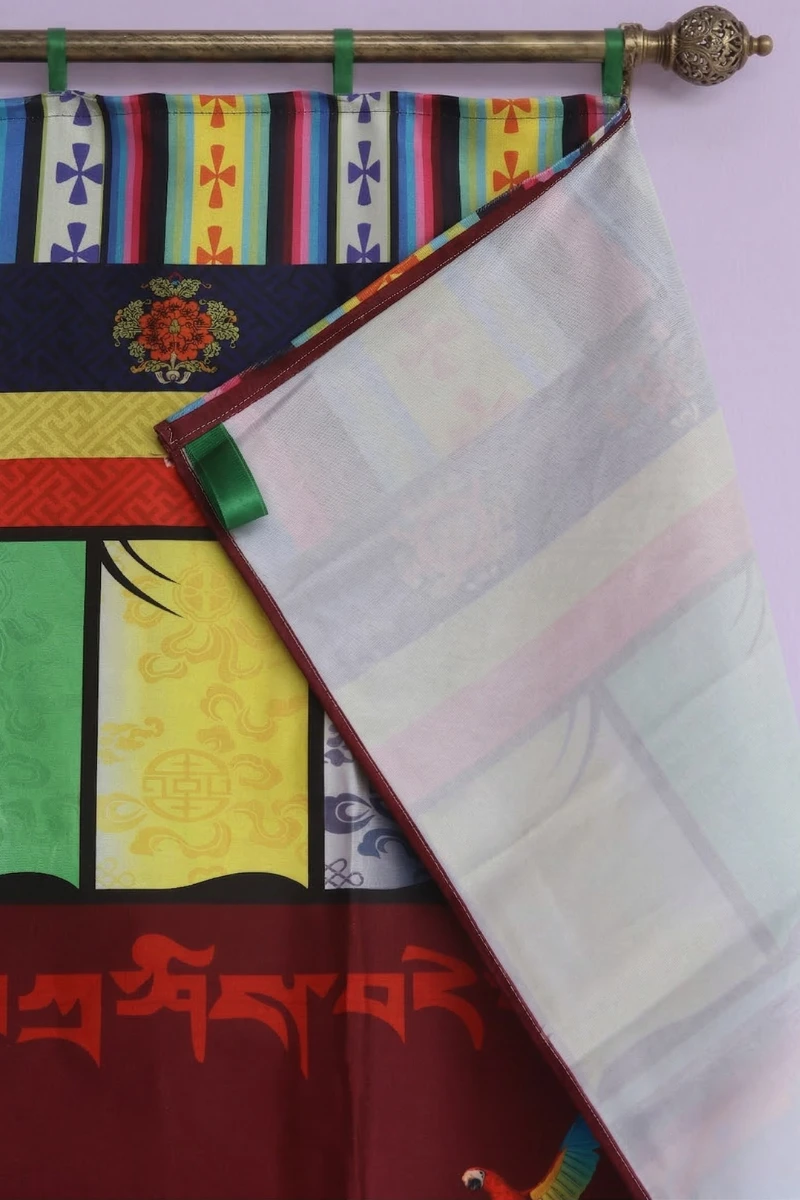
At 172 × 102 cm, this panel is sized for a standard door frame and hangs from three sewn fabric loops without specialist fittings. It suits a puja room entrance, a meditation room doorway, or a living space wall. Each piece is sourced directly from artisan workshops in the Eastern Himalayan hills and dispatched from Kalimpong, West Bengal.



Reviews
There are no reviews yet.