Description
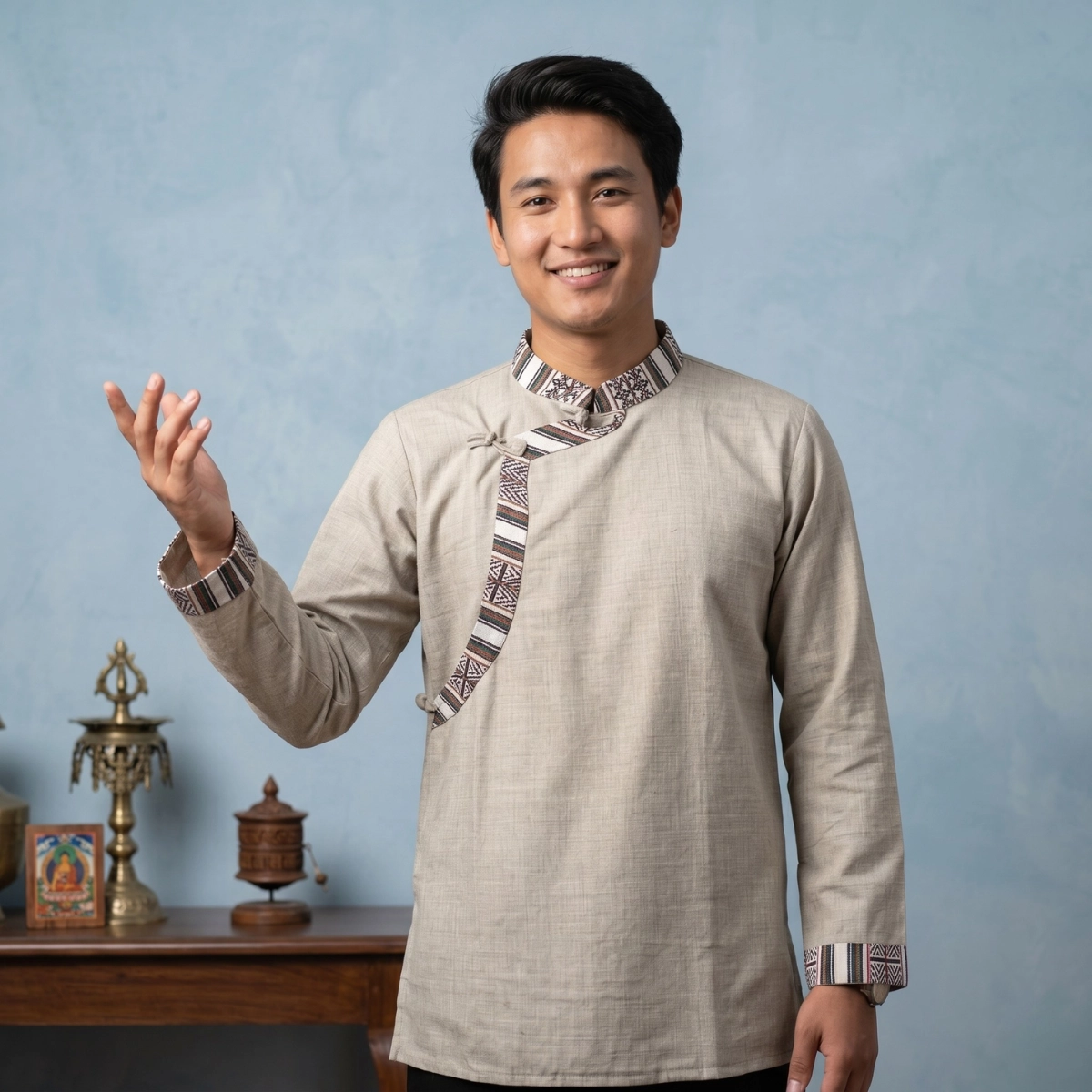
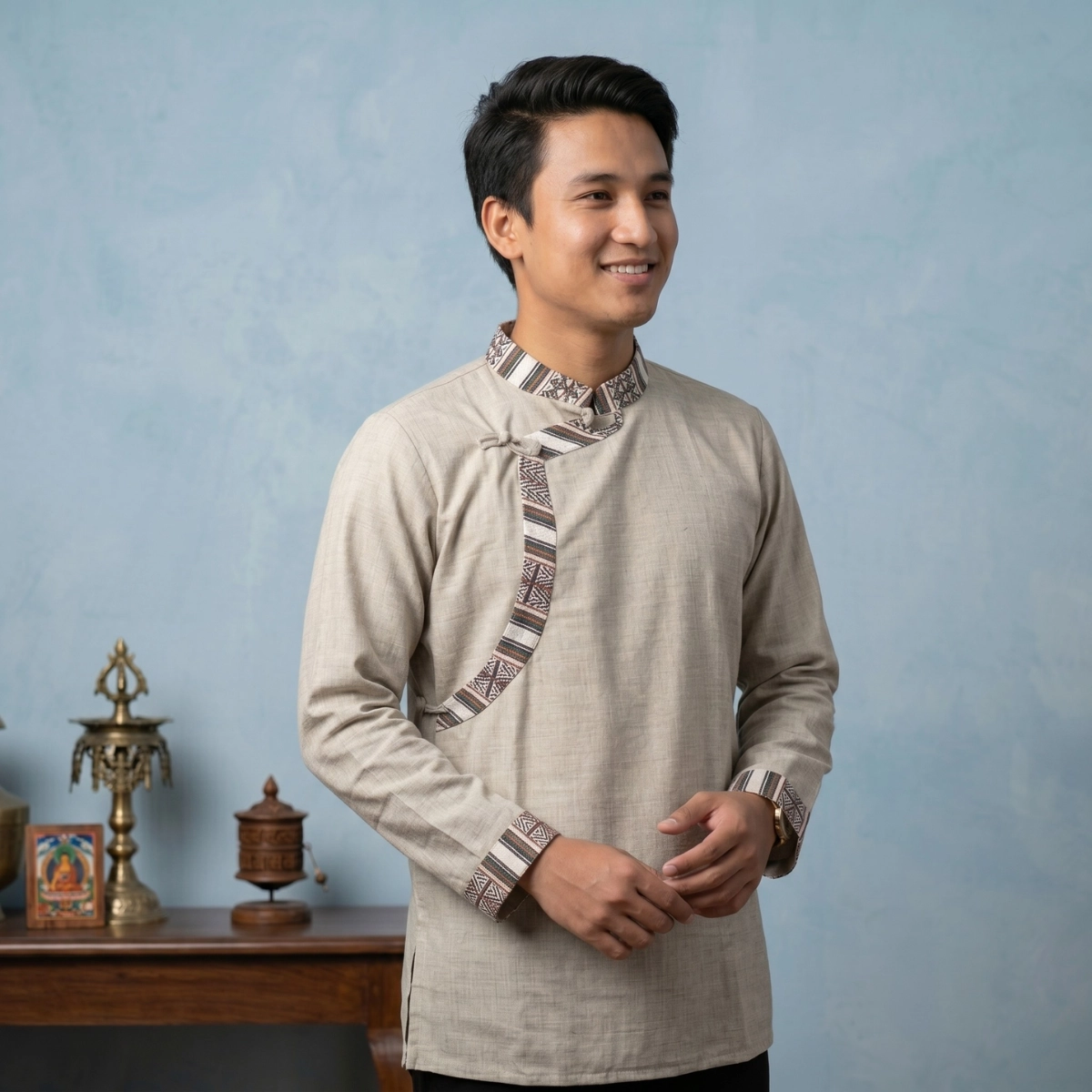
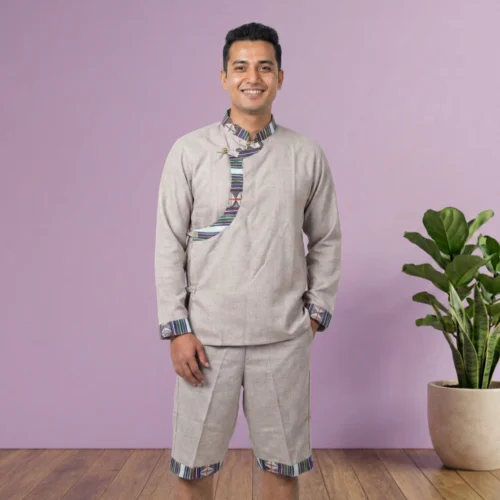
The Lepcha Khenja is a traditional jacket worn by men of the Lepcha (Rong) community — one of the indigenous peoples of the Darjeeling hills, Kalimpong, and Sikkim. It is the garment of cultural ceremony, brought out for Tendong Lho Rum Faat, Nambun harvest gatherings, and the formal social occasions that define Lepcha community life. To wear a Khenja is to carry a specific cultural identity — not a costume, but a living garment.
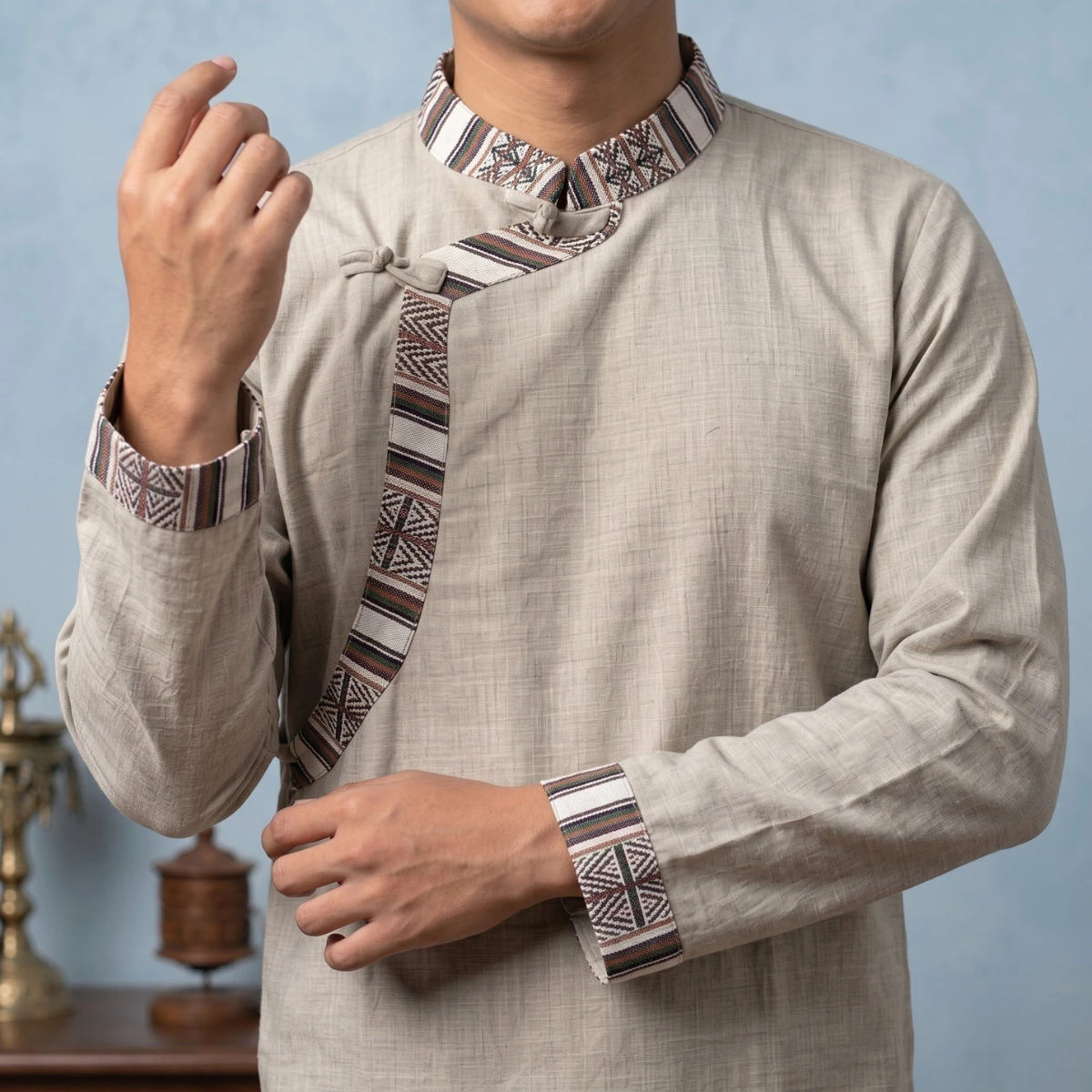
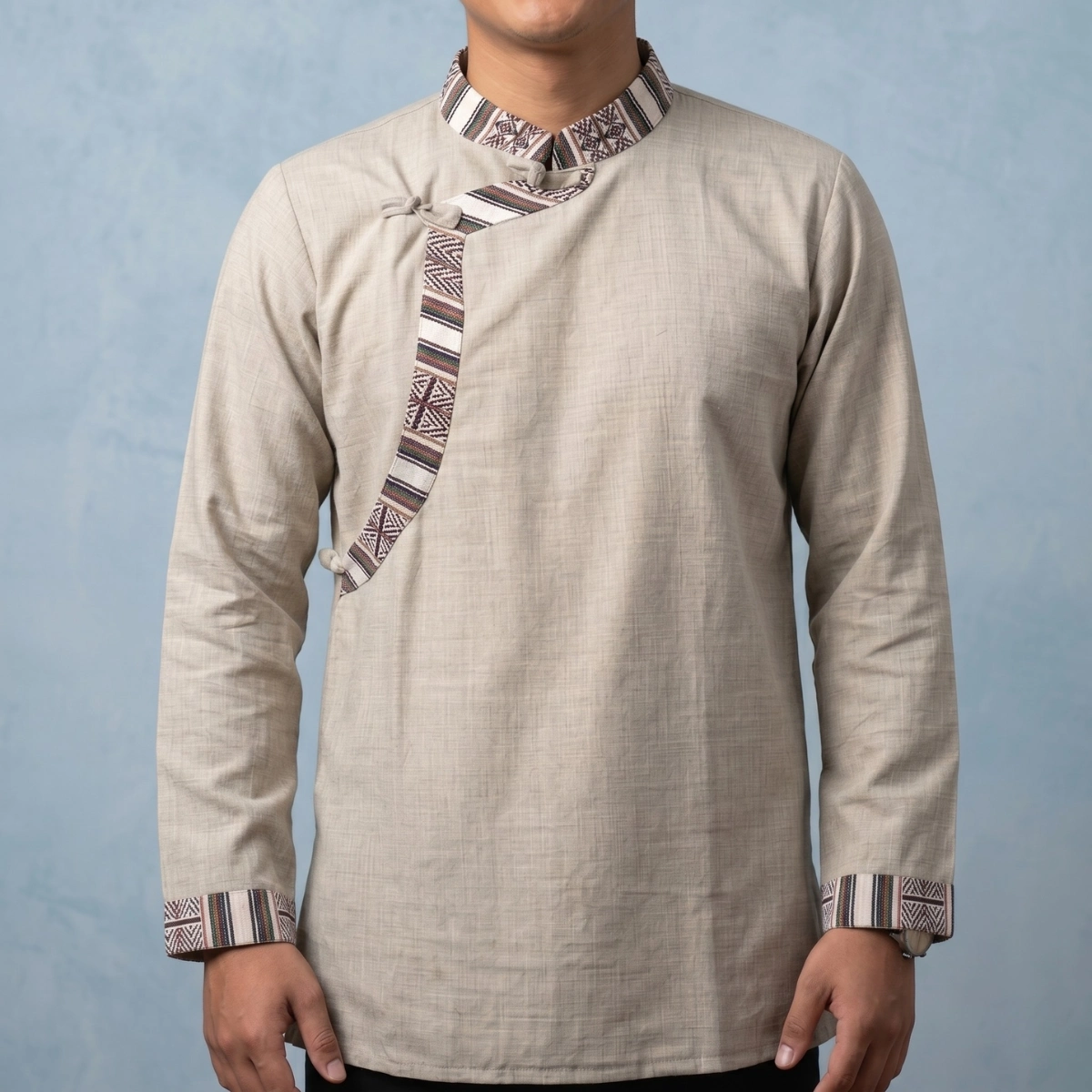
This version is cut from plain-weave cotton in a natural oatmeal-grey tone — light on the body and suited to the climate of the Darjeeling hills. The defining construction element is the diagonal overlap closure running from the right collar across the chest to the left side, secured with two brass ball-button toggles. A woven geometric trim ribbon featuring triangles, Ramdang diamond cross-hatch patterns, and horizontal stripe bands in black, white, terracotta, and forest green lines the mandarin collar, traces the full diagonal closure band, and finishes each cuff — the trim is the garment’s cultural signature.
The Khenja is worn over a plain inner layer, keeping the jacket as the visual focus. From Kalimpong, where this garment has been worn across generations, we make it possible for Lepcha families and cultural enthusiasts worldwide to wear this piece with the confidence that it was made correctly.


Tenzin Lepcha –
The diagonal overlap closure with the brass ball-button toggles is exactly how a traditional Khenja should be constructed — I’ve seen older versions in my family and this follows the same form precisely. Wore it for Tendong Lho Rum Faat and felt it was the right garment for the occasion.
Dawa Tshering –
The Ramdang-patterned trim at the collar, closure band, and cuffs is what makes this jacket culturally distinct — the diamond cross-hatch geometry is specific to Lepcha weave tradition and this version renders it clearly and correctly.
Pemba Namgyal –
The oatmeal-grey cotton is lighter in weight than I expected — it wears comfortably but may not be warm enough.
Rinchen Dorji –
The two brass ball-button toggles are solid and well-attached — they held through an entire day of ceremony without loosening. The brass colour reads well against the oatmeal-grey cotton base and against the multicolour trim.
Sonam Gurung –
Having a Lepcha Khenja available to order from Kalimpong itself is significant — this is not a generic hill jacket but a garment made with clear understanding of the Rong community’s cultural context. The fit came back accurate to the measurements provided.
Dorje Tshering –
The woven geometric trim ribbon is the heart of this jacket — the combination of black, white, terracotta, and forest green in the Ramdang diamond pattern is visually striking and culturally grounded. Every element of the trim placement is correct.
Karma Lepcha –
Wore this for Nambun harvest ceremony alongside my father who wore the same Khenja design worn by his own father — the construction form has been maintained accurately enough that the two garments read as continuous tradition rather than a new version and an old one.
Gyatso Bhutia –
The mandarin collar sits slightly higher than I prefer. The trim workmanship at the collar is very detailed and the brass toggles are good quality.
Passang Rai –
The diagonal closure band traced with the full Ramdang trim ribbon is the defining visual element of this jacket and it is executed cleanly — the trim lies flat without puckering and the geometry is consistent across the full length of the closure.
Lhendup Dorji –
The oatmeal-grey cotton base is an authentic choice for the Lepcha Khenja — the natural undyed tone is historically correct and lets the multicolour woven trim carry the visual weight of the garment as it should.
Nimdup Lepcha –
This is the correct garment form for Tendong Lho Rum Faat — the asymmetric diagonal closure, the mandarin collar, the Ramdang trim, the brass toggles. Nothing has been simplified or substituted for convenience.
Tashi Wangchuk –
The tailor-made process meant the jacket arrived fitting correctly across the shoulders and through the chest — important for a garment worn at formal Lepcha cultural occasions where a poor fit would be immediately noticeable.
Dichen Wangmo –
Delivery took about 10 days. The jacket itself is made correctly and fits as expected.
Chewang Namgyal –
The woven trim ribbon at the cuffs finishes the jacket detail correctly — a lot of contemporary versions stop the decorative trim at the collar and closure band and skip the cuffs, which changes the visual completeness of the garment. This version includes all three correctly.
Nima Tshering –
The plain-weave cotton is breathable for a hill climate — I wore this through an outdoor Nambun gathering and the fabric managed the temperature well throughout. The diagonal closure keeps the front secure without feeling restrictive.
Lobsang Lepcha –
For Lepcha men living in the diaspora in Sikkim and Darjeeling, finding a correctly made Khenja outside of specialist tailors has historically been difficult. This jacket resolves that — it is made by people who know what this garment is.
Gyalpo Bhutia –
The Ramdang diamond cross-hatch pattern in the trim ribbon is geometrically precise — the repeat is even, the colours are clean, and the pattern reads clearly against the oatmeal-grey cotton. That visual clarity is what makes the jacket work at ceremony.
Tsering Dorji –
The brass ball-button toggles are functional but slightly smaller than I expected— they hold the closure securely but a slightly larger toggle would have given the fastening more visual presence. Small detail but noticeable.
Pema Wangchuk –
The mandarin collar with Ramdang trim is tight enough in its construction to hold shape through hours of wear without wilting or folding — important for a jacket worn at formal community occasions where appearance is held to a considered standard.
Sangay Lepcha –
My son wore this for his first Tendong Lho Rum Faat and my mother — who grew up in a Lepcha household in Kalimpong — said the jacket was made correctly. That is the most meaningful review I can give.
Ugyen Tshering –
The forest green in the woven trim ribbon is a deep, saturated tone that holds its colour well — after washing per the cold hand-wash instruction both the cotton base and the trim colours were unchanged.
Rinzin Dorji –
The diagonal overlap closure runs cleanly from the right collar across to the left side without pulling or bunching at the transition — the construction at that intersection is neat and holds correctly under the brass toggles.
Sonam Lepcha –
The cotton is comfortable for warm-weather festivals but I would have preferred the option of a slightly heavier fabric weight for cooler-seasons.
Phurba Namgyal –
The terracotta in the multicolour trim ribbon is warm and earthy against the oatmeal-grey cotton — the four-colour palette of black, white, terracotta, and forest green works together with the kind of considered restraint that traditional Lepcha woven patterns are known for.
Kinga Wangchuk –
Wore this to a community cultural programme in Gangtok alongside two other men from Kalimpong — the three Khenjas in the room were compared closely and this one was noted by elders as well-made and correctly formed. That kind of peer recognition matters.