Description
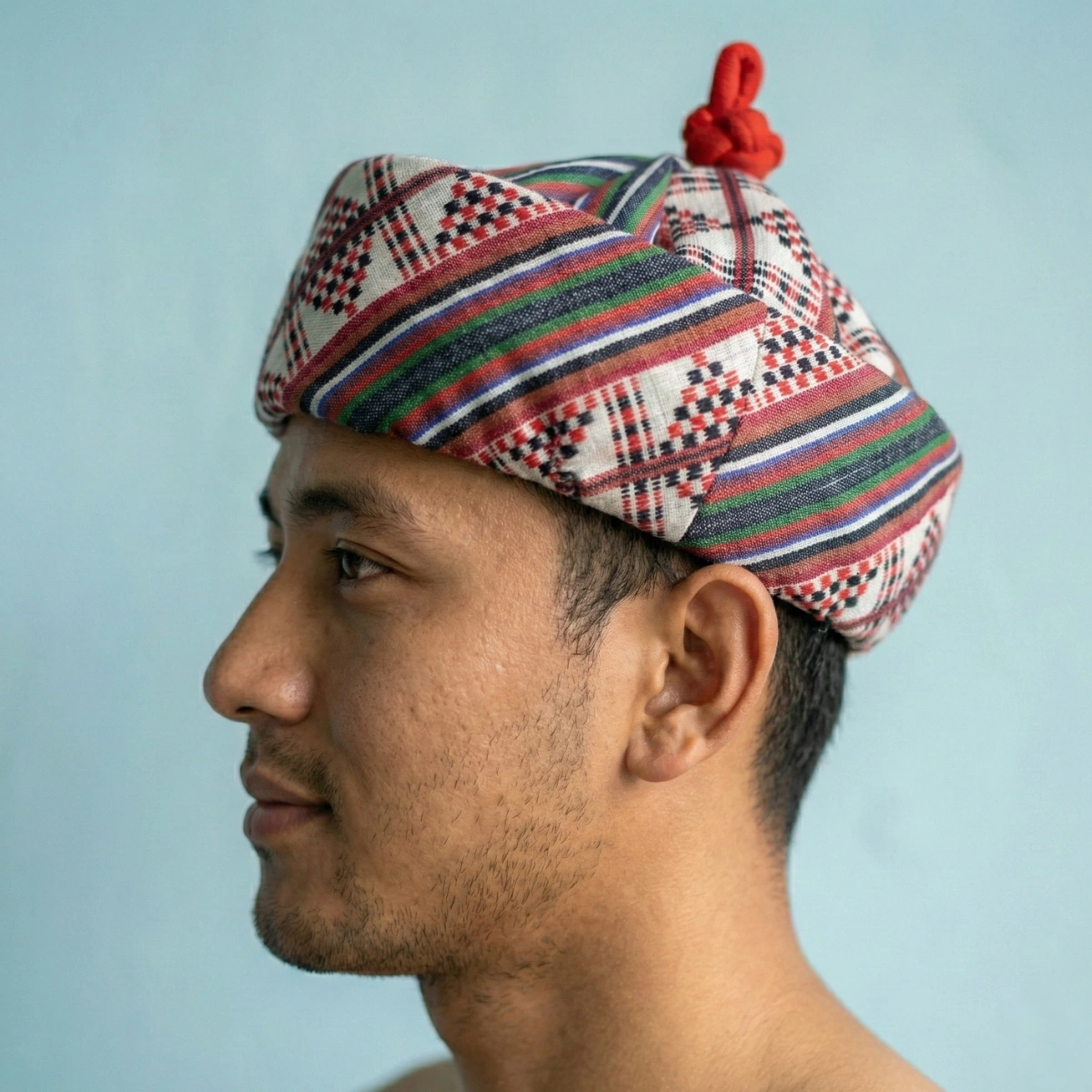
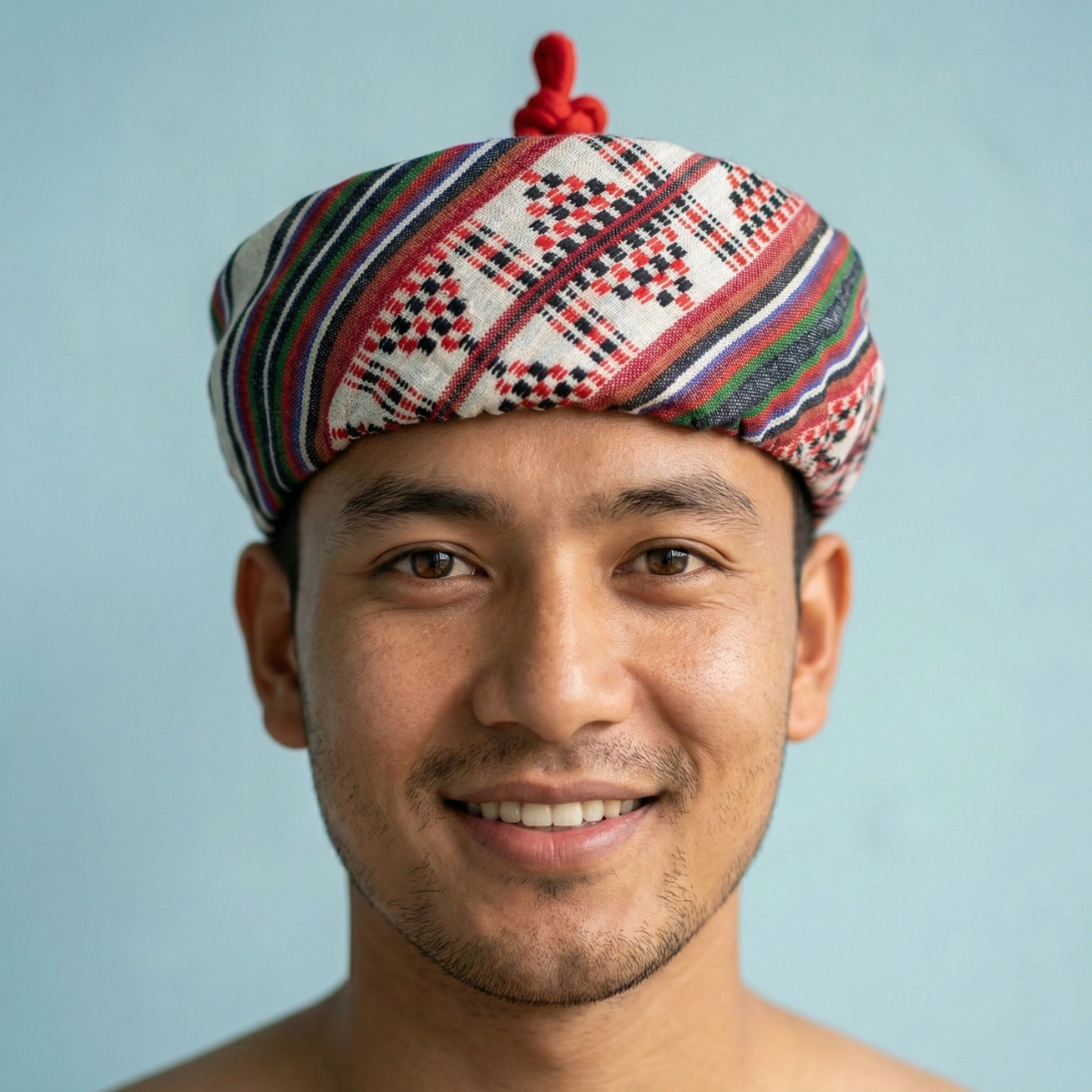
The Lepcha Topi is the traditional men’s headwear of the Rong people — the Lepcha community — indigenous to the Eastern Himalayan hills of Sikkim, Darjeeling, and Kalimpong. Worn as part of a complete traditional ensemble, the topi accompanies the Dumyan robe at Namsoong, Tendong Lho Rum Faat, and the social occasions that mark the rhythm of Lepcha cultural life.
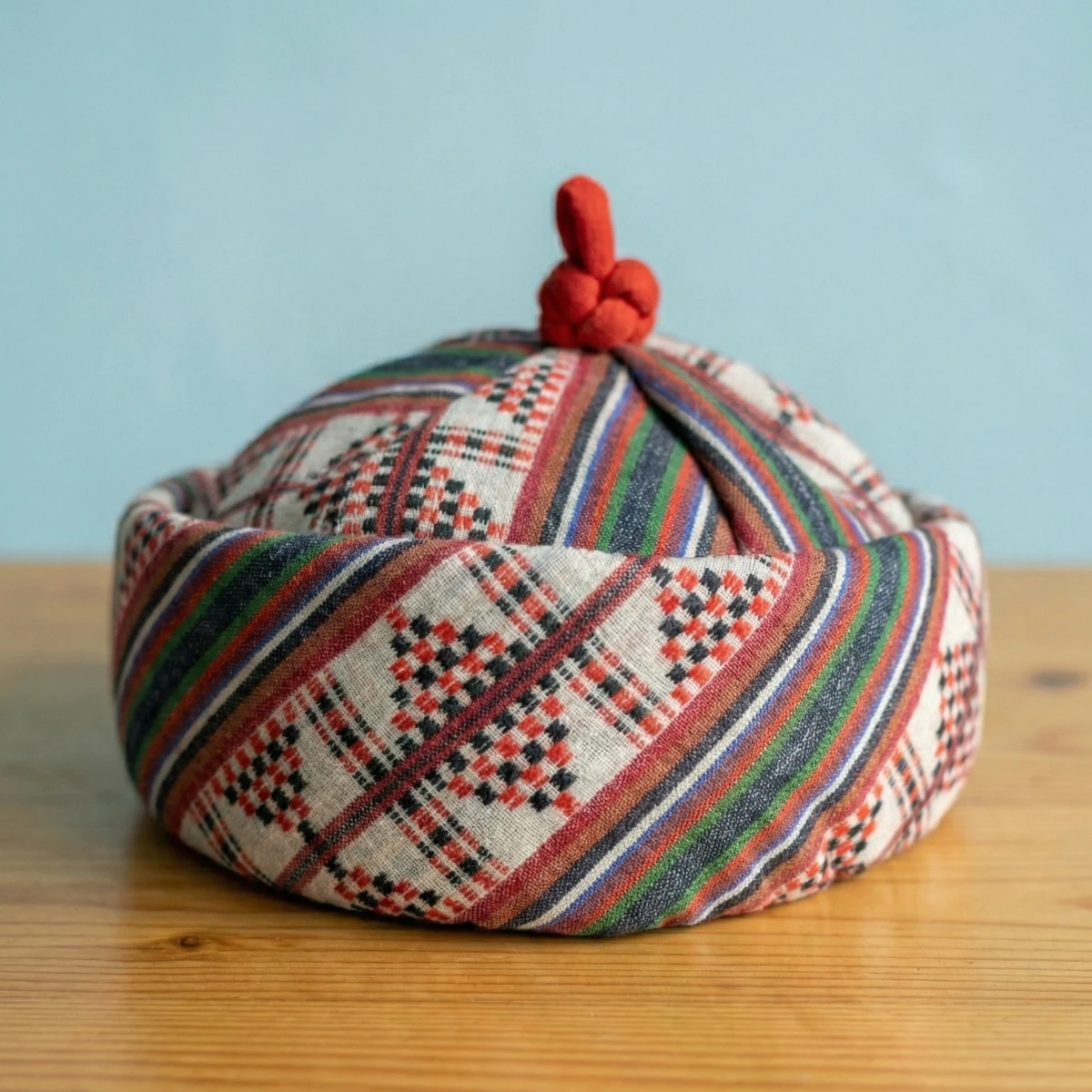
The BHUTIB Lepcha Topi is offered in two distinct styles. The fully woven patterned hat carries traditional interlocking geometric motifs — angular, repeating bands in ochre, maroon, cream, and black — running across the entire surface of the structured poly-cotton crown. The black velvet-rimmed variant retains the same woven crown but finishes the base with a clean velvet band, a contrast that frames the pattern and gives the hat a slightly more formal bearing.
Both styles hold their shape through extended wear while staying light against the head. Lepcha men wear the topi as part of a full traditional dress — paired with the Dumyan — at weddings, festivals, and any occasion where community identity is worn with intention.


Sabok Lepcha –
The interlocking geometric bands in ochre, maroon, and cream are exactly as they appear in the Lepcha weaving tradition — this is not a printed imitation, you can feel the woven structure when you hold it. Wore it for Namsoong and it completed the Dumyan ensemble perfectly.
Tenzing Lepcha –
The velvet-rimmed variant has a noticeably more formal bearing than the fully patterned version — the black band at the base really does frame the crown and lift the overall look for weddings and receptions.
Chewang Lepcha –
Bought the fully patterned style for Tendong Lho Rum Faat and the geometric motifs are sharp and well-defined across the crown. Holds its structure through a full day of outdoor ceremony without losing shape.
Pemba Tamsang –
The poly-cotton blend is lighter than I expected — sits comfortably on the head for extended wear without becoming hot or uncomfortable even indoors. The pattern is vibrant and clearly Lepcha in its motif vocabulary.
Lyang Lepcha –
My grandfather was moved when he saw this — he said the geometric pattern matches the traditional Lepcha weave he grew up seeing. For a community whose headwear is rarely found outside Kalimpong and Sikkim, finding this online matters.
Rinchen Tamsang –
Ordered the velvet-rimmed version for my son’s first Namsoong ceremony. The hat arrived beautifully finished — the velvet band is cleanly sewn with no fraying and the contrast against the woven crown is exactly what makes the formal variant worth choosing.
Sonam Tamsang –
The crown holds its shape even after being packed in a bag for travel — I carried it to a cultural programme in Gangtok and it arrived without needing any reshaping. That kind of structural integrity matters for traditional headwear.
Gyalpo Lepcha –
The angular repeating bands running across the full crown are what distinguish the Lepcha Topi visually from other hill community headwear — this version captures that geometric vocabulary accurately and wears it with confidence.
Mingma Tamsang –
The fully woven patterned variant has more visual complexity than the velvet-rimmed version — better for cultural events where the topi is meant to be seen as part of the full Lepcha ensemble. Good quality for the price.
Palden Lepcha –
Wore the velvet-rimmed version to a Rong community gathering in Darjeeling. Several elder community members commented on the quality of the weave — that kind of approval from people who know traditional Lepcha dress well means something.
Yangchen Tamsang –
Bought this as a gift and the recipient found the sizing slightly tight at the crown — he has a larger head than average and the standard measurement wasn’t quite enough. Otherwise the woven pattern quality is genuinely good.
Chiring Lepcha –
The maroon and cream tones in the geometric pattern are clean and well-saturated — no fading or bleeding between colours even on close inspection. This level of weave quality at this price is rare for community-specific traditional headwear.
Tshering Lepcha –
Finding a properly made Lepcha Topi that isn’t sourced from a tourist market stall is genuinely difficult. This one is well-constructed, uses the right geometric motifs, and sits properly on the head — exactly what Namsoong and Tendong Lho Rum Faat calls for.
Norbu Tamsang –
The black velvet band on the rimmed version has a clean, tight stitch at both edges — no loose thread or puckering where it meets the woven crown. Small details like this are what separate careful craftsmanship from rushed production.
Passang Lepcha –
The structured poly-cotton crown keeps the hat from collapsing flat when set down — it holds its form on a shelf the way a properly made traditional topi should. Wore it for a community wedding in Kalimpong without any issues.
Karma Tamsang –
I would have appreciated a size chart with head circumference measurements.
Gyamtso Lepcha –
The angular geometric bands sit flat and even across the crown — no warping or uneven tension in the weave. That consistency across the full surface of the hat is what gives it the clean, structured look that the Lepcha Topi silhouette requires.
Jigme Tamsang –
Bought both variants — the fully patterned for cultural ceremonies and the velvet-rimmed for formal family events. The quality is consistent across both and the patterned one in particular draws comment from community members who recognise the traditional motifs.
Rigzin Lepcha –
My uncle saw this and said the geometric pattern is the closest he has seen to the traditional Lepcha weave outside of pieces made in the community itself. For diaspora Lepcha families who can’t access traditional artisans easily, this is genuinely meaningful.
Dichen Tamsang –
The hat is light enough to wear comfortably through a full ceremony day — I’ve worn heavier cotton versions that became uncomfortable by mid-afternoon. The poly-cotton blend here strikes a better balance between structure and wearability.
Nima Lepcha –
The ochre, maroon, and black colour combination in the patterned crown is very distinctly Lepcha — it’s a palette that carries cultural meaning and this version renders it clearly without looking garish or oversaturated.
Sakyong Tamsang –
Wore this to Tendong Lho Rum Faat paired with my Dumyan robe and the ensemble looked complete in a way it never has with mass-produced headwear alternatives. The geometric motifs in the crown are the right ones — recognisably Lepcha to anyone who knows.