Description
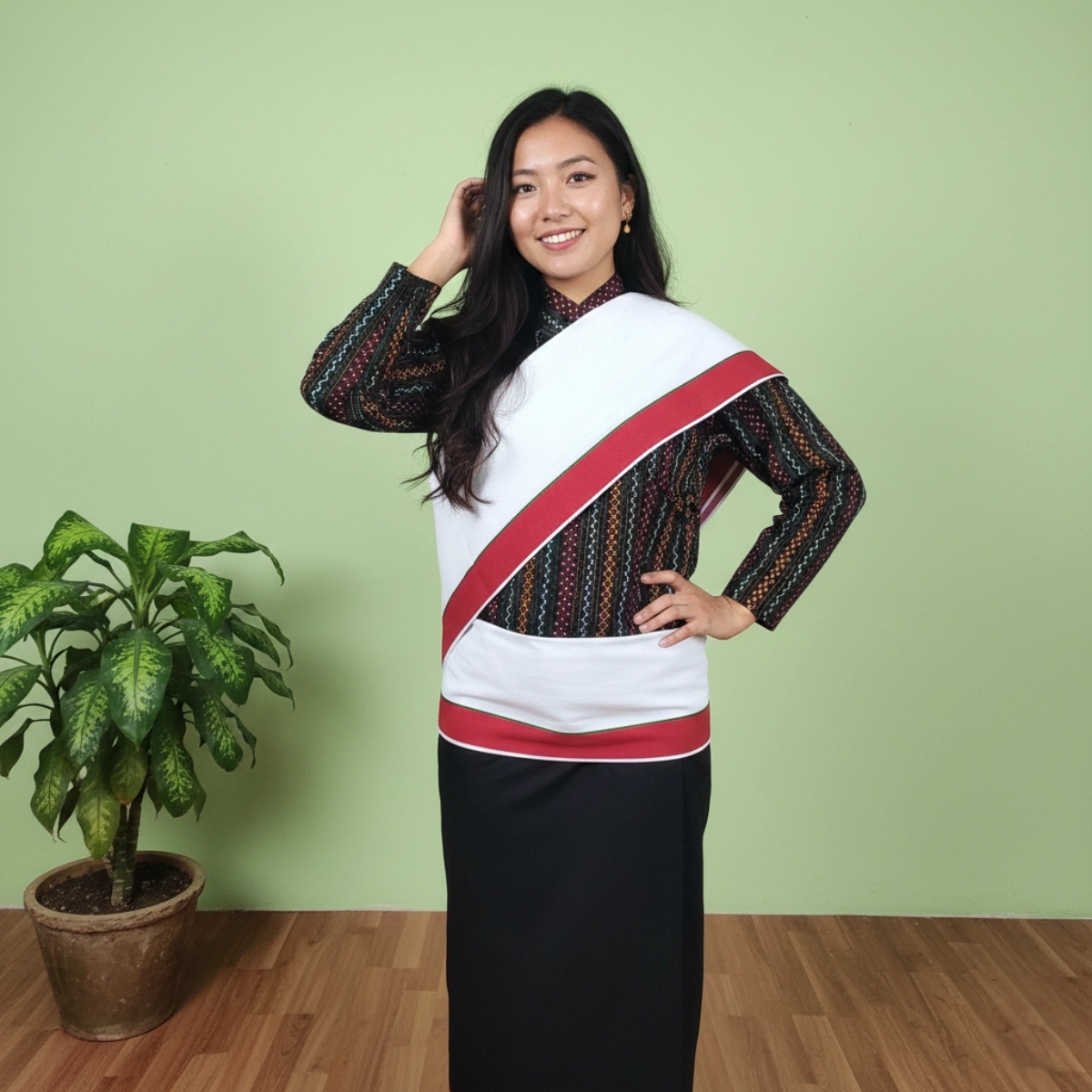
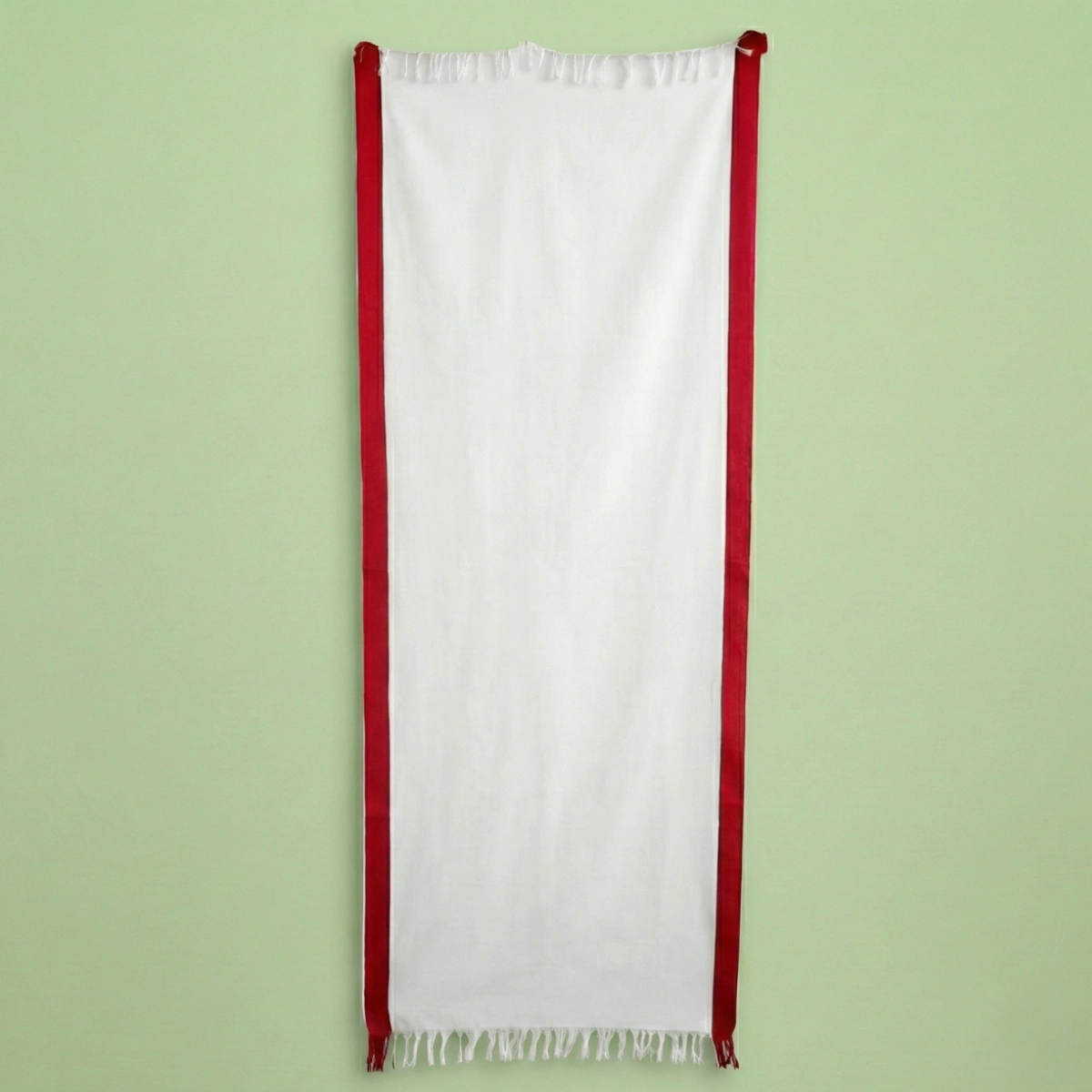
The Newari shawl is a ceremonial drape worn by Newar women of the Kathmandu Valley tradition — present at Indra Jatra, Swet Machendranath processions, and family rites such as the Ihi ceremony, where cultural dress marks community identity as much as occasion. The white field and red border are not incidental choices: white carries ritual purity in Newari ceremonial, red signals auspiciousness, and the pairing has been held intact across generations of festival and rite.
This shawl is woven in 100% cotton, giving it a light, breathable hand that drapes across the shoulder without pulling or stiffening. The red border runs along both long edges as a clean, defined stripe — woven directly into the cloth rather than applied as surface trim, which preserves its geometry and durability through repeated wear and washing. The plain-weave construction keeps the fabric honest: cool against the skin, easy to fold, substantial enough to hold its drape across hours of ceremony without adjustment.
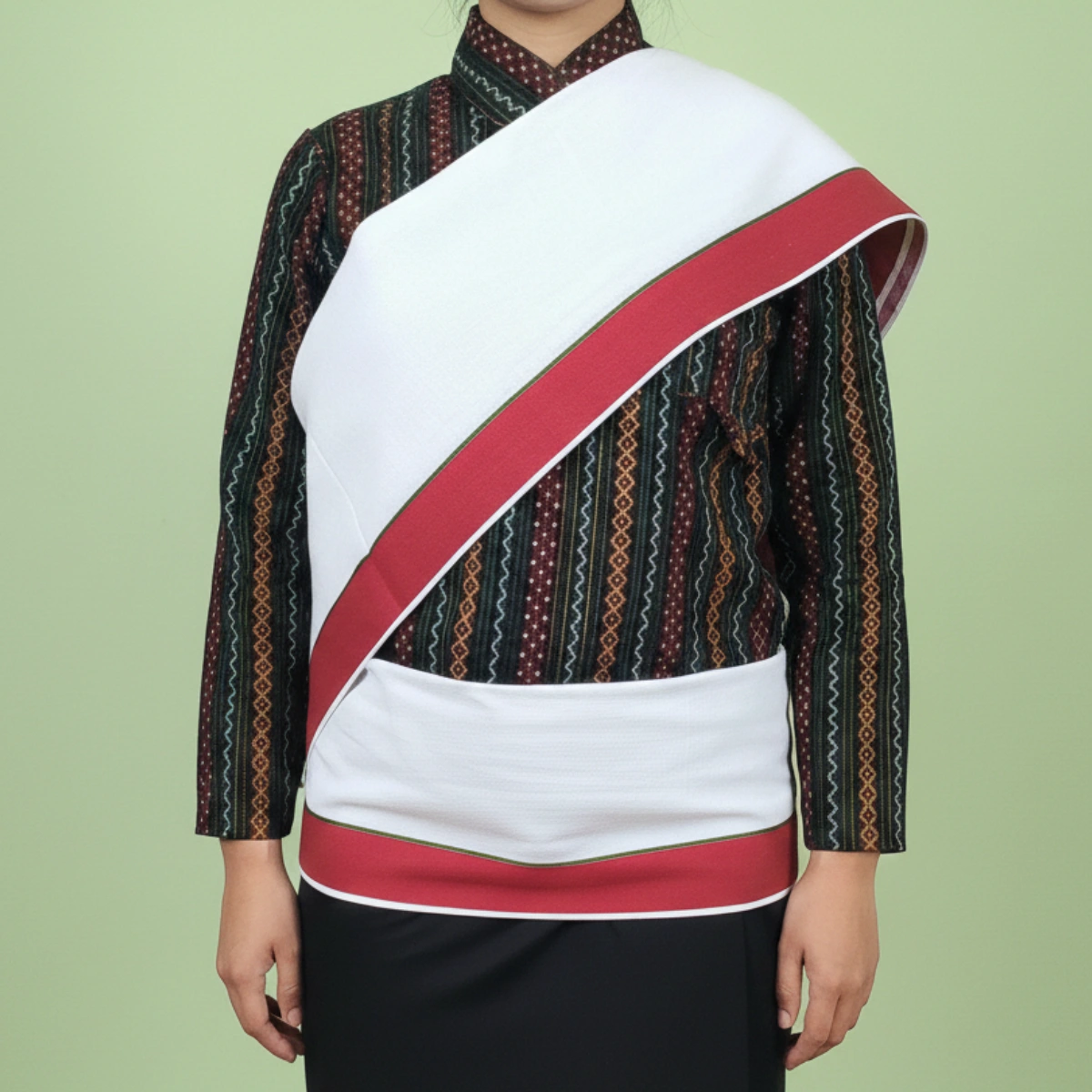
Newari women wear this shawl draped over the shoulder or across the upper body, most often alongside the Haku Patasi ensemble at festivals and cultural gatherings where dress carries intentional weight. From Kalimpong, where the Eastern Himalayan hills form a living crossroads of Nepali, Tibetan, and Bhutia cultural life, BHUTIB ensures every garment leaves with the care and accuracy the tradition deserves.


Sunita Shrestha –
The red border is woven directly into the cotton — not applied on top — which means the stripe geometry is perfectly clean and will stay that way through years of washing. Wore this for Indra Jatra alongside my Haku Patasi and it completed the ensemble entirely.
Anita Maharjan –
The 100% cotton is noticeably breathable for a shawl — draped across the shoulder through an entire outdoor ceremony and it never felt heavy or hot. The white field is genuinely clean and bright, not off-white or yellowed.
Bina Tuladhar –
The shawl is slightly shorter in length than I expected. Quality of the fabric and border weave is otherwise very good.
Kopila Rajbhandari –
The red stripe border on both long edges is the defining detail — clean, even width, and woven in a red that is deep and saturated without bleeding into the white field at all. After one hand wash both colours held completely.
Mina Amatya –
Wore this for Swet Machendranath and my mother commented that it looked exactly like the shawls she grew up seeing at Newari ceremonies in Kathmandu. For diaspora families in Darjeeling and Sikkim, that kind of cultural accuracy is hard to find.
Roshani Shrestha –
The plain-weave construction is honest and understated — no extra texture or sheen, just clean cotton that drapes and folds as it should. The simplicity is what makes it work for Newari ceremonial occasions where restraint is culturally correct.
Gita Joshi –
My grandmother wore this to the Ihi ceremony for my niece and she said it felt like the shawls from her own childhood in Nepal. The white and red pairing is not decorative — it carries real ceremonial meaning and this version gets it right.
Sujata Maharjan –
The cotton is light — perhaps slightly more so than expected for a shawl. It stays in place well enough but a slightly heavier weave would have given it more presence.
Pratibha Tuladhar –
The red border width is consistent all the way along both edges — no narrowing or wavering where the border meets the field. That weave consistency is what makes the shawl look intentional and culturally considered rather than approximate.
Nirmala Shrestha –
Bought this for a Newari family ceremony in Kalimpong — the measurement confirmation process meant it arrived at the right dimensions for the occasion. The cotton is soft and cool against the skin even worn through a long indoor gathering.
Sarika Rajbhandari –
The pairing of white field and red border is so specifically Newari that wearing it immediately signals community identity at any cultural gathering. The weave renders that visual language clearly and correctly.
Kabita Amatya –
The shawl folds flat without creasing permanently — important for a ceremonial piece that may be stored between festival uses for months at a time. The 100% cotton maintains its shape through folding and unfolding without needing ironing every time.
Puja Maharjan –
Delivery took about ten days which was slightly longer than I anticipated. The shawl itself is well made and culturally accurate. Quality is not the issue — just the lead time.
Sabina Tuladhar –
The hand-loom plain-weave gives this shawl a texture and weight that machine-woven cotton simply cannot replicate — you feel the difference when you hold it. Wore it draped over one shoulder for a cultural programme and the drape was exactly right.
Durga Shrestha –
The red border holds its colour after washing — no fading or bleeding into the white field, which was my main concern before buying. The cotton washes easily and dries quickly, practical details that matter for a ceremonial piece used seasonally.
Menuka Joshi –
This shawl reads as ceremonially correct for Newari occasions because the white and red are not just colours here — they carry the ritual weight of purity and auspiciousness that Newari women have worn to festivals for generations.
Rekha Maharjan –
The shawl drapes beautifully over the shoulder alongside a Haku Patasi — the cotton weight complements the heavier black wrap without pulling or bunching. The two pieces work together the way a traditional Newari ensemble should.
Sangita Amatya –
The red stripe is woven into both long edges symmetrically — the border width matches precisely on both sides, which gives the shawl a very balanced and considered appearance when worn draped or displayed.
Hira Tuladhar –
Bought this for my daughter’s Ihi ceremony in Sikkim and the shawl arrived looking exactly as it does in the photographs — the white is clean, the red is deep, and the woven border has a clarity that printed alternatives never achieve.
Bimala Shrestha –
Finding a traditional Newari shawl with a correctly woven red border — not printed, not appliqued — is genuinely difficult outside of specialist suppliers. This one is the real form and it shows in how the border sits and holds through wear.
Sunmaya –
The cotton breathes well under the warm conditions of outdoor summer festivals — I wore it draped for the full duration of Swet Machendranath and it stayed comfortable and in place without requiring adjustment throughout the procession.
Tara Maharjan –
The shawl is a single layer — which makes it very light and cool but also means it has less draping weight than I prefer for ceremonial wear. A double-layer option at the hem would have given it more presence and structure.
Kamala Tuladhar –
The woven red border geometry is completely clean — straight edges, even width, no distortion where the colour transitions from red to white. That kind of weave precision is what separates a properly made traditional shawl from a mass-produced approximation.
Manju Rajbhandari –
This shawl carries the right visual vocabulary for Newari ceremonial occasions — the white and red pairing is not just aesthetically pleasing but culturally intentional, and wearing it at Indra Jatra alongside community elders who recognise the tradition felt entirely right.