Free Shipping

Cash on Delivery

Free Shipping

Secure Payments

Cash On Delivery

Women’s Nepali Rai Shawl | Cotton

(25 customer reviews)

Original price was: ₹1,699.Current price is: ₹999. 41% OFF

-This Item Is Tailor-Made-
Same design, stitched to your exact size and fit. We will contact you to confirm measurements and any preferences.

Please enter PIN code to check delivery time & Cash on Delivery Availability

  • Available in two variants — plain-weave cotton (embroidered) and poly-cotton double-layer (solid, structured drape)
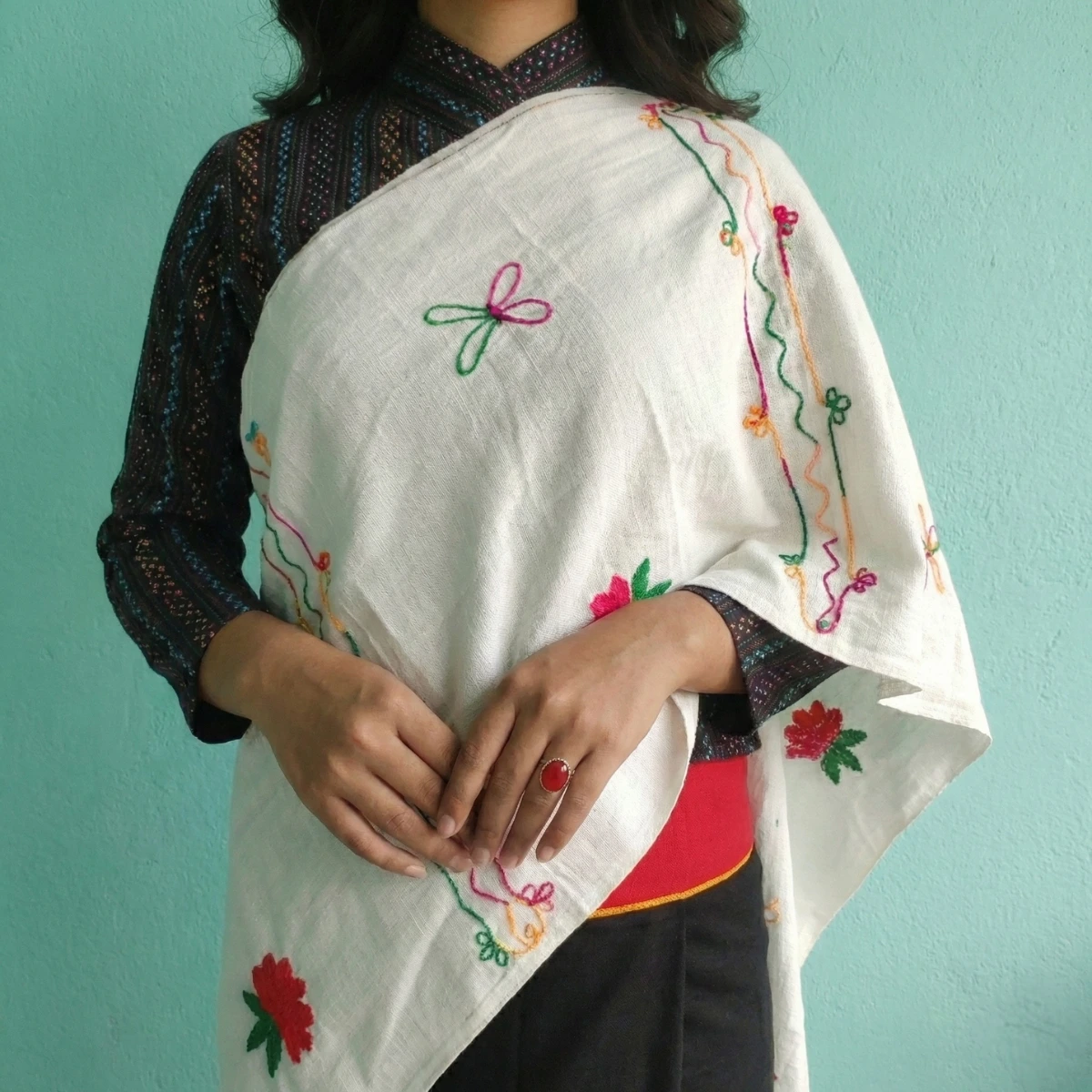
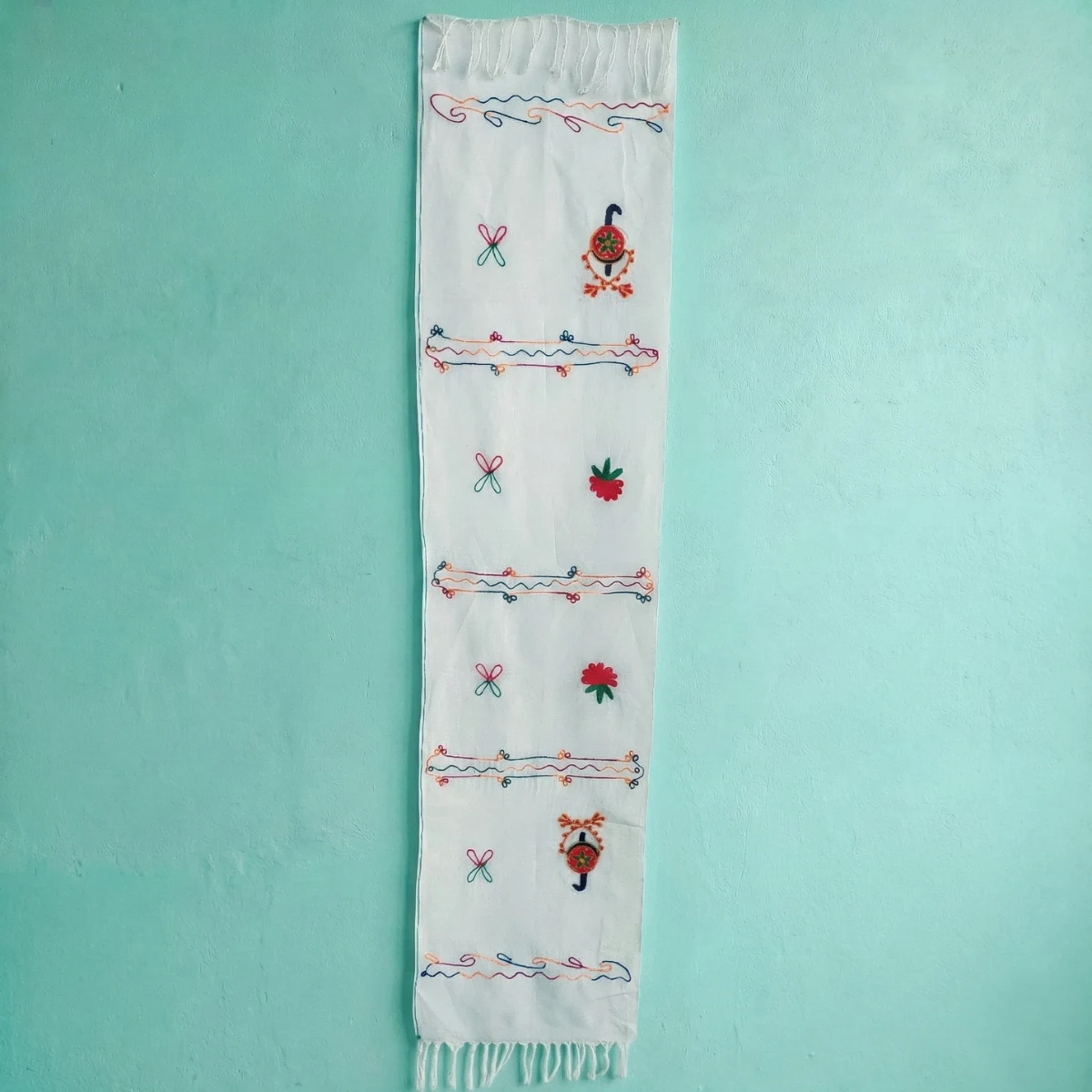
  • Embroidered cotton variant features hand-stitched floral and geometric border in multi-colour threadwork; poly-cotton variant finished with a clean double-layer hem — no embellishment, weight as design
  • Worn on Sakela festival (Ubhauli and Udhauli), community weddings, Dashain, and cultural gatherings

Description

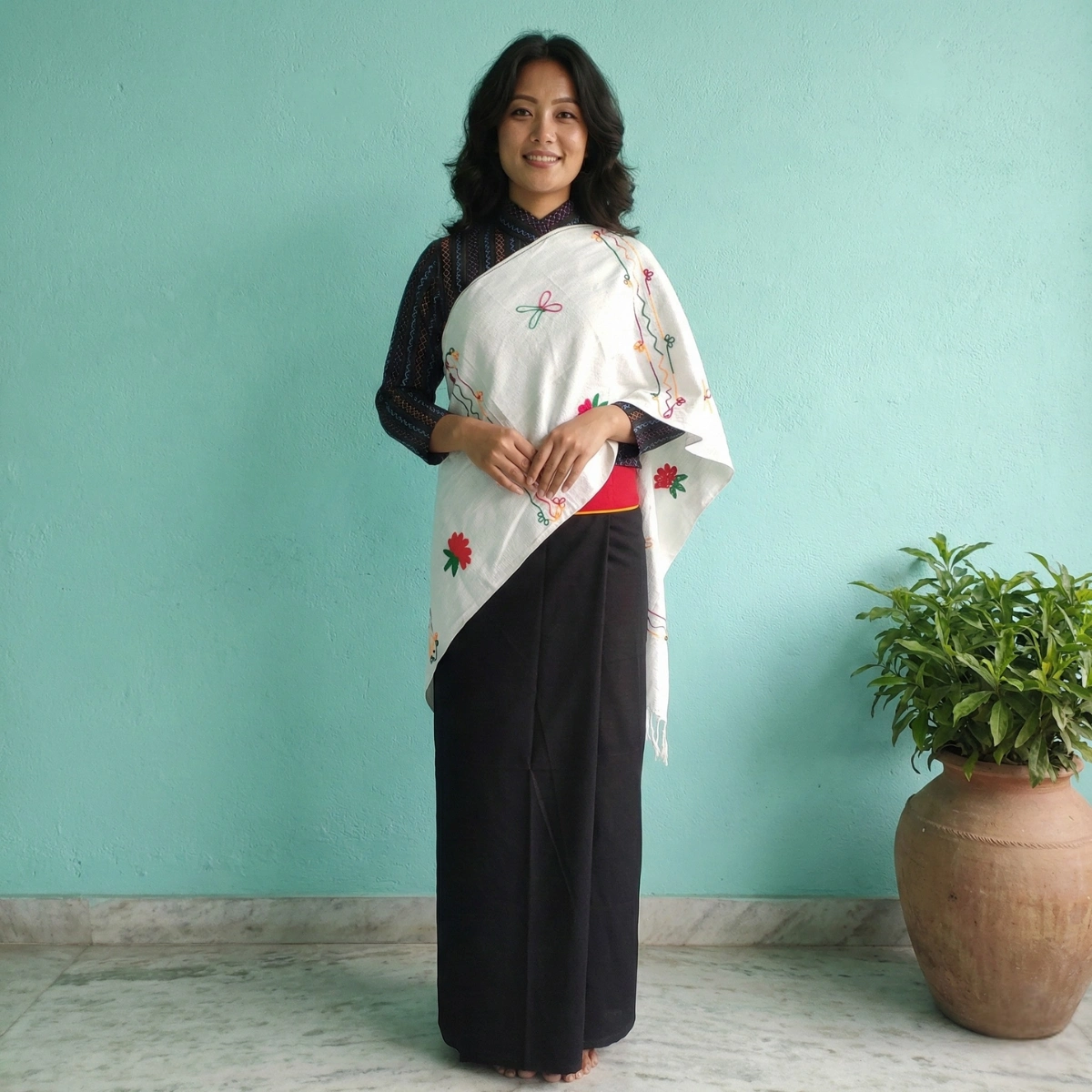
The shawl is a defining element of Rai women’s ceremonial dress — worn draped over the shoulder during Sakela, the Kirat Rai harvest festival celebrated twice each year, and at weddings, Dashain, and community events by Rai women across Nepal, Sikkim, Darjeeling, and the Kalimpong hills. It is not an accessory added to an outfit but a marker of community belonging, as recognisable within Rai cultural life as any other element of traditional dress.

BHUTIB offers this shawl in two distinct forms. The cotton variant is a plain-weave wrap in off-white with a densely embroidered border — floral clusters and geometric repeats worked in deep red, forest green, black, and gold thread along one long edge and both short ends, the stitching close and even. The poly-cotton variant is double-layered — the same fabric folded back on itself at the hem for a clean, weighted finish — in a deep maroon that carries a low sheen in light, the structure and colour doing the work that embroidery does in the other version.

25 reviews for Women’s Nepali Rai Shawl | Cotton

  1. Sunmaya Rai

    The embroidered border on the cotton variant is dense and close-stitched — deep red, forest green, and gold running the full length of one edge and both ends. Wore it draped over my shoulder for Sakela Ubhauli and it was the most culturally complete I have felt in years.

  2. Kamala Chamling

    The poly-cotton double-layer variant drapes beautifully — the maroon is deep and carries a low sheen in indoor lighting that makes it look far more premium than the price suggests. The weighted hem keeps it in place without pinning.

  3. Bimala Rai

    The cotton variant arrived slightly more ivory than off-white. The embroidery itself is lovely and closely worked, but the base colour difference was noticeable against my other traditional pieces.

  4. Purnima Bantawa

    The floral and geometric embroidery border is the kind of detailed needlework that takes time to appreciate fully — the closer you look, the more intricate the pattern becomes. Wore it for Dashain and it completed the traditional ensemble exactly right.

  5. Sarita Rai

    The double-layer hem on the poly-cotton version gives the shawl a clean, structured finish without needing any stiffening or interfacing. It drapes and holds its shape in a way that single-layer cotton simply cannot match.

  6. Manju Limbu

    Bought the embroidered cotton shawl for a Rai community wedding in Kalimpong — the gold threadwork in the border catches the light during outdoor ceremonies in a way that photographs beautifully. The stitching is very close and even throughout.

  7. Kopila Rai

    My grandmother recognised this shawl pattern immediately as Kirat Rai. For diaspora families who can’t easily access traditional Rai dress, being able to order something this culturally accurate is genuinely meaningful — she wore it for Udhauli with real pride.

  8. Deepa Chamling

    The embroidery thread on the border is slightly raised from the cotton base. The pattern itself is correct and the overall quality is decent, but a little more finishing attention would have made it perfect.

  9. Anita Rai

    The plain-weave cotton base is light and breathable — important for a shawl that will be worn draped over one shoulder through a long outdoor festival like Sakela. It does not bunch or slip, and the embroidery border lies completely flat.

  10. Renuka Bantawa

    The forest green and deep red combination in the embroidered border is very distinctly Rai in its colour vocabulary — not generic ethnic embroidery but something that reads as culturally specific to anyone who knows Kirat traditional dress.

  11. Nirmala Rai

    Ordered both variants to compare — the embroidered cotton is the right choice for Sakela and outdoor festivals, the poly-cotton maroon for indoor formal occasions. Both are well-made and the quality is consistent across the two.

  12. Tara Chamling

    The shawl arrived with the embroidery in perfect condition — no loose threads, no colour transfer onto the white base, everything exactly as it should be. The geometric repeats in the border are very precisely worked.

  13. Sushila Rai

    The poly-cotton variant is slightly thicker than I expected for a shawl — it drapes well but feels closer to a stole in weight. Good for cooler weather occasions though.

  14. Binita Bantawa

    Wore the embroidered cotton version for Sakela Ubhauli in Sikkim and the border embroidery held up through a full day of dancing and ceremony without any unravelling or distortion. That kind of construction durability matters for festival wear.

  15. Gita Rai

    The gold thread in the embroidered border doesn’t overpower the red and green — it sits within the pattern as an accent rather than dominating it, which keeps the overall look ceremonially restrained and culturally correct for Rai occasions.

  16. Chandrika Chamling

    The shawl drapes and stays in place when worn over one shoulder without constant readjustment — the weight of the cotton and the structure of the embroidered edge seem to anchor it naturally. Practical detail that matters for active festival wear.

  17. Laxmi Rai

    The deep maroon poly-cotton variant photographs extraordinarily well under warm indoor lighting — the low sheen gives it a richness that flat cotton cannot replicate. Wore it for a Dashain family gathering and it looked like a much more expensive piece.

  18. Pratima Bantawa

    The delivery took about ten days which was slightly longer. The shawl itself is well worth the wait — the embroidery is dense and accurate — but I ordered it close to Sakela and the timing was stressful.

  19. Rina Rai

    The off-white cotton base of the embroidered variant is clean and even — no inconsistencies in the weave and the surface is smooth enough to let the embroidery stand out clearly against it. A crisp, well-made piece.

  20. Sangita Chamling

    Bought this for my daughter’s first Sakela ceremony — she wore the embroidered version draped over a traditional top and the embroidery border was the detail that made the whole outfit look intentionally cultural rather than approximate.

  21. Rupa Rai

    The floral clusters in the embroidered border are worked with the kind of density that makes them look almost three-dimensional from a short distance. This is not a printed border or a machine-embroidered shortcut — the stitching is hand-worked and it shows.

  22. Meena Bantawa

    The poly-cotton double-layer variant holds its shape much better than a single-layer shawl when folded for storage — it doesn’t develop the creases that a light cotton piece would. Small practical advantage that matters for a garment worn at specific occasions.

  23. Sabita Rai

    The geometric repeats in the embroidered border are slightly irregular in two places along the long edge — most likely hand-embroidered variation rather than a defect.

  24. Kabita Chamling

    The embroidery colours are rich and saturated without bleeding into the white cotton base — after one gentle hand wash the colours held completely and the white remained clean. Good colour-fastness for embroidered traditional wear.

  25. Hira Rai

    The shawl is long enough to drape properly over one shoulder and still reach the waist on the other side — the dimensions are right for traditional Rai styling at Sakela and community events, not a shortened decorative version of the form.

Add a review

Your email address will not be published. Required fields are marked *