Free Shipping

Cash on Delivery

Free Shipping

Secure Payments

Cash On Delivery

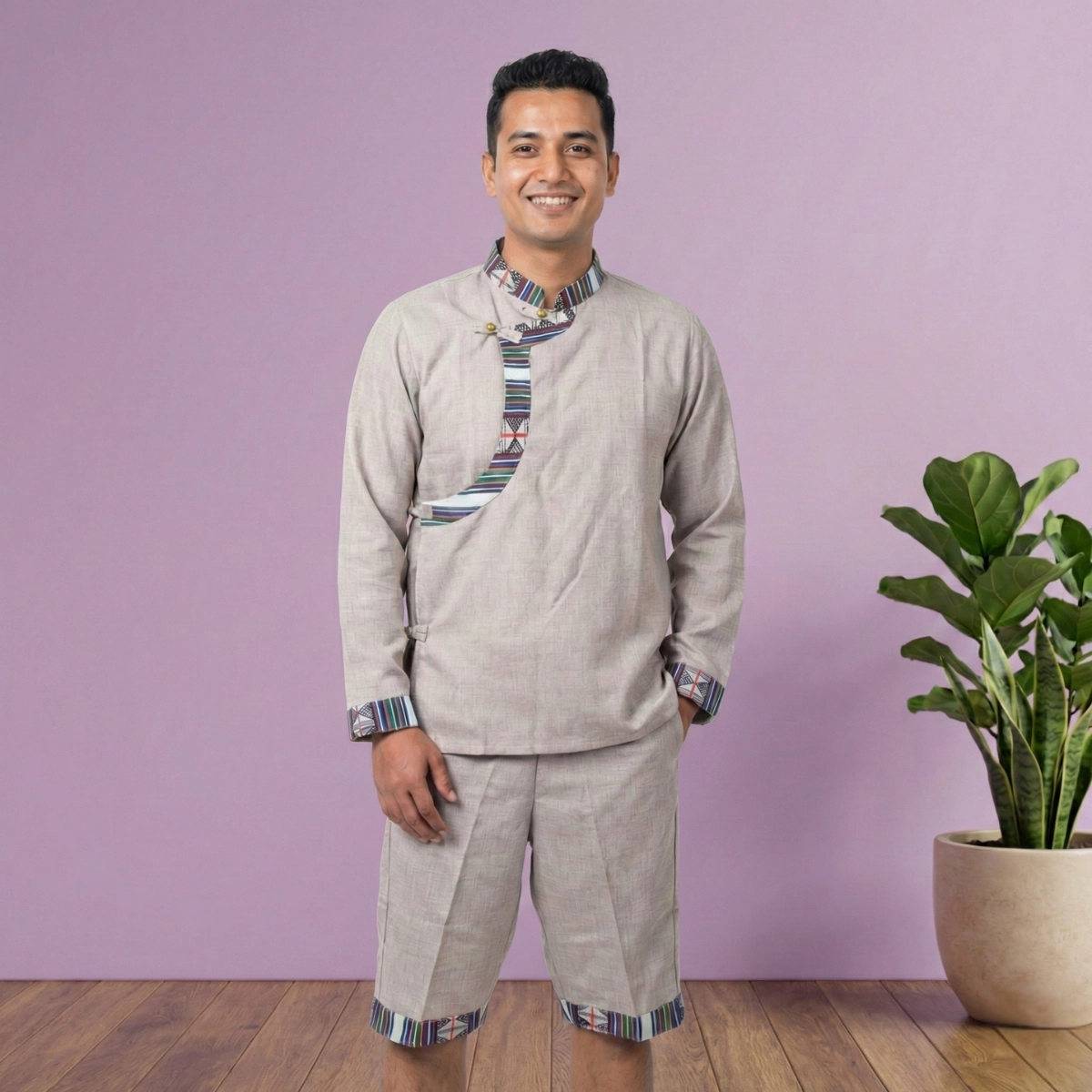
Men’s Lepcha Khenja Set — Natural Cotton with Geometric Trim

(23 customer reviews)

Original price was: ₹3,499.Current price is: ₹2,199. 37% OFF

-This Item Is Tailor-Made-
Same design, stitched to your exact size and fit. We will contact you to confirm measurements and any preferences.

Please enter PIN code to check delivery time & Cash on Delivery Availability

  • Natural oatmeal-toned cotton — slightly textured medium-weight weave, breathable and skin-friendly for year-round Himalayan foothills wear
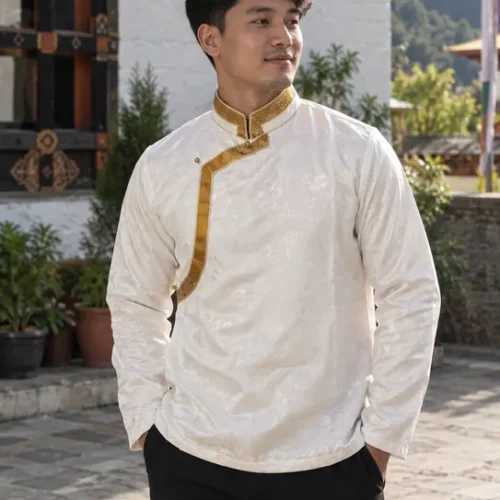
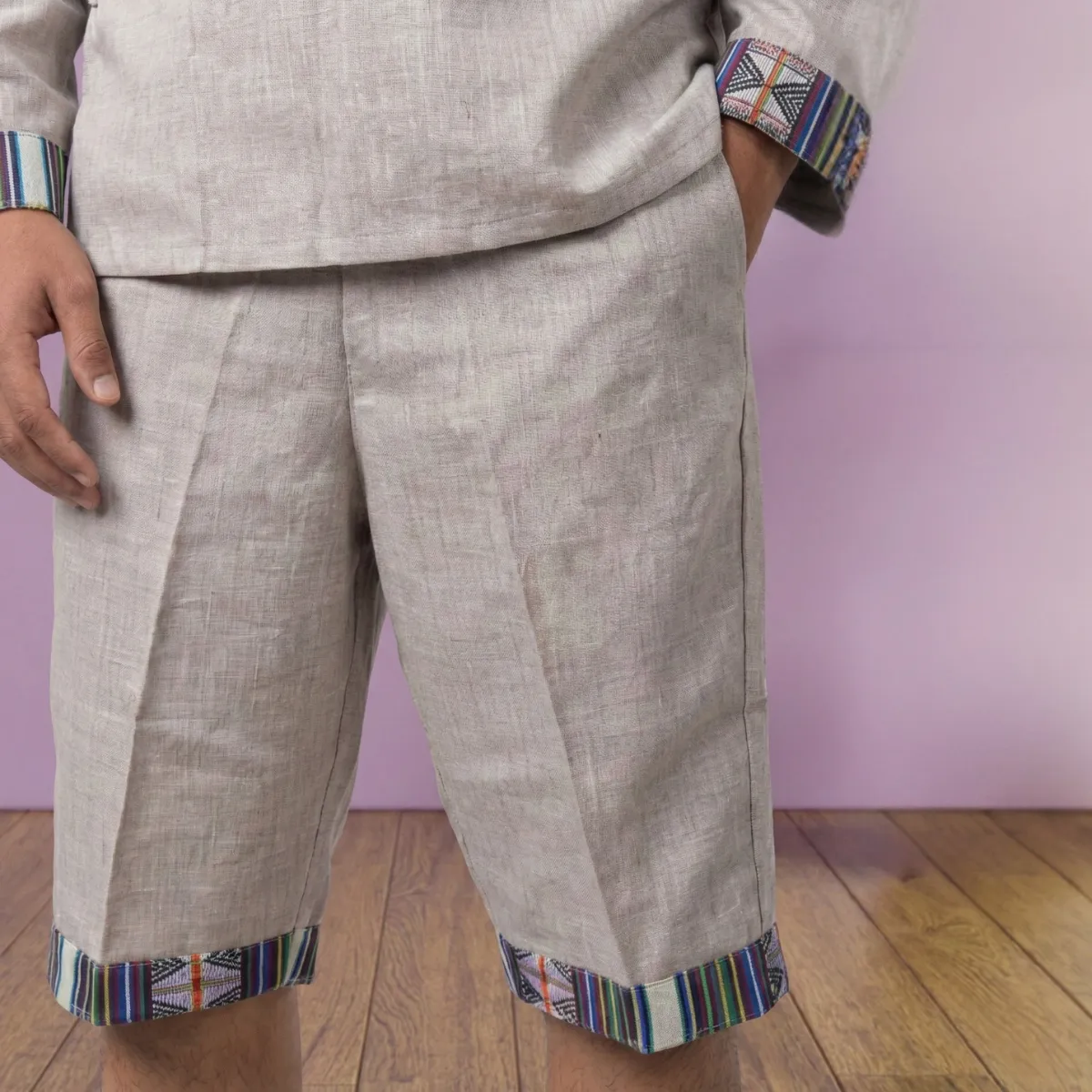
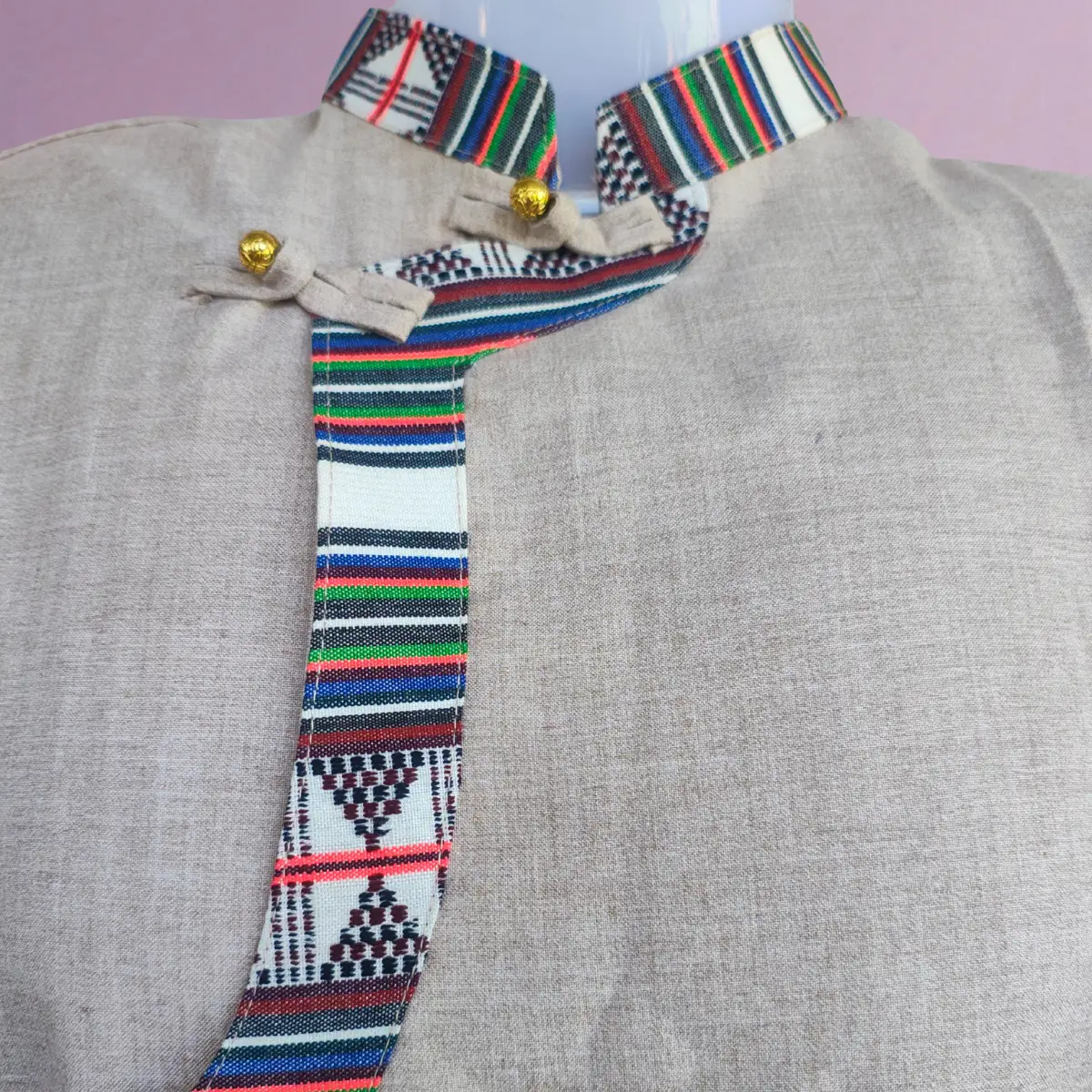
  • Asymmetric wrap-front placket with multicolor Lepcha geometric woven border at collar, placket edge, sleeve cuffs, and shorts hem; two gold dome buttons at the neckline
  • Daily cultural wear and community events; Also Worn at Lepcha community festivals including Tendong Lho Rum Faat and Namsoong
  • Includes Long-sleeve Khenja top and matching cotton shorts
  • Hand wash cold

Description

The Lepcha Khenja is traditional menswear of the Rong community — the indigenous people of Sikkim and the Darjeeling hills known more widely as the Lepcha. Worn at community gatherings including Tendong Lho Rum Faat and the Namsoong harvest festival, this two-piece set presents the Khenja in its daily-wear form: a long-sleeved jacket paired with shorts, both carrying the geometric woven trim that marks Lepcha textile identity.

The body is cut in natural oatmeal-toned cotton — a light-to-medium weight fabric with a slightly textured surface that breathes well in the foothills climate. The defining construction detail is the asymmetric front placket: the Khenja does not open at center front but wraps off-center with a diagonal overlay, the edge finished in a multicolor Lepcha woven border of horizontal stripes in red, green, royal blue, and white, interspersed with small geometric motifs in dark navy and burgundy. The same border appears at the mandarin collar, the sleeve cuffs, and the hem cuffs of the shorts, creating visual continuity across the set. Two gold dome buttons secure the neckline.

Lepcha men wear this set for festivals, community events, and as cultural daily wear — the cotton construction makes it practical through most of the year in the temperate Himalayan foothills. Each piece is tailor-made to your measurements — after ordering, BHUTIB contacts you directly to confirm fit and preferences. Made in Kalimpong by artisans who know this garment the way it should be known.

23 reviews for Men’s Lepcha Khenja Set — Natural Cotton with Geometric Trim

  1. Tenzin Lepcha

    The woven geometric border is applied with complete consistency across the set — the same stripe sequence and motif repeat appears at the collar, placket edge, sleeve cuffs, and shorts hem without variation. That visual continuity is what makes the top and shorts read as a unified traditional set rather than two separate garments.

  2. Pemba Namgyal

    The asymmetric wrap-front placket is the defining construction detail of the Lepcha Khenja and this version gets it right — the diagonal overlay falls correctly and the geometric border along the placket edge sits flat without pulling or bunching through a full day of wear.

  3. Dawa Tshering

    The shorts run slightly shorter in the inseam than expected from the product images.

  4. Karma Lepcha

    The natural oatmeal cotton breathes well in the Himalayan foothills climate — I wore this set through an outdoor Tendong Lho Rum Faat celebration from morning into the afternoon and the fabric stayed comfortable across the temperature change. The textured surface gives it presence without weight.

  5. Sonam Tshering

    Two gold dome buttons at the neckline is the correct detail for the Lepcha Khenja — they secure the collar without the bulk of additional closure hardware down the chest, and the gold reads well against the natural cotton and the multicolour trim border.

  6. Rinchen Dorji

    My uncle — a Lepcha elder from Kalimpong — saw me wearing this set at Namsoong and said the construction form was correct: the asymmetric placket, the border placement, the natural cotton tone. Confirmation from someone who grew up wearing this garment matters more than any product description.

  7. Lhendup Bhutia

    The woven border in red, green, royal blue, and white with dark navy and burgundy geometric motifs is rendered with the kind of fine detail that only quality woven trim achieves — the small motifs between the stripe bands are crisp enough to read clearly at normal viewing distance.

  8. Phurba Namgyal

    The matching shorts are an important inclusion — a Khenja top sold without the coordinating shorts requires separate sourcing that rarely achieves the same trim alignment and cotton tone. Having both pieces tailor-made together means they arrived matching precisely.

  9. Gyatso Tshering

    The mandarin collar with geometric woven border sits cleanly at the neck — the collar height and stiffness are both correct for the traditional Lepcha Khenja form, and the border trim at the collar edge continues into the placket trim without any awkward junction or colour break.

  10. Chewang Lepcha

    For Lepcha families in Sikkim and Darjeeling who want a correctly made Khenja set for community occasions, finding this quality outside of specialist tailors in Kalimpong has historically required significant effort. This set is made by people who know exactly what this garment is.

  11. Dorje Bhutia

    The oatmeal-toned cotton washes without changing colour or shrinking significantly — I have now washed this set three times by cold hand wash and the garment is holding its dimensions and the trim colours are unchanged. Practical reliability for a set worn across multiple festival seasons.

  12. Urgen Tshering

    The geometric motifs in dark navy and burgundy between the horizontal stripe bands of the woven border are small but precisely rendered — the repeat is consistent and the colours hold their depth without fading into the surrounding stripes. This kind of trim detail quality takes skill to produce correctly.

  13. Sangay Lepcha

    Wearing the full two-piece set at Namsoong harvest festival, the oatmeal cotton top and matching shorts read as a unified traditional ensemble rather than a jacket-and-shorts combination. The trim continuity across both pieces is what creates that unified appearance.

  14. Kinga Dorji

    The asymmetric wrap-front opens and closes easily — the diagonal overlay lies naturally without needing to be adjusted throughout the day, and the two gold dome buttons at the neckline hold the collar closed securely even during physical movement at festival activities.

  15. Nima Bhutia

    The shorts hem with geometric woven border finishes the two-piece set correctly — skipping the trim at the hem of the shorts would have made the set look incomplete. Having the same border appear at all four trim locations — collar, placket, cuffs, shorts hem — is the detail that completes the garment.

  16. Lobsang Tshering

    The set photographs well but the trim colours appear slightly more saturated in person than in the product images.

  17. Pema Lepcha

    My son wore this set for his first Tendong Lho Rum Faat.

  18. Dichen Namgyal

    The slightly textured surface of the oatmeal cotton gives this set a more considered appearance than plain smooth cotton would — it catches light across the weave in a way that makes the natural tone appear richer and less flat, which works well alongside the vibrant geometric trim.

  19. Rinzin Lepcha

    The tailor-made process confirmed my measurements before stitching and the result was accurate — the Khenja top fits across the shoulders and chest correctly, and the shorts sit at the right waist position. For a culturally significant garment, that fit precision is important.

  20. Jigme Tshering

    The cotton construction makes this Khenja set practical for daily Lepcha cultural wear as well as festival use — breathable enough through warm Himalayan foothills weather, and structured enough to read as a considered traditional garment at community events.

  21. Sonam Bhutia

    The shorts are cut with a relaxed fit that works well for festival movement — comfortable through an active day at Namsoong. Worth noting that the relaxed fit is traditional rather than slim-cut, so ordering accurately to measurements gives the right result.

  22. Pemba Lepcha

    The red stripe in the woven geometric border is a saturated, warm red — not orange-toned, not faded — and it holds its colour after cold hand washing. That trim colour fastness across the full border palette is what makes the set look well-maintained across repeated festival use.

  23. Tashi Dorji

    The Lepcha Khenja set is the garment that Rong community men are recognised by at festivals across Sikkim and the Darjeeling hills. This version is made in Kalimpong by people who know the garment from the inside out — the form is correct, the trim is correct, the cotton is correct.

Add a review

Your email address will not be published. Required fields are marked *