Description
Guru Rinpoche — known also as Padmasambhava, the Lotus-Born — is the foundational figure of Himalayan Vajrayana Buddhism, revered across Tibet, Bhutan, Sikkim, and the Darjeeling hills as the master who carried the Dharma into the mountains and ensured it took root. In the 8th century he travelled through Bhutan, meditating at Taktsang — the Tiger’s Nest — and across Sikkim, subduing local spirits and concealing sacred texts known as termas for future discovery.
For communities across the Eastern Himalayan region, a Guru Rinpoche Thangka is not merely decorative — it is a lineage connection and an acknowledgement of the teacher who made Himalayan Buddhism possible.
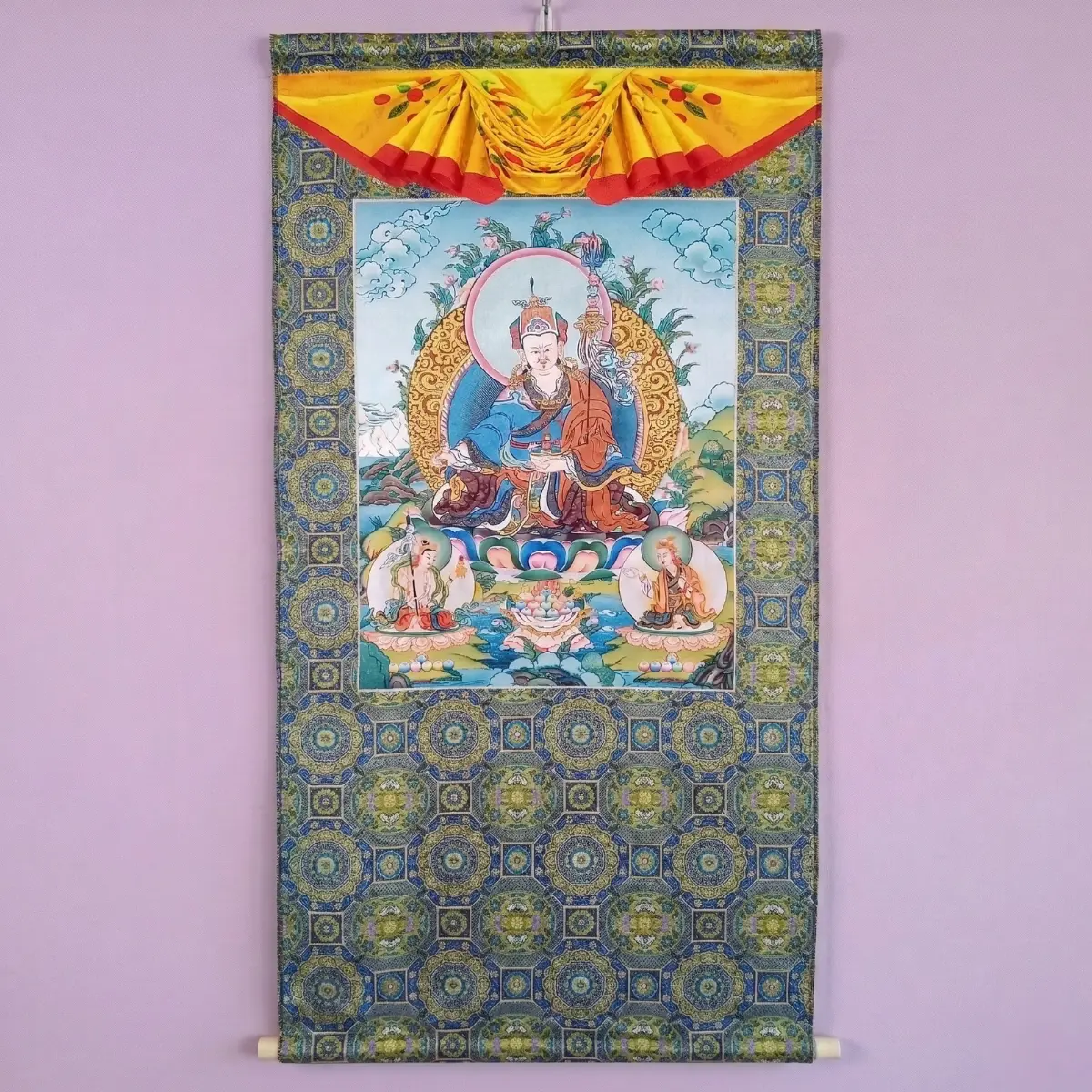
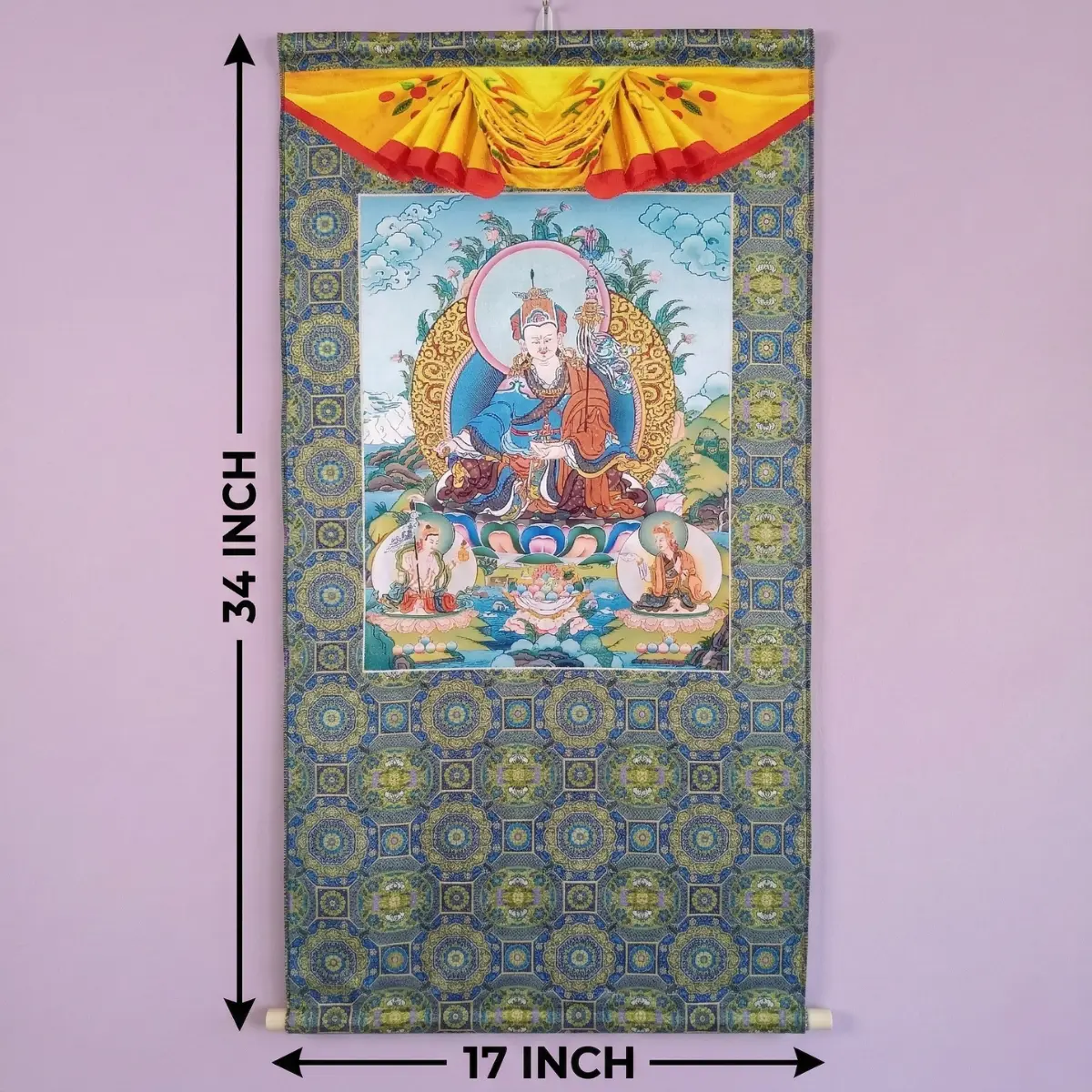
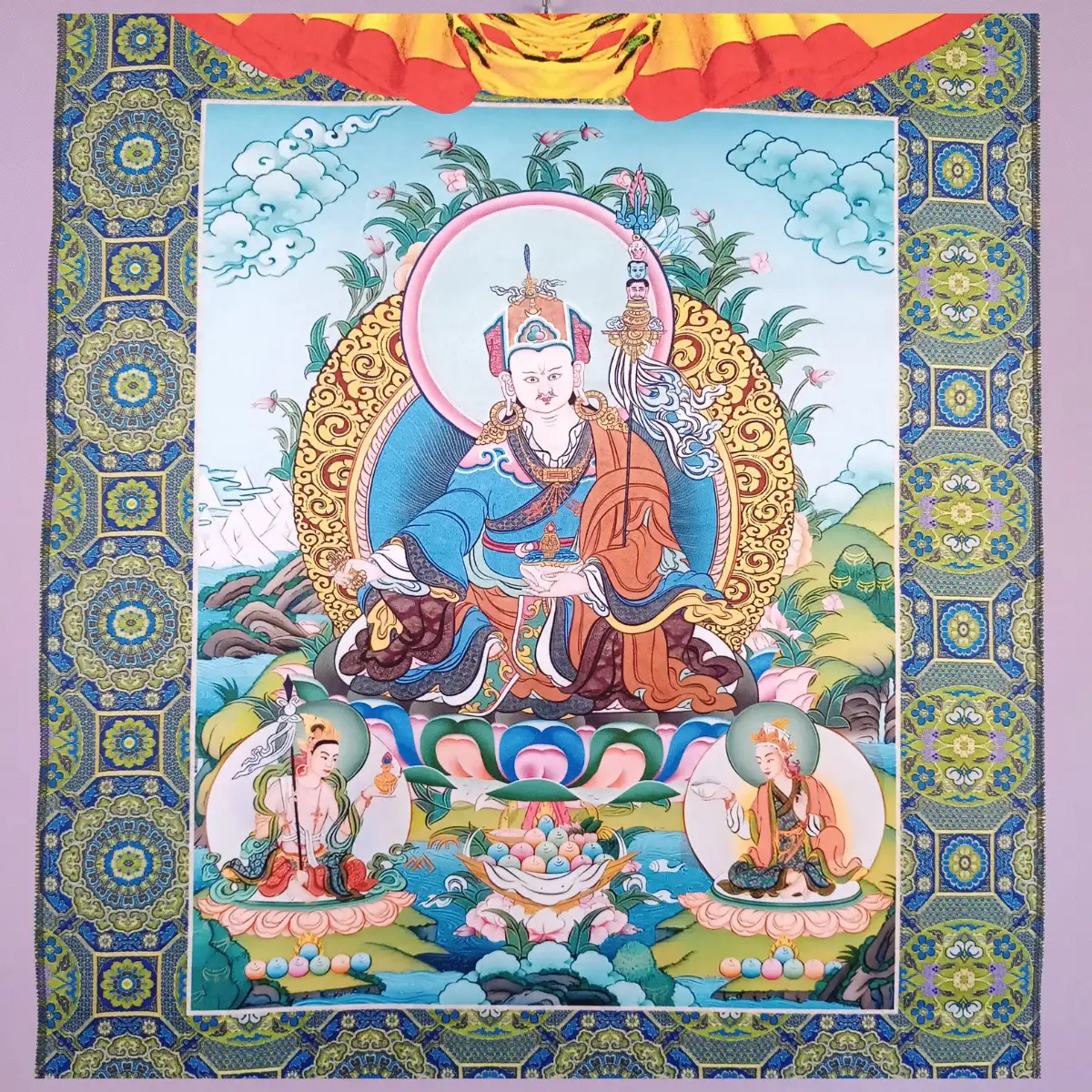
The central image is printed on poly-silk, rendering full iconographic detail with colour balance and precise line work. Guru Rinpoche is depicted holding a golden vajra upright in his right hand to subjugate negative forces, with a kapala — skull cup containing a vase of immortality — in his left; the khatvanga trident staff rests in the crook of his arm, signifying his mastery over the three realms.
He wears his distinctive five-petaled lotus hat, gifted by the King of Sahor, symbolising miraculous birth from a lotus and mastery over the five poisons. The scroll is mounted on a blue-green teal brocade border with gold circular medallions, suspended from a wooden dowel. This Thangka is placed on a home altar or shrine room wall as a devotional support, particularly meaningful on the 10th day of each Tibetan lunar month, observed by Vajrayana practitioners as Guru Rinpoche Day. It is gifted for Losar, monastic dedications, and housewarmings within Buddhist households across Sikkim, Bhutan, and the wider Himalayan diaspora.



Reviews
There are no reviews yet.