Free Shipping

Cash on Delivery

Free Shipping

Secure Payments

Cash On Delivery

Tash Kuchin One-Piece Chuba/Bakhu with attached Wonju

(22 customer reviews)

Original price was: ₹5,999.Current price is: ₹3,899. 35% OFF

-This Item Is Tailor-Made-
Same design, stitched to your exact size and fit. We will contact you to confirm measurements and any preferences.

Please enter PIN code to check delivery time & Cash on Delivery Availability

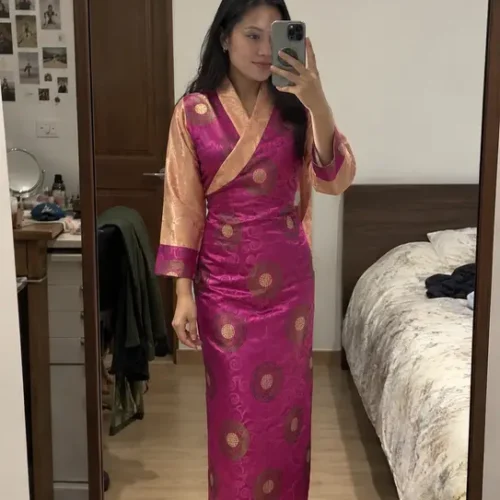
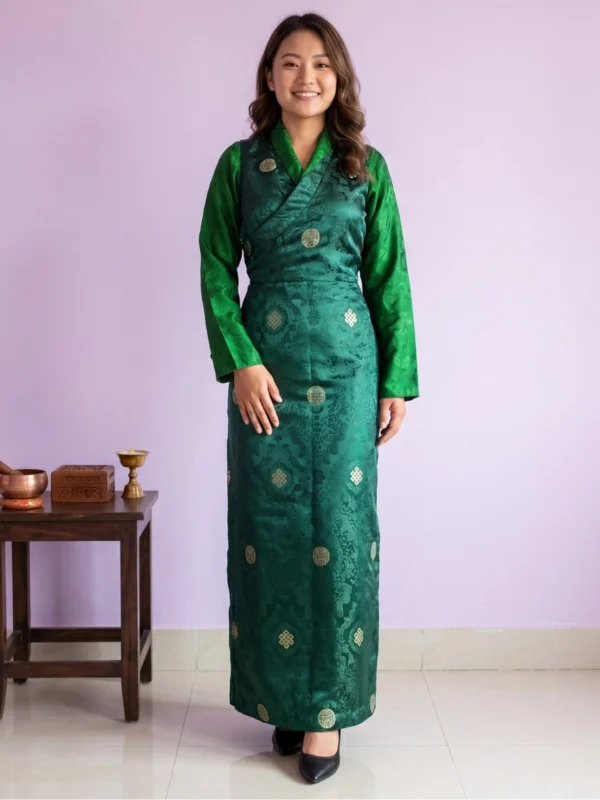
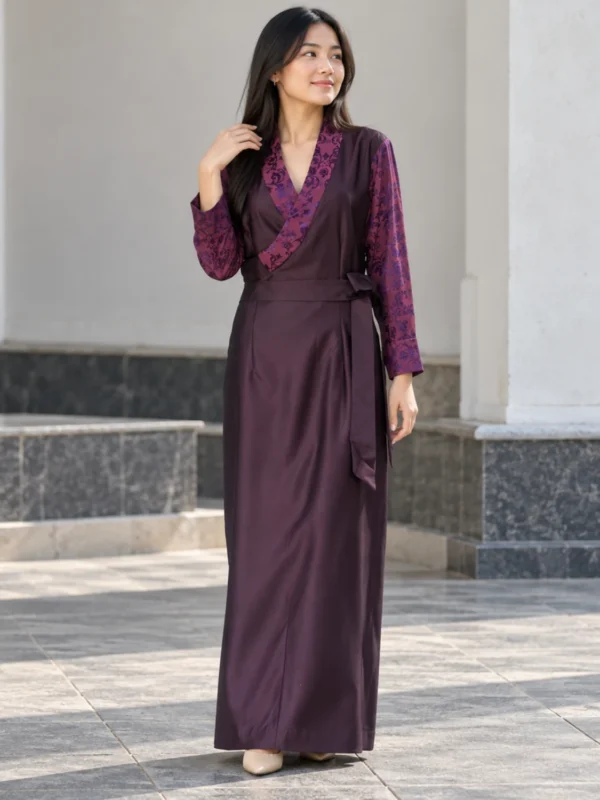
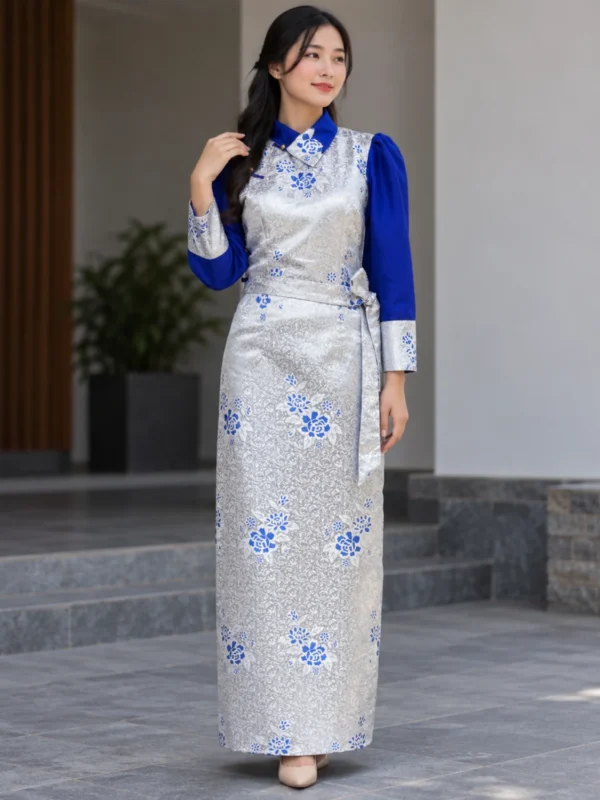
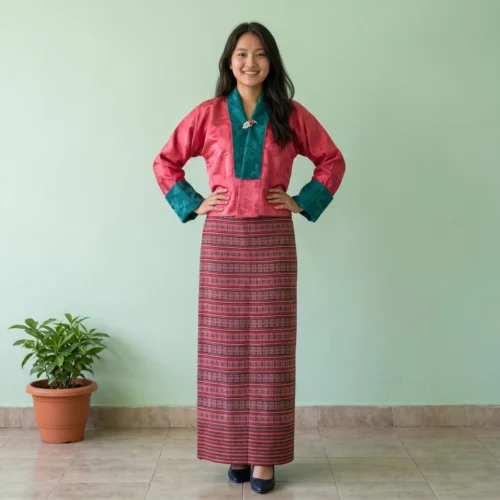
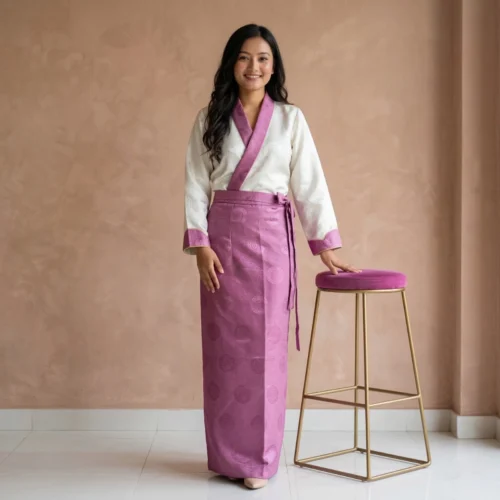
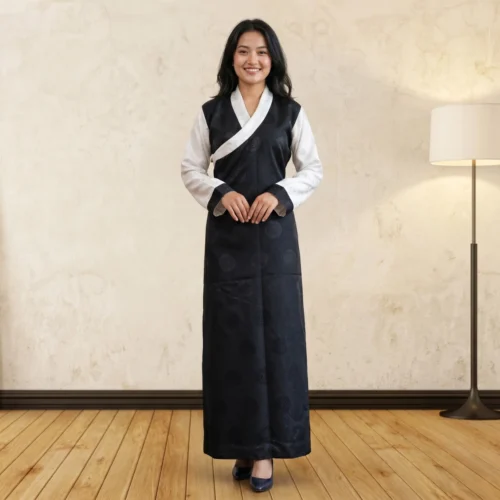
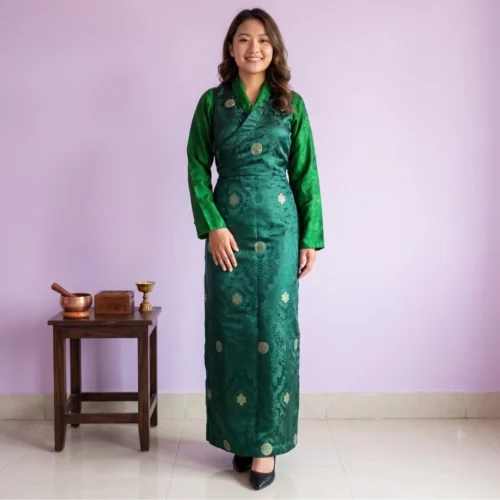
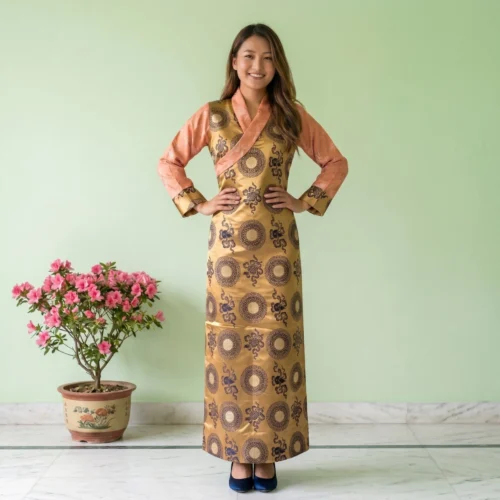
  • Tash Kuchin satin brocade woven with Tibetan longevity medallions and ruyi cloud-scroll motifs; two colour variants — magenta with peach bamboo-motif Wonju, fuchsia with teal geometric Wonju
  • One-piece wrap construction; crossover V-neckline formed by contrasting Wonju brocade lapel; ¾-length sleeves in Wonju fabric; cuffs finished with body fabric accent trim
  • Occasion Losar, Saga Dawa, Bhutanese and Tibetan community festivals, ceremonies, and social gatherings

Description

The Bakhu — known also as Chuba in Tibetan — is the ceremonial dress of Tibetan and Bhutia women, worn through generations of Losar celebrations, Saga Dawa observances, and the full rhythm of community life. This one-piece version integrates the Wonju inner blouse into a single elegant garment, preserving the layered silhouette that defines the form without the separate dressing step. In Himalayan communities from Darjeeling to the wider world, the Bakhu is cultural presence — worn deliberately, with understanding.

The outer body is cut from Tash Kuchin satin brocade: a high-sheen fabric woven with large circular medallion motifs in the Tibetan longevity tradition, set against a ruyi cloud-scroll ground that catches the light at every angle. The attached Wonju — in a contrasting peach bamboo-motif or teal geometric brocade — forms the diagonal crossover lapel and provides the ¾-length sleeves, with the body fabric returned as trim at the cuffs, a construction detail that ties the two fabrics into one resolved garment.

The floor-length column silhouette is fitted through the waist and hip with the structured drape that Tash Kuchin naturally holds. This Bakhu is worn to Losar mornings, prayer gatherings, and ceremonies where arriving in traditional dress is not a question but a given.

22 reviews for Tash Kuchin One-Piece Chuba/Bakhu with attached Wonju

  1. Tenzin Dolkar

    The one-piece construction integrating the Wonju into the Bakhu is the most practical solution for a ceremonial garment at this level — the layered silhouette reads correctly without the dressing complexity of a separate Wonju. Wore the magenta colourway to Losar and it held its structured column drape through the full morning.

  2. Pema Wangmo

    The Tash Kuchin satin brocade has the high-sheen surface quality that only this fabric achieves — the longevity medallion motifs and ruyi cloud-scroll ground catch light continuously as you move, which is exactly the effect that makes this fabric the choice for Tibetan ceremonial dress.

  3. Dechen Lhamo

    The contrasting Wonju brocade at the diagonal crossover lapel is the defining visual element of this garment — the peach bamboo-motif brocade against the magenta Tash Kuchin body creates a colour contrast that is warm and distinctly Tibetan in its palette. The two fabrics are resolved into a single garment with the body fabric trim at the cuffs.

  4. Sonam Wangchuk

    Ordered the fuchsia with teal Wonju colourway — the teal geometric brocade at the lapel is a bolder contrast than the magenta-peach combination, and both colours are rich and deep in person. The Tash Kuchin holds its shape through a full Losar celebration without the fabric pulling or creasing.

  5. Yangchen Dolma

    My mother wore a separate Bakhu and Wonju for Losar every year and she was impressed that a one-piece version now preserves the same silhouette — she said the crossover lapel falls correctly and the proportion of Wonju to body fabric is accurate to the traditional form.

  6. Rinchen Wangmo

    The ¾-length sleeves in Wonju fabric are the right proportion for this Bakhu — they reveal the wrist and allow the hands to be visible for puja offerings without the sleeves interfering. The body fabric trim at the cuffs ties the sleeve fabric back to the main brocade neatly.

  7. Dichen Lama

    The structured column silhouette requires careful movement management — sitting and walking in a floor-length fitted brocade requires some adjustment if you’re not used to wearing Bakhu regularly. The garment itself is beautifully made; the fit learning curve is part of wearing traditional dress correctly.

  8. Kelsang Dolkar

    The ruyi cloud-scroll ground of the Tash Kuchin brocade gives the fabric a visual depth that plain satin cannot replicate — the cloud motifs are woven into the ground itself rather than printed, which means they catch light differently from the medallion foreground pattern and create continuous surface interest.

  9. Choedon Lhamo

    Wore this to a Saga Dawa prayer gathering in Gangtok — the magenta Tash Kuchin with peach Wonju lapel was the most elaborately dressed among the women present and drew comment from older Tibetan community members about the quality of the brocade. That kind of recognition matters.

  10. Tsering Dolma

    The tailor-made process confirmed measurements before stitching and the result fits correctly through the chest and is well-proportioned through the column silhouette — for a floor-length fitted brocade garment, that measurement precision is essential and the process handled it well.

  11. Pema Choden

    The one-piece format means the Wonju lapel always falls in the correct position — with a separate Wonju the crossover can shift during wear and require readjustment. Having it integrated means the diagonal neckline stays precisely placed through a full ceremony without attention.

  12. Takshi Dolkar

    The magenta Tash Kuchin is a genuinely vivid colour — not the muted magenta-pink that some brocades produce but a full, saturated tone that reads as deliberately festive at Losar and Buddhist community celebrations. Alongside the peach Wonju lapel the combination is warm and correctly Tibetan.

  13. Lhamo Yangchen

    The longevity medallion motifs woven into the Tash Kuchin are large and clearly defined — the circular format fills the brocade field with a pattern that reads well at the floor-length scale of this garment. Smaller motifs would have been lost at this scale.

  14. Sabi Wangmo

    For Tibetan and Bhutia women in Darjeeling, Sikkim, and the wider diaspora, sourcing a Bakhu in genuine Tash Kuchin with correctly integrated Wonju construction has required either travelling to Nepal or relying on inconsistent local sourcing. This garment resolves that directly.

  15. Karma Wangchuk

    The fuchsia with teal Wonju colourway is the bolder of the two options — the teal geometric brocade lapel against the fuchsia Tash Kuchin body creates a high-contrast combination that reads as celebratory and confident. Wore it to a Tibetan community social gathering and it was the most remarked-upon garment present.

  16. Sonam Dolkar

    The garment takes about ten days from order to delivery.

  17. Dechen Wangmo

    The structured drape of Tash Kuchin is self-supporting — the fabric holds the column silhouette without lining assistance, which means the garment maintains its floor-length fitted form through hours of wear without becoming soft or losing its shape through the waist and hip.

  18. Choedon Dolma

    The body fabric returned as trim at the cuffs is the construction detail that resolves the two-fabric garment into a single coherent piece — the magenta Tash Kuchin at the cuffs anchors the peach Wonju sleeve back to the body fabric and prevents the two brocades from reading as disconnected.

  19. Saron Yangchen

    Wearing a correctly made one-piece Bakhu in Tash Kuchin to Losar is a different experience from wearing a separate Bakhu and Wonju — the integrated construction means you arrive dressed without the adjustment that separate pieces require, and the silhouette holds throughout the celebration.

  20. Pema Dolkar

    The high-sheen surface of the Tash Kuchin brocade photographs beautifully at Losar and cultural events — the medallion motifs and ruyi cloud ground catch camera flash and natural light in different ways, giving different photographs of the same garment a different visual character.

  21. Peden Wangmo

    The crossover V-neckline formed by the contrasting Wonju lapel is the visual signature of the Tibetan Bakhu — the diagonal line across the chest created by the colour contrast between body fabric and lapel brocade is what makes this garment immediately identifiable as traditional Tibetan women’s dress.

  22. Tsering Wangchuk

    My grandmother wore a Tash Kuchin Bakhu every Losar of her life and said the fabric quality and construction of this one-piece version is correct — the brocade sheen, the lapel proportion, the column silhouette. When someone who has worn this garment for decades confirms it is made right, there is nothing more to add.

Add a review

Your email address will not be published. Required fields are marked *