Description
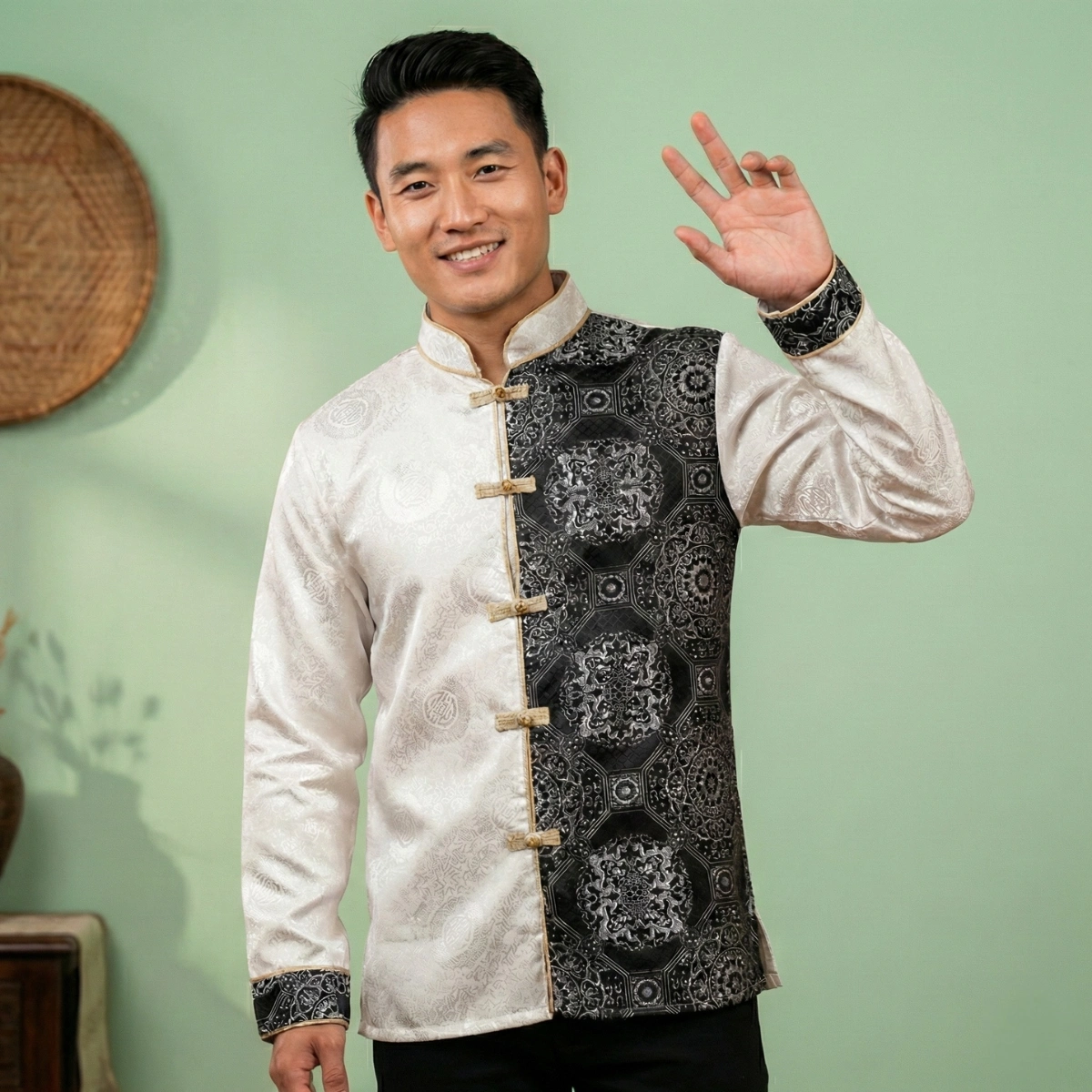
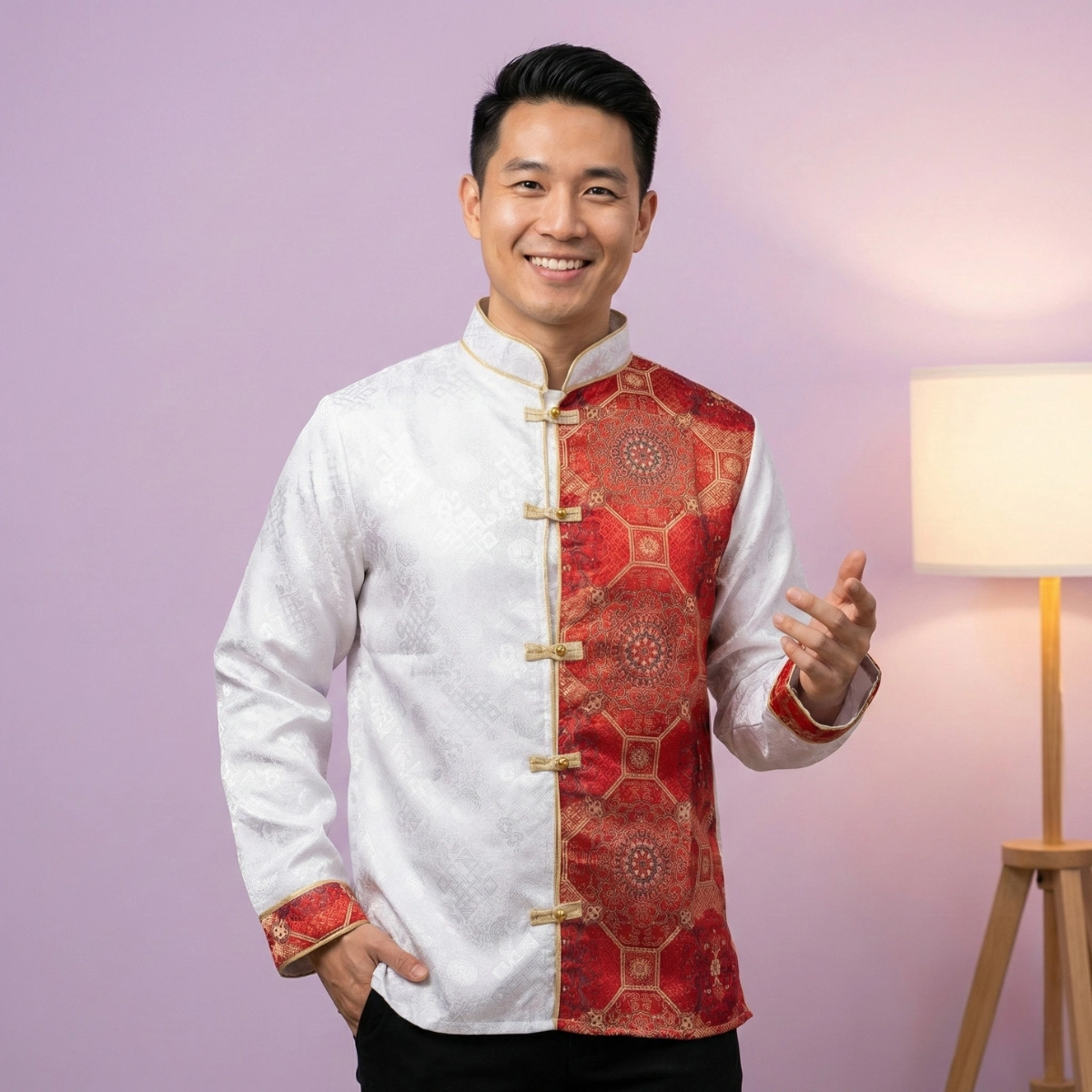
This brocade khenja is a ceremonial expression of Himalayan Buddhist tradition. The garment is constructed from two distinct fabrics—kuchin, a traditional Tibetan brocade with subtle jacquard patterning, and a bold jacquard panel that runs asymmetrically from the right shoulder to the hem.
Each colour & design offers its own statement. The white khenja features a rich crimson panel with golden octagonal medallions. The cream khenja pairs with a deep black panel detailed in silver-grey motifs. Both are finished with matching brocade cuffs that echo the panel fabric.
The mandarin collar is edged with golden piping, as are the panel borders, adding a subtle frame that accentuates the garment’s structure. Five sets of golden frog button closures run down the center front, offering both function and ornamentation. The fit is tailored to sit elegantly against the body, with sizes ranging from 38″ to 44″ chest measurements.
This khenja is worn by Tibetan, Tamang, Sherpa, and Bhutia communities during festivals, weddings, and social gatherings. Perfectly stitched to fit with elegance, this brocade khenja is designed with precision stitching that reflects the premium craftsmanship BHUTIB is known for.
| Attribute |
Details |
| Product Type |
Brocade Khenja (Traditional Ceremonial Jacket) |
| Culture |
Tibetan, Tamang, Sherpa, Bhutia |
| Fabric |
Kuchin (Tibetan Jacquard Brocade) |
| Pattern |
Ornate tone-on-tone jacquard with geometric and floral medallions, accented with subtle metallic threading |
| Available Variants |
2 Colourways (White/Cream with Red Panel, Cream with Black Panel) |
| Collar Style |
Mandarin Collar with Golden Piping |
| Sleeve Length |
Full Sleeves with Brocade Cuff Detail |
| Fit |
Structured, Tailored, Hip-Length |
| Piping Detail |
Golden/Brass Piping on Collar and Panel Edges |
| Craftsmanship |
Handmade, Premium Stitching |
| Care Instructions |
Dry clean recommended, handle with care |
| Occasion |
Ceremonies, Festivals, Weddings, Formal Cultural Gatherings |



Tenzin Wangchuk –
Ordered the black colourway and the asymmetrical jacquard panel running from right shoulder to hem is the strongest design detail — bold, structured, and visually distinct from any generic brocade jacket. The five golden frog button closures down the centre front are well-finished and hold securely.
Dorje Tamang –
The kuchin fabric has a weight and surface quality that reads as genuinely ceremonial — there’s a subtle metallic thread woven through the jacquard that catches light differently across the day. Wore the red variant to Losar and it was the right garment for the occasion.
Passang Bhutia –
The red panel on the black base khenja has a depth and richness that photographs don’t fully convey — in person the crimson reads as genuinely luxurious against the dark kuchin ground. The golden piping at the collar and panel edges frames the garment without overpowering it.
Rinchen Dorji –
For Tibetan community festivals in Darjeeling and Kalimpong, finding a correctly constructed ceremonial khenja with genuine kuchin brocade fabric rather than a printed substitute has always been difficult. This jacket resolves that — the fabric is the real thing.
Sonam Lama –
The asymmetric panel construction — running from right shoulder diagonally across the chest and down to the hem — is precisely the traditional Tibetan khenja silhouette. Nothing has been simplified or modernised in a way that compromises the garment’s ceremonial character.
Pema Wangdi –
Wore this for a Sherpa community wedding in Sikkim alongside men wearing older family heirloom khenjas — mine was noted by elders as correctly made. The brocade quality and the frog button placement both read as culturally accurate.
Nima Sherpa –
The octagonal medallion motifs woven into the jacquard panel are rendered with the kind of geometric precision that separates quality brocade from cheaper alternatives — each medallion repeats cleanly without distortion or misalignment across the full length of the panel.
Lhendup Tamang –
Five golden frog button closures is the correct number for a ceremonial khenja of this length — the spacing across the centre front is even and the closures themselves are solid, not decorative-only. They open and close cleanly through repeated use.
Ugyen Wangchuk –
The tailor-made process is what makes this jacket work — the measurements confirmation before stitching meant the jacket arrived fitting correctly through the chest and shoulders rather than requiring adjustment. For a structured brocade garment, fit precision matters considerably.
Tsering Bhutia –
The kuchin base fabric has a quiet jacquard patterning that reads as rich without being visually loud — when the panel brocade commands attention, the base fabric provides depth rather than competition. That tonal calibration is well judged.
Chewang Lama –
The golden piping at the collar and asymmetric panel borders is applied with a steadiness that only careful hand-finishing achieves — there’s no wavering or widening, just a clean gold frame that reinforces the structure of the garment without calling attention to itself.
Pemba Tamang –
Ordered the black colourway for my father for Losar and he wore it alongside a traditional Bhutia gown — the two pieces worked together correctly because the khenja’s silhouette and fabric quality are at the right level for formal Buddhist festival wear.
Lobsang Sherpa –
The brocade cuffs match the asymmetric panel fabric exactly — same weave, same colour, same medallion repeat. That consistency of fabric across the panel and cuffs gives the jacket a considered, unified appearance rather than the slightly mismatched look that cheaper versions often have.
Sangay Bhutia –
The metallic threading woven through the jacquard reflects in a way that makes the jacket appear different in natural and indoor light — in sunlight the surface has a subtle iridescence that deepens the visual quality of the brocade considerably.
Kinga Dorji –
Delivery took closer to 9 days than expected
Jigme Wangchuk –
The red variant is striking — the crimson panel against the cream kuchin base creates a colour contrast that reads as both festive and ceremonially correct for Tibetan and Bhutia cultural occasions. Nothing about the colour combination is accidental.
Tshering Lama –
The structured tailored fit of this jacket means it sits against the body correctly rather than hanging loosely — for a ceremonial brocade garment worn at weddings and festivals, that structural discipline is what makes the wearer look composed and properly dressed.
Rinzin Tamang –
The asymmetric panel seaming — where the kuchin base meets the brocade panel — is finished cleanly on the inside without any visible raw edges or loose threads. That interior finishing quality signals that the whole garment has been made with the same care throughout.
Namgyal Sherpa –
For Tamang and Sherpa community members in Darjeeling and Sikkim who want a correctly made ceremonial khenja that can be worn at both Buddhist festivals and formal weddings, this jacket covers both occasions without compromise.
Phurba Wangdi –
The five sets of golden frog button closures are evenly spaced down the centre front with a precision that looks intentional rather than approximate — each set is positioned to reinforce the visual structure of the diagonal panel rather than interrupting it.
Sonam Bhutia –
My grandfather wore a khenja made from kuchin brocade for every Losar of his life and he said this one is made in the same form — same fabric character, same asymmetric panel silhouette, same frog button closure style. That continuity across generations is what this garment is for.