Description
The Shakyamuni Buddha Thangka belongs to a tradition of Himalayan scroll painting rooted in 7th-century Tibet, when the art form emerged as a portable means of transmitting Buddhist doctrine across the Tibetan plateau.
In Tibetan Buddhist and broader Himalayan Vajrayana practice, Shakyamuni — the historical Buddha depicted at the moment of his enlightenment — is one of the most foundational subjects a Thangka can carry. On a home altar, in a monastery hall, or displayed during occasions such as Buddha Purnima and Losar, this scroll serves as both a focal point for contemplative practice and a sustained reminder of the path to liberation.
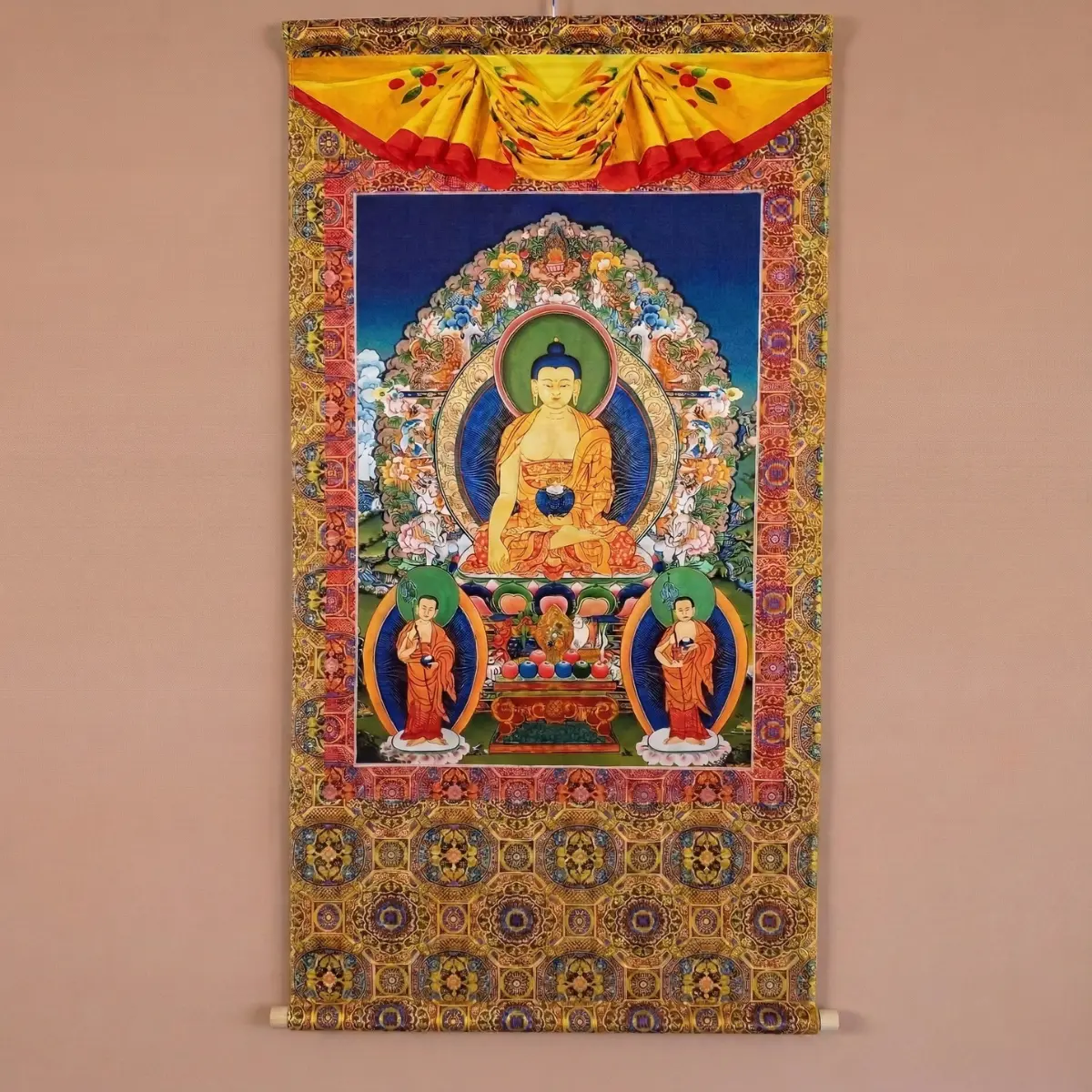
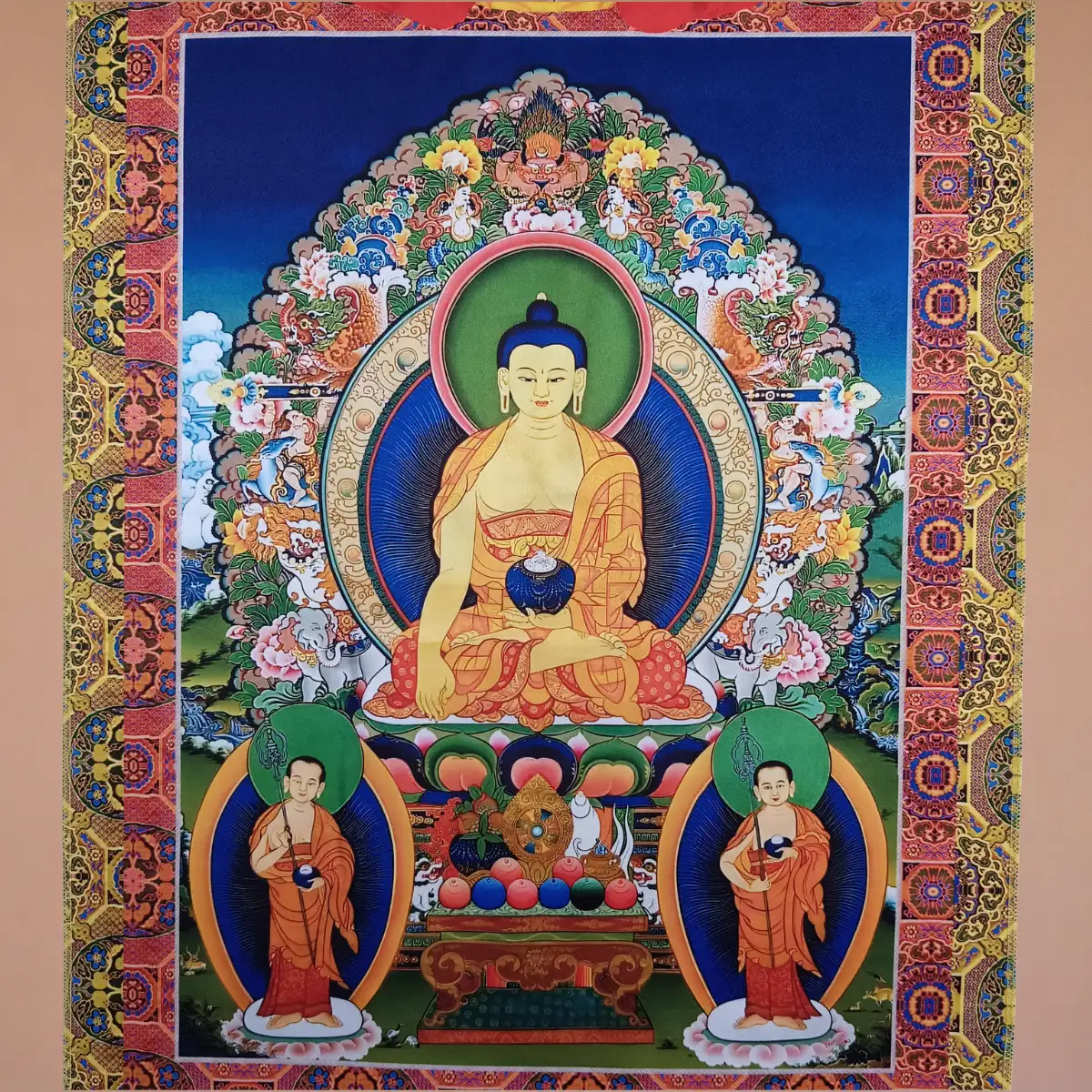
The central image is printed on poly-silk, reproducing the dense detail and colour saturation of classical Menlug-style iconography. Shakyamuni is rendered in warm gold tones, seated in vajrasana on a multi-tiered lotus throne — the lotus a symbol of spiritual purity, rooted in samsara yet blossoming above it — with his right hand extended in bhumisparsha mudra, calling the earth goddess Sthavara to bear witness to his defeat of Mara.
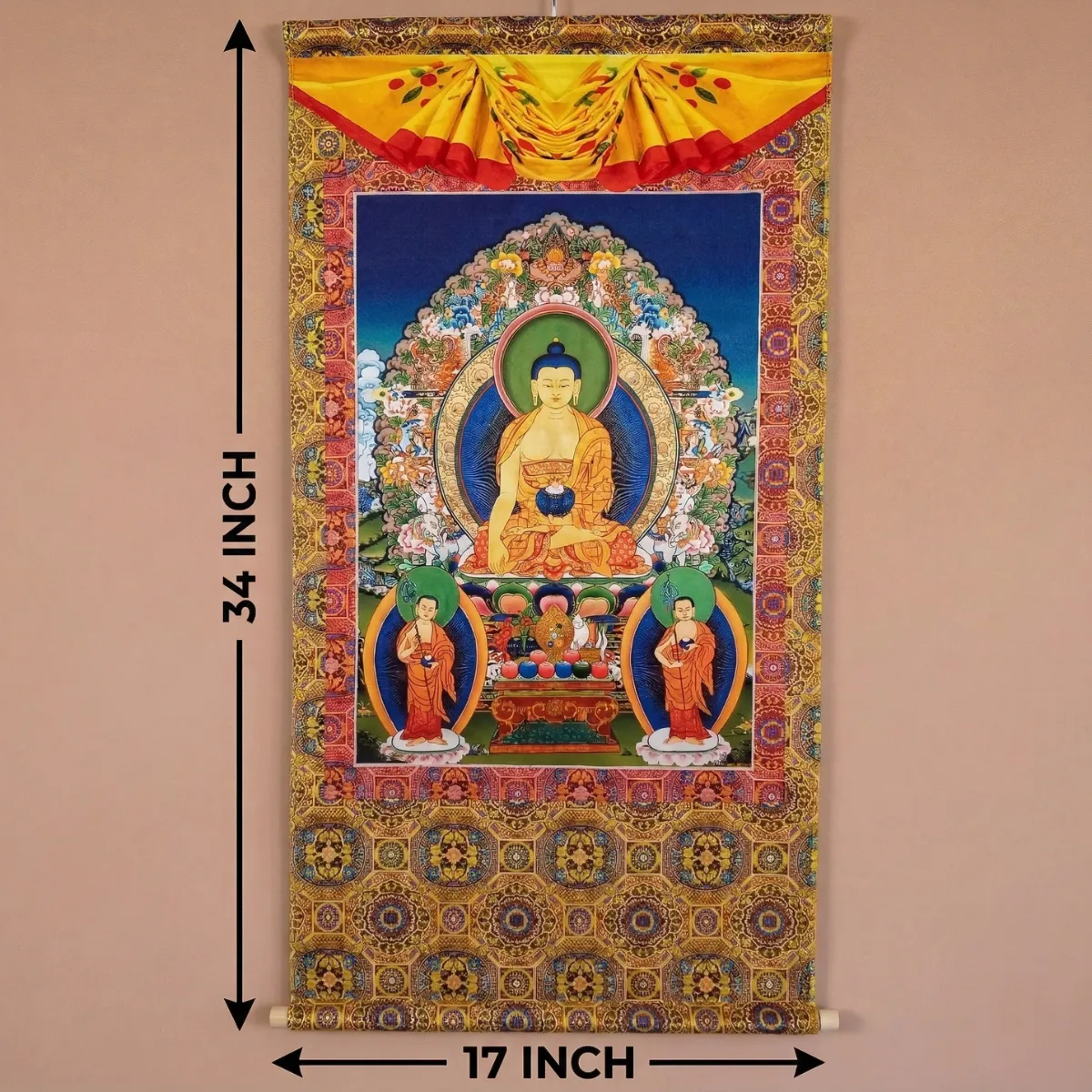
A deep blue outer halo edged with fine gold lines frames the figure, and the scroll is mounted on hand-stitched golden-amber brocade with circular medallion patterns, suspended from a plastic dowel in the traditional Himalayan scroll format.
This Thangka is well placed on a home altar or in a dedicated meditation space, hung at eye level as a support for daily practice or given as a considered gift for Losar, Buddha Purnima, or a housewarming. The traditional silk valance at the top and the full brocade panel below follow the presentation format common across Tibetan Buddhist households in Sikkim, Bhutan, and the Darjeeling hills.



Reviews
There are no reviews yet.