Description
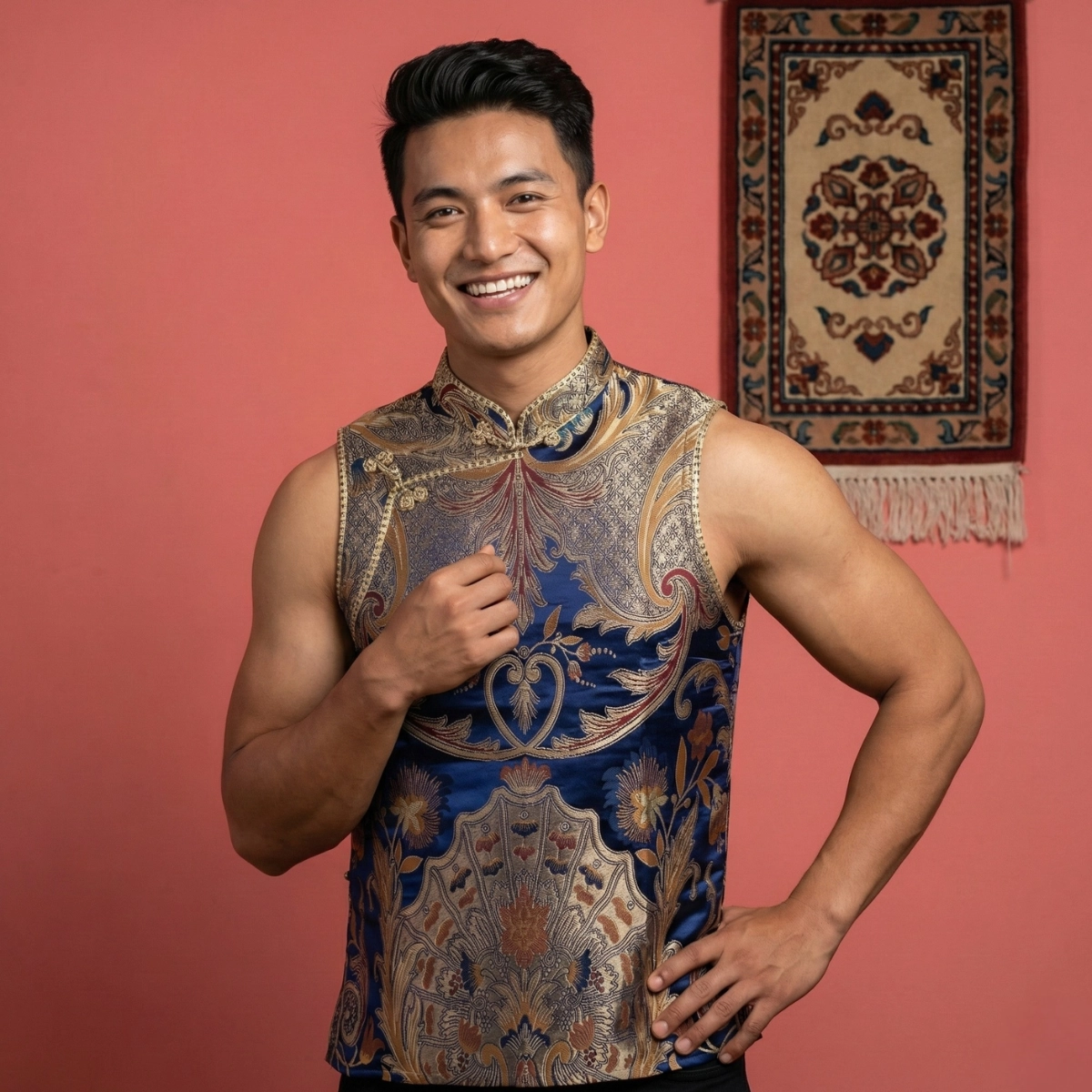
The sleeveless Khenja is a shared garment form across Bhutia, Sherpa, Tibetan, and Tamang communities — worn at weddings, receptions, and the social gatherings where presence is marked through dress. Unlike its full-sleeved counterpart, the vest-cut silhouette suits layering over inner garments or wearing alone in warmer months, which is why this form appears across occasions where comfort and cultural formality must coexist.
This jacket is cut from Japanese Tash Kuchin — a grade of brocade distinguished from standard Tash Kuchin by its higher thread count, tighter weft structure, and the precision of its iridescent shimmer. The gold-thread weft runs across the full field of the fabric, producing a two-tone shift — deep indigo that reads blue in shadow and gold in light; burnt orange that moves between amber and bronze with angle. The surface carries an embedded geometric brocade pattern, visible as a raised texture across the body. The mandarin collar is structured, approximately 3–4 cm, finished in the same body fabric with no contrasting trim. Five to six metallic dome buttons run the center-front closure from collar to hem.
Bhutia and Tamang men wear this over a simple base garment at weddings and cultural functions — the vest silhouette keeps the upper body light while the Japanese Tash Kuchin surface carries the formal register the occasion requires.


Dawa Tshering Bhutia –
The indigo Tash Kuchin shifts between deep blue and gold depending on the light — in person it looks far more premium than any photo can capture. Wore it to a Bhutia wedding in Kalimpong and the fabric got more compliments than I expected.
Karma Dorji –
Vest-cut silhouette is exactly right for wearing over a kurta in warm weather. The mandarin collar holds its shape well and the dome buttons sit flush — very clean finish.
Passang Sherpa –
The geometric brocade pattern on the Japanese Tash Kuchin is subtle but rich — you notice it more as the light changes. Tailor-made fit came out perfectly across the chest and shoulders.
Mingma Tamang –
Wore this to a community reception and it layered perfectly over a plain white base. The sleeveless cut kept me comfortable without losing any of the formal register.
Tenzin Wangchuk –
The gold weft iridescence is the standout detail — it gives the indigo a kind of depth that plain fabrics simply don’t have. Very happy with the overall construction quality.
Norden Lepcha –
Good weight to the fabric — not flimsy, not stiff. Sits well on the body. The armhole binding is clean and comfortable even without an inner sleeve.
Sonam Gyalpo –
The Khenja itself is well-made but took nearly 10 days to arrive
Lobsang Dorje –
My father wore this to my wedding and he looked completely distinguished. The Tash Kuchin brocade has a ceremonial quality that plain fabrics simply cannot replicate. Worth every rupee.
Pema Wangdi –
The five dome buttons are well-spaced and sit neatly — the center-front closure looks very precise. Fits like it was actually made for my measurements, which of course it was.
Jigme Namgyal Sherpa –
Wore the indigo version to a Tibetan cultural reception in Gangtok. The fabric caught the hall lighting beautifully and several people asked me about the jacket.
Kesang Dorji –
Chest sizing is slightly generous at the 42 inch — I’d recommend sizing down if you prefer a cleaner fit. The brocade quality is genuinely excellent though.
Tashi Phuntsog –
The raised geometric pattern across the body of the fabric is something you have to feel to appreciate — it has a texture that looks handcrafted even though the weave itself is the statement.
Ugyen Tshering –
Bought the burnt orange for a festival gathering — the way it moves between amber and bronze in different angles is unlike anything in my wardrobe. Very distinctive piece.
Namgyal Bhutia –
Clean silhouette, structured collar, quality brocade. Simple as that. This is the kind of garment that photographs well and wears even better in real life.
Dorje Wangchuk –
The dry-clean-only care instruction is a reasonable ask for this quality of brocade. After two wears and one dry clean the fabric has lost nothing — same shimmer, same structure.
Pemba Gyaltshen –
The mandarin collar is about 3cm tall and holds beautifully without digging into the neck. Small detail but it matters when you’re wearing something all day at a function.
Rinchen Tenzin –
The product itself is very nice but I wish there were more colour options beyond indigo and orange. A deep maroon or black version would sell extremely well for winter ceremonies.
Chewang Norbu –
Layered this over a simple cotton kurta for a Tamang community wedding — the vest silhouette made it comfortable for hours without feeling overdressed or underdressed. Exactly the right balance.
Sangay Dorji –
The iridescent gold weft is most visible under warm indoor lighting — at the wedding hall it genuinely looked like a different garment than it did in daylight. Both versions were stunning.
Kunsang Tamang –
Bought this as a gift for my husband for our community anniversary function. He wore it with a simple white kurta and the Tash Kuchin did all the work. He has since refused to attend any gathering without it.
Tashi Lama –
Solid construction — seams are tight, collar is symmetrical, buttons are evenly spaced. The tailor-made process means it actually fits a broader chest frame without pulling at the armholes.
Dichen Wangmo –
Bought the orange version for my brother for Losar and he looked absolutely striking. The burnt amber tone is warm and rich and pairs beautifully with a cream inner garment.
Tshering Wangchuk –
The Japanese Tash Kuchin brocade has a noticeably tighter weave than standard brocade — you can see the difference in how the pattern sits and how the surface holds its sheen after wearing. Genuinely premium fabric.