Description
The topi worn by a Tamang bride is not chosen casually — it is part of an ensemble assembled with deliberate cultural intention. Across Tamang communities in Nepal and the Eastern Himalayan hills, including Darjeeling and Sikkim, the bridal topi sits at the ceremonial centre of the wedding dress, paired with the patuki waistband, layered jewellery, and the full traditional set. It marks occasion and community belonging in equal measure.
This topi is built on a Tash Kuchin fabric base — a woven textile with a body that holds its dome form cleanly and a surface that accepts embellishment without distortion. The teal variant is finished with flat silver coin discs and scattered seed-bead motis, each hand-applied; the coins catch light differently depending on angle, giving the hat visual movement while staying grounded in ceremonial restraint.
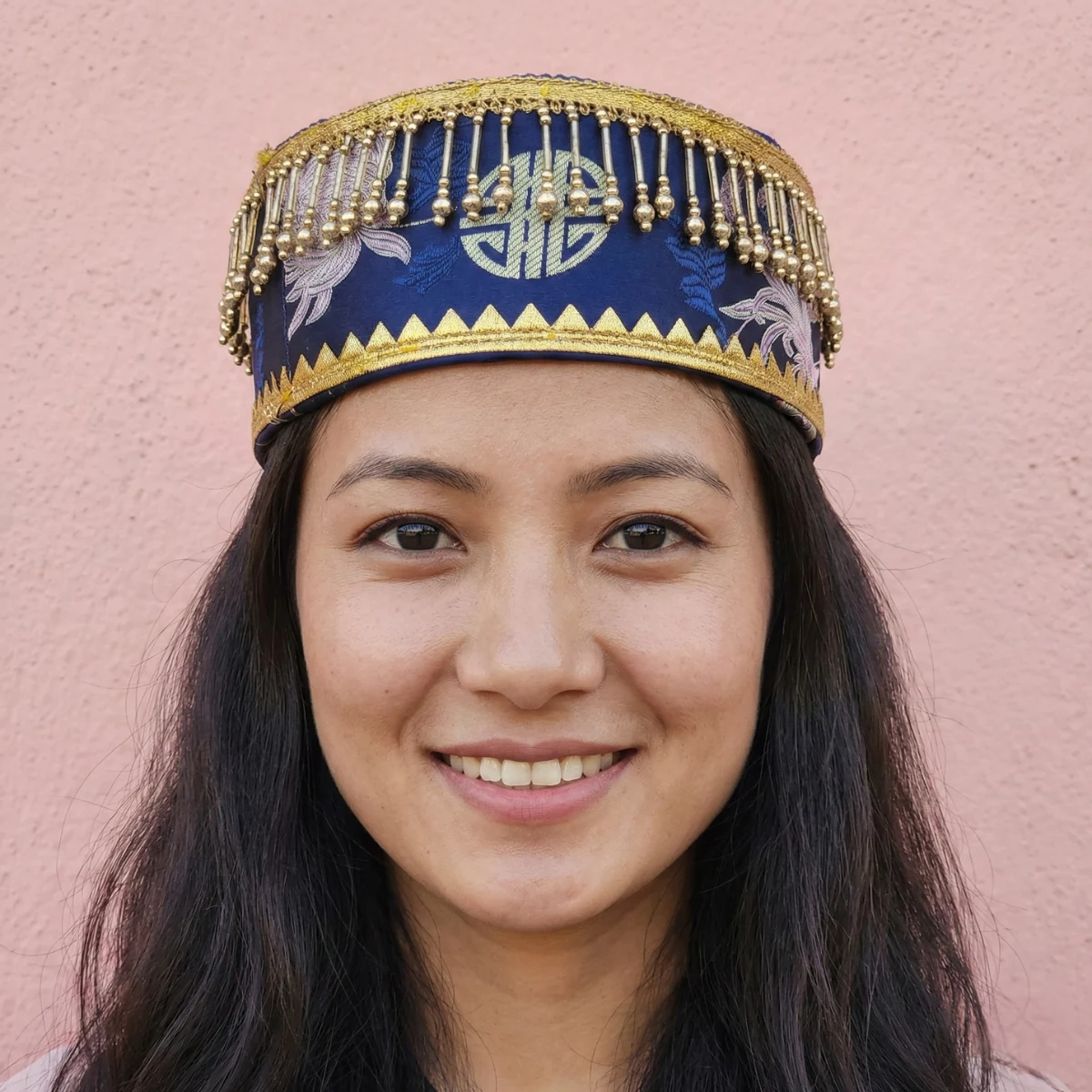
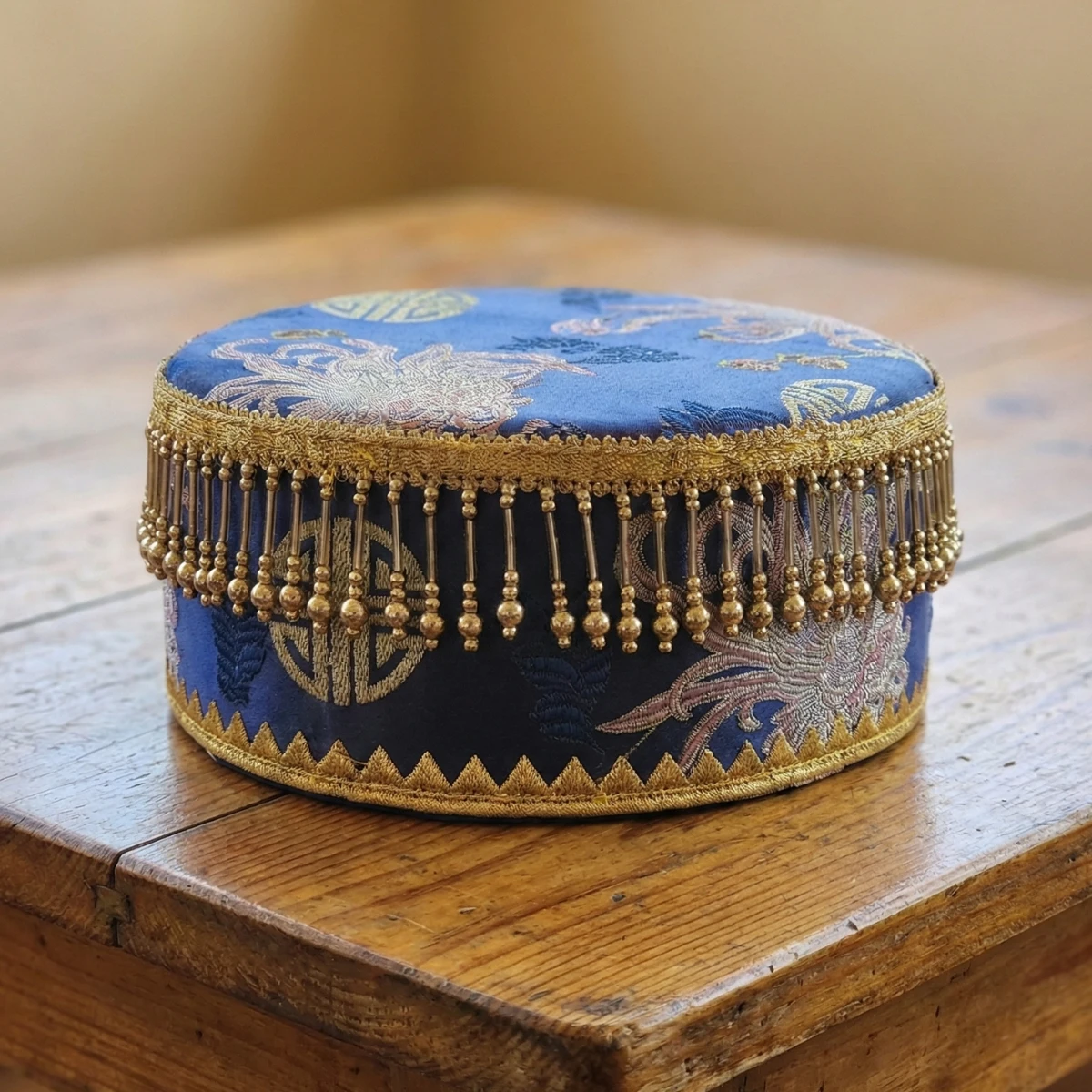
The navy blue variant works in a heavier register — gold bead motis distributed across the body, with a dense metallic fringe running the full circumference of the base, a finishing detail suited to formal wedding ceremony. Tamang brides typically wear the topi placed forward on the crown as part of the assembled bridal look; it is not styled in isolation.


Sushila Tamang –
The navy blue version with the gold fringe running the full circumference is exactly what a Tamang wedding topi should look like — when my daughter wore it for her wedding ceremony in Darjeeling, every elder in the room recognised it immediately. The gold bead motis are hand-applied and you can tell.
Dichen Lama –
Ordered the teal variant for my niece’s wedding and the silver coin discs catch the light beautifully — they shift and shimmer with every movement of the head, which makes the topi come alive during the ceremony. Very nicely finished.
Pema Tamang –
The dome form holds well but the sizing came out slightly large for my daughter’s head. The embellishment quality is genuinely good.
Bimala Lama –
The Tash Kuchin base holds its dome form cleanly without any sagging or distortion — important for a bridal topi that will be photographed from every angle. The navy version with the metallic fringe looks very formal and ceremonially correct.
Sarmila Tamang –
Bought this for my own wedding and was genuinely moved when I put on the full set — topi, patuki, jewellery. The topi completed the look in a way nothing else could. The gold fringe detail is dense and sits beautifully at the base.
Kamala Moktan –
The seed-bead motis on the teal version are each individually applied — you can see the care in the spacing and placement. Not a single one was loose or misaligned when I inspected it closely after it arrived.
Sunita Tamang –
The teal colour in person is slightly more blue-green than the photographs— it leans more towards turquoise in natural daylight. The craftsmanship is lovely.
Mina Lama –
My mother saw this topi and said it was the most accurate representation of a traditional Tamang bridal hat she had seen outside of custom-made pieces. The silver coin discs on the teal version have real visual movement — not flat or lifeless.
Rekha Tamang –
The metallic fringe on the navy version is dense enough to hang properly and move with the hat rather than sticking out stiffly. That kind of weight and drape in the fringe is what separates well-made bridal accessories from cheap imitations.
Nirmala Moktan –
Bought both variants for myself and my sister-in-law for a joint wedding ceremony. The teal and navy versions complement each other well when worn together in photographs — both are beautifully made and clearly the same consistent quality.
Laxmi Tamang –
The Tash Kuchin base has a subtle thread sheen that photographs well under both natural and indoor event lighting. For a bridal topi that will be in dozens of photographs, that surface quality matters more than people realise.
Anita Lama –
My mother-in-law attended the wedding and she specifically commented on the topi — said it looked like the ones she wore in her own Tamang wedding ceremony decades ago. For a culturally specific bridal accessory, that kind of recognition is the highest praise.
Kabita Moktan –
The gold bead motis on the navy version are distributed evenly across the crown with deliberate spacing — this is hand-applied work and the consistency shows. A machine-applied version would never achieve the same placement quality.
Renu Tamang –
Wore this at my own wedding ceremony in Sikkim and the topi held its position perfectly throughout the day — placed forward on the crown as is traditional, it did not shift or need adjustment even during the extended ceremony and reception.
Bipana Lama –
The Tash Kuchin base gives the topi just enough structure to hold the dome shape without feeling stiff or uncomfortable against the head. For a ceremonial hat worn through a long wedding day, that balance of structure and comfort is important.
Kopila Tamang –
The silver coin discs on the teal version are flat and matte-finish rather than highly polished — they catch light subtly rather than glaring, which gives the topi a more refined ceremonial quality than a bright mirror-finish would.
Tara Moktan –
The fringe on the navy version is beautiful but slightly delicate — I would be careful about how it is stored between wearings.
Pratima Tamang –
Ordered this for my younger sister’s wedding and the measurement confirmation process meant it fit her head correctly on arrival — no adjustments needed. The gold fringe and bead motis together create a very complete and formal bridal look.
Durga Lama –
The topi pairs beautifully with a full Tamang wrapper set and layered jewellery — when the complete bridal ensemble is assembled, the topi sits at the ceremonial top of the look in exactly the way it is meant to. Very culturally accurate.
Sangita Tamang –
I searched for a proper Tamang wedding topi for months before finding this listing. The navy version with the dense gold fringe is exactly what appears in traditional Tamang wedding photographs — it is not a simplified or tourist version of the form.
Deepasna Moktan –
The seed-bead motis on the teal version have a texture and depth that flat printed versions simply cannot replicate — each bead catches the light slightly differently, giving the surface of the topi a layered visual quality that reads as genuinely handcrafted.
Champa Lama –
Bought for my daughter’s engagement ceremony in Kalimpong and the teal variant was the right choice for the occasion — slightly less formal than the navy but still clearly ceremonial, and the silver coin discs gave it movement and life throughout the event.
Hema Tamang –
The dome form of this topi does not collapse under the weight of the embellishments — the Tash Kuchin base is stiff enough to support the coin discs and fringe without the crown losing its shape through a full wedding day. That structural integrity is what makes it a proper bridal piece.